
 简体中文
 Русский
 Français
 Português
 Español
 لالعربية


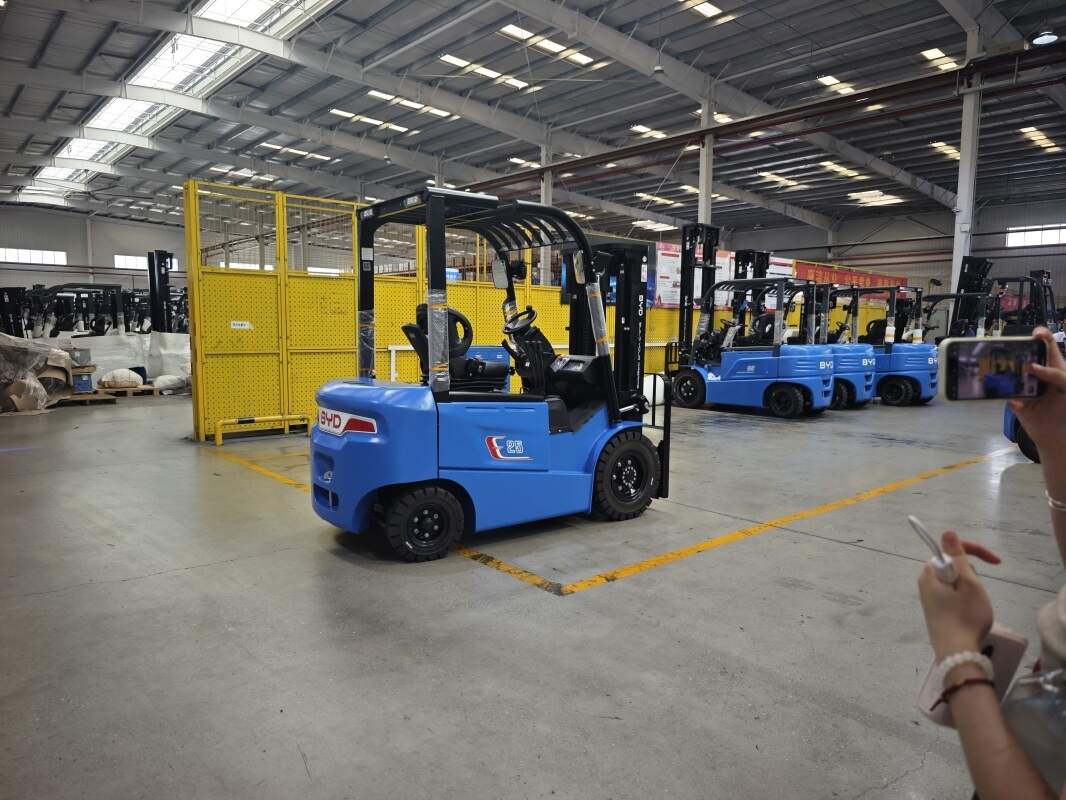
With the continuous development of green logistics systems, electric forklifts have become one of the most widely applied material handling equipment in indoor warehousing, manufacturing workshops and urban distribution centers in recent years. Unlike fuel-powered counterparts, their operation logic and use requirements have unique characteristics that need to be fully grasped by relevant frontline practitioners and managers.
Core Advantages of Modern Electric Forklifts
Most mainstream electric forklifts run on rechargeable power modules, which produce almost no exhaust emission during the whole working process, so they are more suitable for closed indoor working environments with high air quality requirements. Their overall operation noise is kept at a relatively low level, which can effectively reduce noise interference to surrounding staff and avoid physical discomfort caused by long-term exposure to high-noise working environment. In terms of energy consumption, the operating cost per unit running time is usually lower than that of traditional fuel equipment, which can bring stable cost control effect for long-term continuous operation.
Standard Daily Operation Norms
Before starting each work shift, operators need to check the remaining power level, braking sensitivity, lifting mechanism flexibility and tire wear status first, to eliminate potential hidden risks that may occur during subsequent operation. During the operation process, the loaded goods weight should be kept within the rated load range of the equipment, and sharp turning, sudden braking and over-height stacking of goods should be avoided as much as possible. When the equipment triggers a low power reminder, it should be parked in the designated safe area for charging in time, and it is not recommended to force continuous operation under insufficient power status.
Routine Maintenance Points to Extend Service Life
Regularly clean the dust and accumulated sundries on the surface of the power module and the heat dissipation part of the motor, to avoid affecting the normal heat dissipation effect of core components. Check the connection status of each circuit connector every week, and deal with loose or aged lines in time to avoid abnormal power supply. It is also necessary to add appropriate amount of lubricating oil to the movable connection parts of the lifting and steering mechanism on schedule, to reduce the wear degree of mechanical parts in long-term continuous use.
Scene Matching Tips for Different Use Demands
For scenes with narrow channel width, you can choose corresponding products with small body size and flexible steering performance, to improve the overall space utilization rate of the warehouse. For scenes that need to work continuously for more than 8 hours per day, you can configure a matching spare power module to realize quick replacement without waiting for long charging time.


