
 简体中文
 Русский
 Français
 Português
 Español
 لالعربية


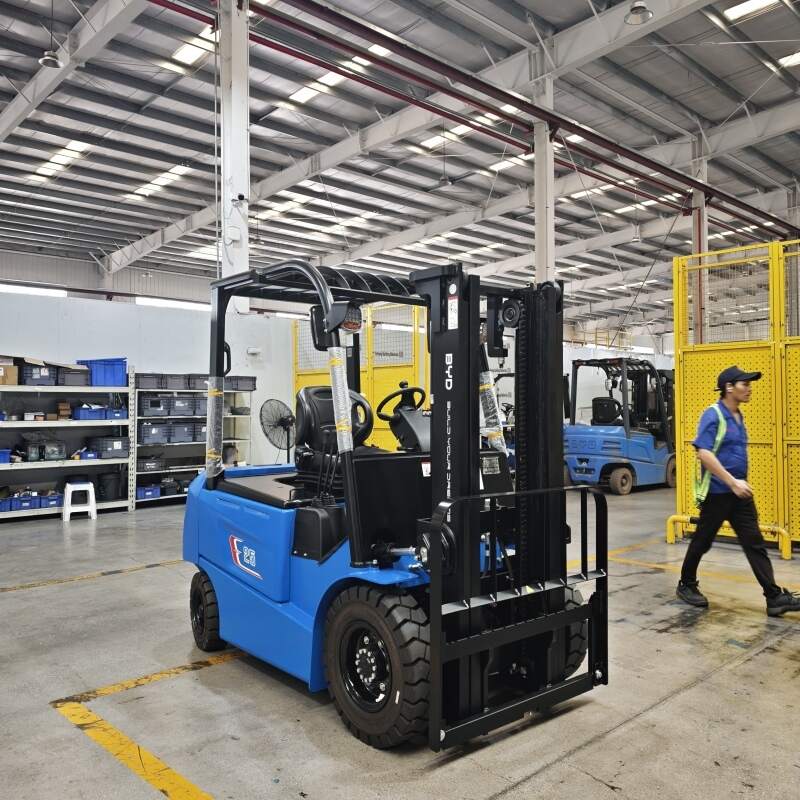
With the continuous promotion of green logistics concepts in the industrial material handling field, electric forklifts have gradually become one of the most widely used handling equipment in daily warehouse operations, and mastering correct use and maintenance rules can bring stable value for long-term operation.
Key Performance Features of Electric Forklifts
Unlike traditional internal combustion forklifts, electric forklifts rely on electric power systems to provide driving and lifting power, generating much lower operation noise and no exhaust emission during work, which is more suitable for enclosed indoor working environments such as food warehouses, pharmaceutical storage centers and e-commerce distribution stations. Their overall structure has fewer vulnerable moving parts in the power system, so the failure probability in normal use is relatively controllable, and the daily operation cost does not involve the consumption of fossil fuels.
Standard Operation Specifications for Daily Use
Before each startup, operators need to conduct a simple pre-check, including confirming the remaining power level, testing the sensitivity of brake and steering systems, checking for obvious deformation or crack on the fork surface, and confirming the normal operation of the warning light and horn. During the operation process, it is not allowed to overload the goods beyond the rated load mark, and no extra personnel shall be carried on the working platform of the forklift. When lifting goods to a high position, operators need to slow down the driving speed to avoid the goods falling due to sudden braking, and keep a safe distance from the surrounding shelves and personnel when turning in narrow channels.
Routine Maintenance Guidelines
Regular maintenance work can effectively extend the service life of electric forklifts. For the power battery part, operators need to avoid complete discharge before charging, and keep the surface of the battery pack dry and clean to avoid liquid corrosion. It is also necessary to regularly check the heat dissipation structure of the drive motor, the liquid level of the hydraulic oil in the lifting system, and the wear degree of the tire tread, and replace the corresponding wearing parts in time when abnormal wear is found, so as to reduce the hidden danger of sudden failure in subsequent operation.
Application Scenario Matching Suggestions
Different working scenarios can select the electric forklift with corresponding configuration parameters according to actual demands. For narrow channel warehouses with space constraints, models with small turning radius can effectively improve the turnover efficiency of goods. For open and flat outdoor yards, models with proper counterweight design can adapt to heavier handling demands. For special scenarios such as low-temperature cold storage, the corresponding special adaptive configuration can help the equipment maintain stable operation performance within the working temperature range.


