
 简体中文
 Русский
 Français
 Português
 Español
 لالعربية


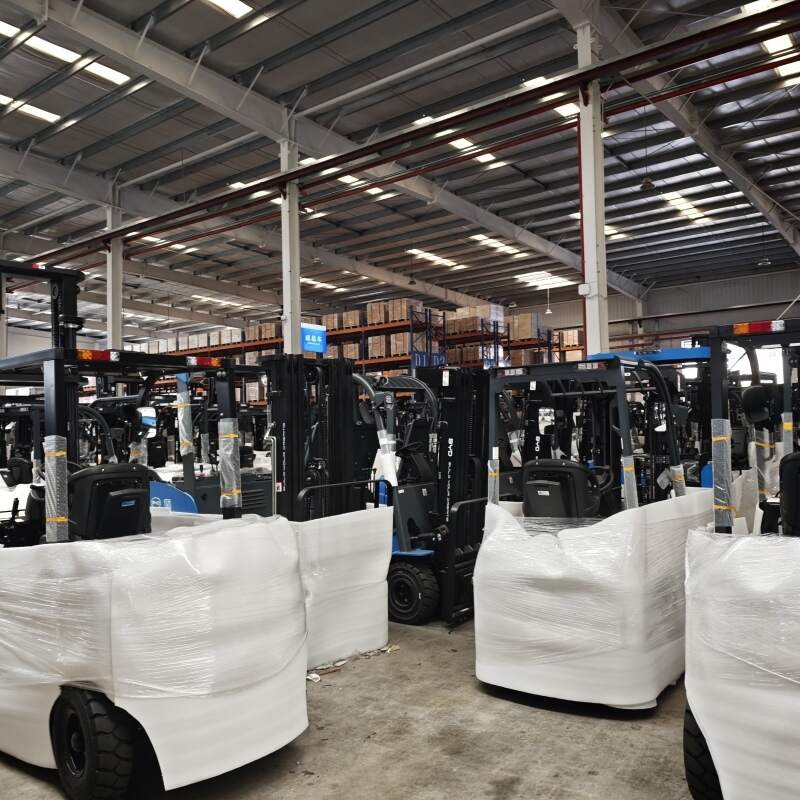
Against the background of global low-carbon industrial transformation, electric forklifts have become one of the most widely used material handling tools in modern warehousing, manufacturing and logistics industries, featuring low noise, zero local emission and flexible operation. Mastering correct use and management rules can help operators give full play to the performance of the equipment while avoiding unnecessary operation risks.
Key Standard Operation Specifications
Before each startup, operators need to complete a full visual check on the core components, including the braking system, warning indicator, tire condition and residual power status, to confirm no abnormal hidden troubles exist before formal operation. During the operation process, operators should strictly follow the rated load limit of the equipment, avoid carrying overweight or unbalanced cargo beyond the specified range, and keep a safe distance from surrounding pedestrians, shelves and obstacles when driving. In narrow channel scenes, operators need to slow down properly and give timely sound reminders to surrounding personnel to avoid collision risks. It is not recommended to carry out sharp steering or emergency braking operations at high speed, which may cause cargo falling or equipment side slipping.
Routine Maintenance Guidelines
Reasonable daily maintenance can effectively extend the overall service life of electric forklifts and reduce the frequency of unexpected failures. For the power core part, operators should avoid long-term overcharging or complete power exhaustion before charging, keep the surface of battery electrodes clean and dry, and regularly check the tightness of the wiring interface to avoid poor contact caused by dust accumulation. Operators also need to check the hydraulic lifting system regularly every week, confirm there is no oil leakage at the pipeline joint, and replace severely worn tires in time to ensure driving stability. The equipment body should be cleaned of sundries and dust after long-time operation, to prevent debris from entering the heat dissipation structure and affecting the normal operation of the motor.
Scenario Adaptation Suggestions
For different application scenarios, operators can make minor adjustment to the use habits to get better performance. In low-temperature cold storage scenes, users can properly extend the preheating time before startup, to avoid the situation that the power supply efficiency drops too fast in low temperature environment. For intensive high-level shelf warehouses, operators can make adaptive adjustment to the lifting speed according to the actual height of goods placement, to improve the operation fluency. In outdoor open scenes, avoid long-term exposure of the equipment to heavy rain or high humidity environment, to reduce the risk of circuit damp damage. Following the above rules can help enterprises maximize the use value of electric forklifts, create a safer and more efficient material handling environment, and better adapt to the current development trend of green industrial logistics.


