
 简体中文
 Русский
 Français
 Português
 Español
 لالعربية


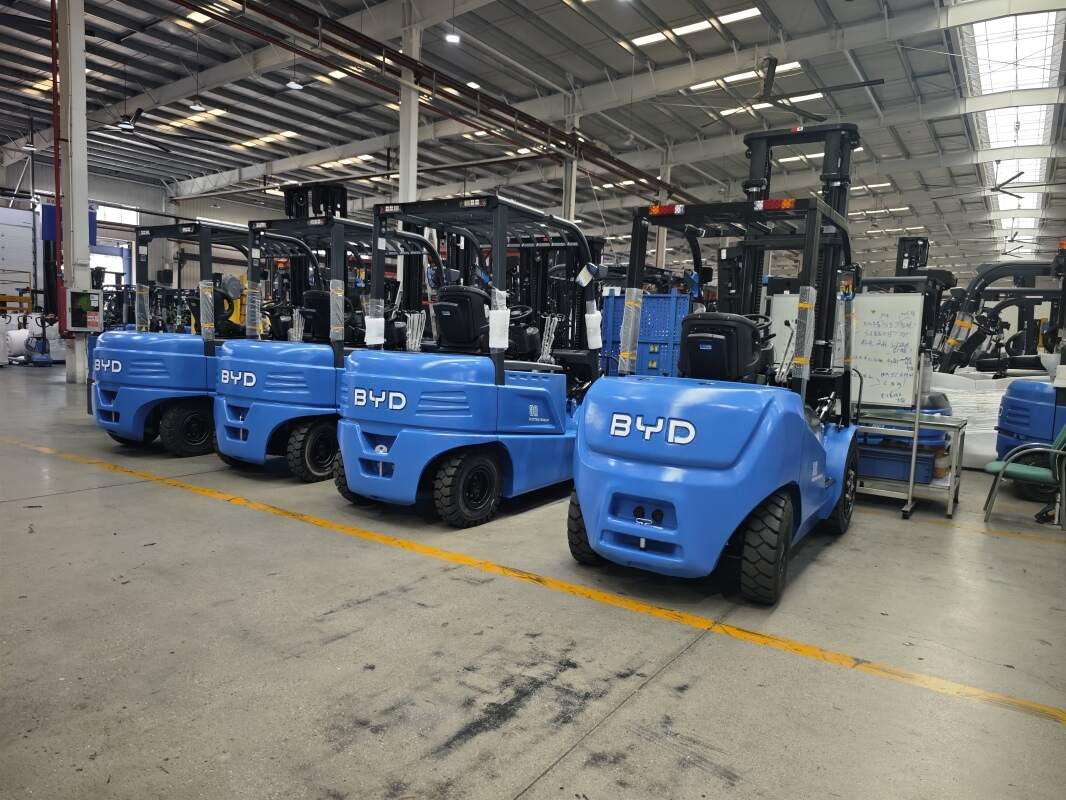
Nowadays, with the continuous promotion of low-carbon transformation in industrial logistics, electric forklifts have become one of the most widely used core material handling equipment in warehouses, manufacturing plants and distribution centers. Many new operators and logistics managers still lack systematic and practical guidance for the scientific use of such equipment, which may lead to extra operating cost and unnecessary performance loss. The following content will share industry professional knowledge from multiple practical dimensions, to provide reliable reference for relevant users.
Core Operation Specifications for Daily Use
Before formal operation, all relevant personnel need to complete full basic safety and skill training to master the basic performance parameters of the equipment. Before starting the machine, it is necessary to check the braking system response, steering sensitivity, tire pressure and remaining power level first, to eliminate hidden risks in advance. During the operation process, do not carry over-weight goods beyond the rated load range, keep a low driving speed in narrow access passages, honk the horn in advance when turning, keep the fork at a low position when carrying goods to avoid accidental slipping of the loaded items, and do not carry extra personnel on the equipment body for moving. After the operation task is completed, park the equipment in the designated fixed area, pull up the hand brake, lower the fork to fully contact the ground, and cut off the main power supply.
Routine Maintenance Points to Extend Service Life
Daily cleaning work should be arranged regularly, to remove dust and residual sundries on the equipment surface in time, especially to ensure that the ventilation outlets of the battery compartment are not blocked by debris. For lead-acid battery models, check the electrolyte level at regular intervals, and for lithium battery models, avoid long-term overcharge or deep discharge as much as possible. After every 200 hours of cumulative operation, arrange professional technicians to check whether there is leakage in the sealing parts of the hydraulic system, whether the chain tension is within a reasonable range, and whether the heat dissipation channel of the drive motor is unobstructed. Do not disassemble the core electrical components without professional guidance, once abnormal noise or operation deviation occurs, stop the machine for troubleshooting in time instead of continuing to work with hidden faults.
Application Adaptation Tips for Different Working Scenarios
For general flat warehouse scenarios, conventional rated load pedestrian or stand-on electric forklifts can meet the demand of regular pallet handling. For high-rise shelf storage scenarios, choose the reach truck model that matches the corresponding lifting height, and confirm in advance that the passage width meets the rotation radius requirement of the selected equipment. For outdoor operation scenarios with uneven pavement, select the model with appropriate ground clearance to avoid chassis scratch risk. For low temperature working environment, take proper battery thermal insulation measures in advance, to reduce the adverse effect of low temperature on the equipment’s endurance performance.
Energy Efficiency Optimization Strategies to Reduce Operating Cost
Make reasonable operation routes in advance to reduce unnecessary back and forth driving distance, sort out the handling batches before starting the work, to avoid scattered multiple handling that causes extra power consumption. Calibrate the pressure parameters of the hydraulic system regularly to avoid unnecessary energy loss. If the equipment will be left unused for a long period, keep the battery power at 40% to 60% level, and carry out supplementary charging every two weeks, to prevent the battery from long-term power loss that affects the overall cycle life. Scientific daily management can help the operation team give full play to the performance advantage of electric forklifts, and support the stable and efficient operation of low-carbon industrial logistics.


