
 简体中文
 Русский
 Français
 Português
 Español
 لالعربية


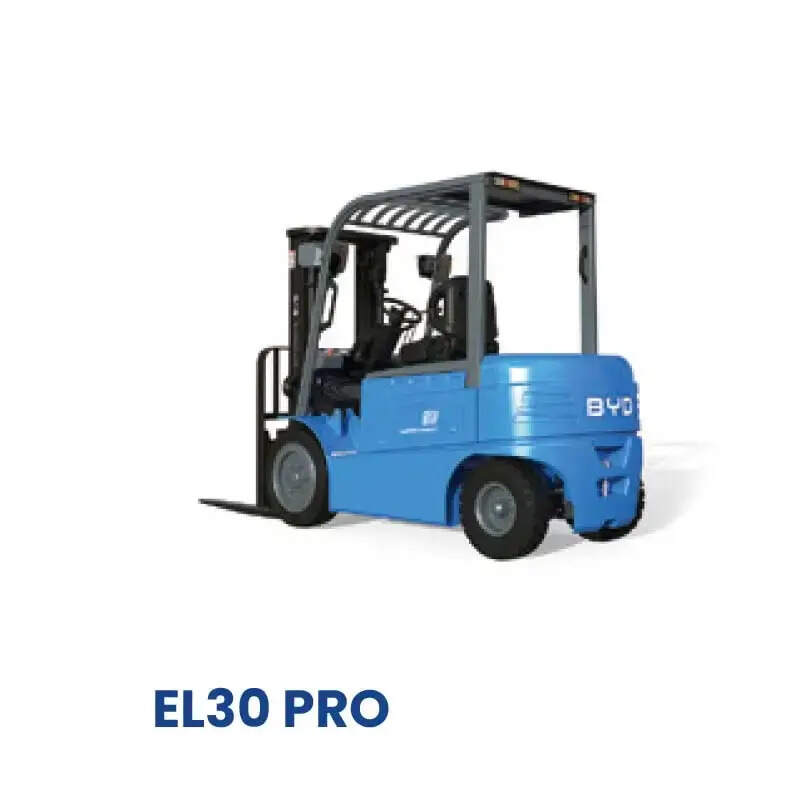
As the logistics and warehousing industry continues to pursue low-carbon, efficient operation modes, electric forklifts have become one of the most widely used material handling equipment in various indoor and semi-enclosed working scenarios in recent years. Mastering systematic professional knowledge related to electric forklifts can help enterprises give full play to the value of equipment, reduce unnecessary operating costs, and improve the overall safety level of on-site operations.
Core Performance Advantages of Electric Forklifts
Compared with fuel-powered handling equipment, modern electric forklifts have no exhaust emission during operation, which can avoid the accumulation of harmful gas in closed warehouse spaces, and will not cause additional negative impact on the working environment of employees. The overall operating noise of the equipment is kept at a relatively low level, which can reduce the noise interference to the surrounding working areas, and is more suitable for use in scenarios that have high requirements for environmental comfort. Most electric forklift models have relatively simple operating structures, which reduce the learning threshold for new operators to a certain extent.
Standardized Operation Essentials for Daily Use
Before each formal use, operators need to complete necessary pre-shift inspection work, including checking the remaining battery level, the flexibility of the steering and braking system, and the integrity of the load-bearing fork structure. During the operation process, the actual load should not exceed the rated load marked on the equipment nameplate, and operators need to adjust the driving speed according to the on-site road conditions and personnel flow. When passing through narrow aisles, high stacking areas and areas with pedestrians moving around, operators should slow down in advance and avoid emergency braking and sharp turning as much as possible.
Routine Maintenance Suggestions
Regular maintenance work can effectively extend the service life of electric forklifts and reduce the probability of unexpected equipment failure. Operators can regularly clean the dust and sundries accumulated on the surface of the battery contact points and the heat dissipation structure of the driving motor to keep the heat dissipation channel unobstructed. For the hydraulic lifting system, it is necessary to check whether there is oil leakage at the sealing position at regular intervals, and replenish the hydraulic oil according to the specified cycle. When the equipment is idle for a long time, the battery should be kept at a reasonable power level for storage, and regular charging and activation operations should be carried out.
Matching Principles for Different Working Scenarios
Different working scenarios have different performance requirements for electric forklifts, and users can select appropriate equipment parameters according to their actual needs. For high-level stereoscopic warehouses, you can choose models with suitable lifting height and narrow body design to adapt to the operation requirements of narrow aisles and high-position stacking. For low-temperature cold storage scenarios, you can choose models with low-temperature resistant materials and special battery protection design to adapt to the characteristics of the working environment.


