
 简体中文
 Русский
 Français
 Português
 Español
 لالعربية


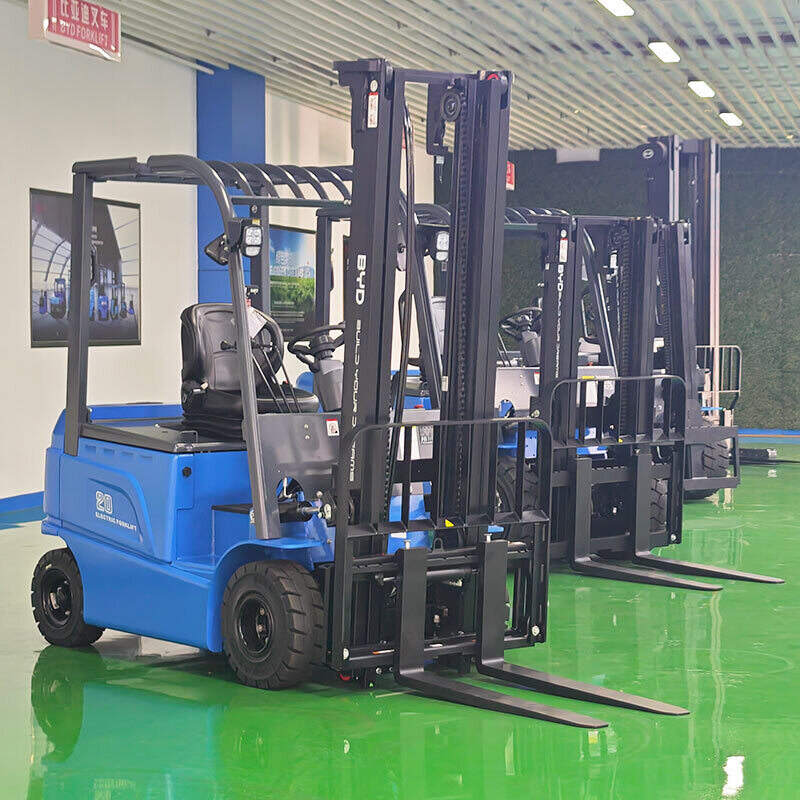
Electric forklifts have become one of the most widely used handling equipment in modern logistics systems, and mastering correct operation and management rules can help teams improve overall operation safety and reduce unnecessary operating cost consumption.
Core Advantages of Electric Forklifts for Common Logistics Scenarios
Different from traditional internal combustion powered handling equipment, electric forklifts produce zero local exhaust emission during operation, which can well meet the clean operation requirements of enclosed warehouse spaces, and avoid the hidden danger of harmful gas accumulation in poorly ventilated indoor working areas. The low-noise operation feature also helps create a more comfortable working environment for on-site operators, and reduces noise interference for surrounding rest and office areas adjacent to the logistics zone. The smooth power output characteristic of electric drive also lowers the probability of cargo damage caused by sudden acceleration or sudden braking during short-distance handling, which is friendly to fragile cargo handling scenarios.
Standardized Daily Maintenance Specifications
Before each shift, operators need to complete a series of simple pre-operation checks, including confirming remaining battery level, observing tire wear status, testing the sensitivity of braking and steering systems, and checking whether there is obvious abnormality in the lifting of the fork. For the power battery module, operators should avoid overcharging and deep discharging for long-term use, and complete charging in a dry, ventilated, temperature-controlled designated area. The surface of the vehicle body and the gap between walking structures should be cleaned regularly to prevent accumulated packaging debris and dust from jamming the transmission part. The hydraulic sealing components need to be checked at regular intervals according to the accumulated operation hours, to prevent hydraulic oil leakage that may affect the lifting stability.
Feasible Methods to Improve Operation Efficiency
Logistics teams can plan operation routes reasonably according to the location of cargo storage areas, so as to reduce unnecessary no-load driving that consumes extra power. Operators can adjust the driving speed dynamically according to the weight of the loaded cargo, avoid frequent sharp acceleration and sharp braking under heavy load conditions, and make full use of the torque characteristic of electric drive to complete the handling work smoothly. When the forklift is not in use, it should be parked in a designated shaded, rain-proof area, avoiding long-term exposure to extreme high or low temperature environment, so as to reduce non-functional loss of power components. Following the above operation and management rules can effectively extend the service cycle of electric forklifts, bring stable long-term return for equipment input, and match the diversified material handling demands of most small and medium sized logistics scenarios.


