
 简体中文
简体中文 Русский
 Français
 Português
 Español
 لالعربية

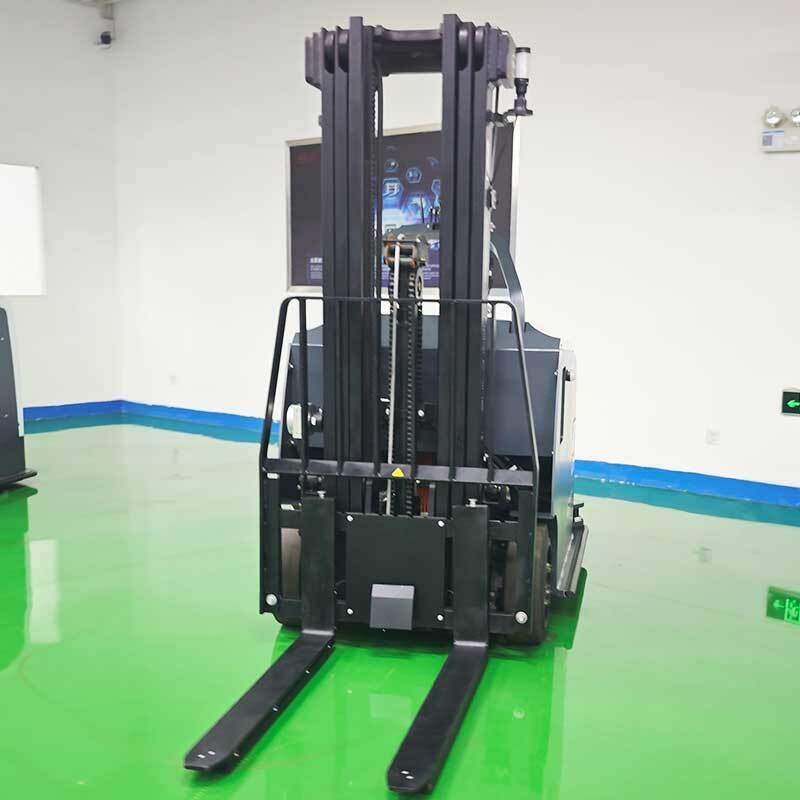
As core industrial handling equipment applied in warehousing, manufacturing and logistics scenarios, electric forklift has its lifting mechanism as the key executive component to complete cargo stacking, height adjustment and other operations. The over-travel fault that the lifting carriage exceeds the maximum allowed moving stroke is one of the common hidden dangers in daily operation, which may cause damage to the inner door frame, steel chain and oil cylinder sealing components, and even lead to cargo tipping in severe cases. Different from the software-level protection logic set in the main operation controller, the over-travel-limit protection parameters built into the lifting mechanism hardware are independent redundant safety configurations solidified in the special hardware control module, which will not fail due to the fault of the main control program.
The first core built-in parameter is the deceleration trigger threshold, which is generally set at the position 100mm to 150mm away from the top mechanical limit of the lifting stroke. When the lifting carriage reaches this trigger position, the hardware module will automatically send a signal to reduce the output power of the lifting motor, limiting the lifting speed below 30% of the rated lifting speed, to remind the operator to control the operation handle to lower the carriage in time.
The second core built-in parameter is the forced stop trigger threshold, which is set at the position 20mm to 30mm away from the final mechanical stroke limit. Once the carriage reaches this position, the hardware module will directly cut off the power supply loop of the lifting motor and the lifting valve, and synchronously activate the acousto-optic warning device on the forklift body, to thoroughly avoid the risk of hard collision between the carriage and the top limit baffle.
The third core built-in parameter is the protection interlock reset threshold. After the over-travel limit protection is triggered, the hardware module will not automatically reset the protection state even if the operator releases the operation handle. It is required that the lifting carriage must be lowered to the safety area 200mm below the deceleration trigger threshold, then the protection interlock can be released, to effectively avoid the misoperation that the operator repeatedly pulls the lifting handle to break through the protection limit.
All these built-in hardware protection parameters are configured in accordance with universal industrial vehicle safety specifications, and non-professionals are not allowed to disassemble the hardware module or modify the solidified parameters without authorization. In the daily maintenance process, the operation and maintenance personnel only need to regularly check the trigger accuracy of the travel limit sensor, and calibrate the parameters appropriately if slight drift occurs after long-term operation, to ensure that the protection function can take effect stably in the whole service cycle of the electric forklift.


