
 简体中文
简体中文 Русский
 Français
 Português
 Español
 لالعربية

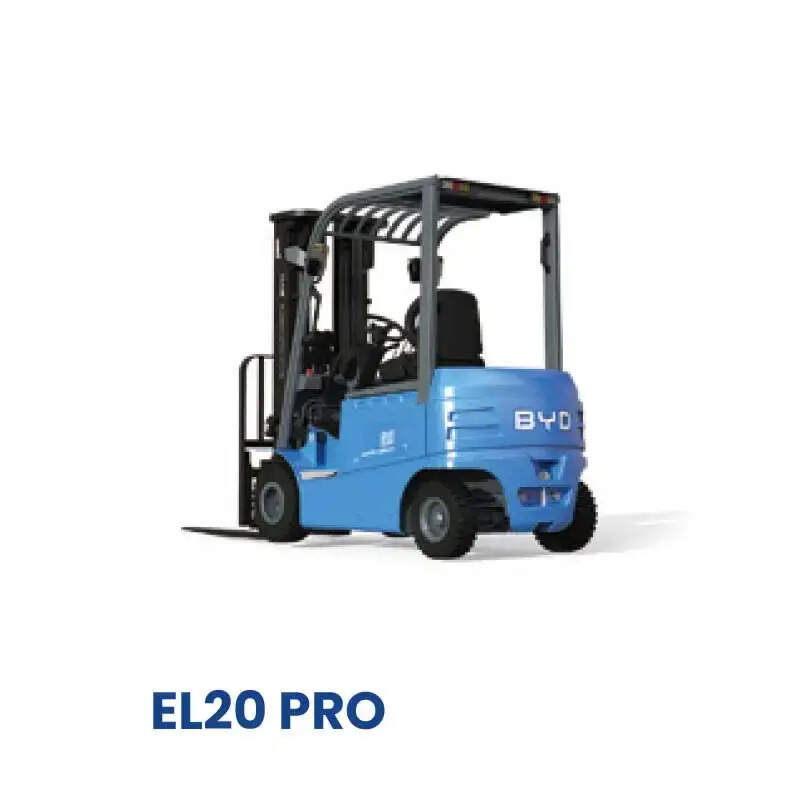
Against the background of low-carbon transformation in the logistics industry, electric forklifts have become one of the most widely used material handling equipment in indoor warehouses, distribution centers and light industrial parks in recent years. Compared with traditional internal combustion counterparts, electric forklifts produce no local exhaust emissions, generate lower working noise, and have relatively lower daily energy consumption expenditure, which can better meet the environmental protection and cost control demands of most operation sites.
Core Value of Electric Forklifts in Modern Material Handling
Electric forklifts are designed to adapt to most indoor enclosed operation environments, and will not generate irritating exhaust gas that affects the health of on-site operators during long-term continuous use. The overall mechanical structure of the equipment has fewer vulnerable moving parts than traditional power models, which can reduce the frequency of regular mechanical maintenance to a certain extent. For logistics operation sites that need to arrange multi-shift continuous work, reasonable electric forklift configuration can also effectively reduce the comprehensive operation cost per unit of cargo handling.
Standard Daily Operation Specifications
Before each shift operation, operators need to complete necessary pre-inspection work, including checking remaining battery level, flexibility of the braking system, smoothness of the lifting gantry and integrity of the warning light components. During operation, staff should avoid overloading beyond the rated load capacity, slow down when passing through narrow aisles or areas with crowded personnel, and give proper voice or light prompts when the sight is blocked. It is not allowed to use the equipment to carry non-working personnel, and keep stable driving speed when passing sloped roads to avoid accidental side slip.
Routine Maintenance Strategies for Longer Service Cycle
To keep electric forklifts in stable working condition for a long time, teams need to arrange standardized daily maintenance work. For the power battery part, operators should avoid frequent full discharge below the lowest safe power threshold, and complete regular equalization charging according to the product manual requirements. The heat dissipation vents of the drive motor should be cleaned regularly to avoid accumulation of dust and sundries that affect the cooling effect. The hydraulic oil level and wear degree of the sealing ring need to be checked every certain working cycle, and the parking brake should be pulled tightly when the equipment is parked in a fixed non-working area.
Scenario Adaptation Suggestions for Different Working Environments
For special working scenarios, users can adjust the relevant configuration and operation mode of electric forklifts to achieve better use effect. For low-temperature cold storage working sites, it is recommended to preheat the power system properly before formal operation to avoid excessive power attenuation in low temperature environment. For sites with continuous high-intensity operation for more than 8 hours a day, it is recommended to arrange reasonable battery rotation charging plan to ensure continuous operation efficiency. These practical measures can help enterprises give full play to the performance advantages of electric forklifts, reduce unnecessary equipment failure downtime, and better match the development needs of modern efficient and low-carbon logistics systems.


