
 简体中文
 Русский
 Français
 Português
 Español
 لالعربية


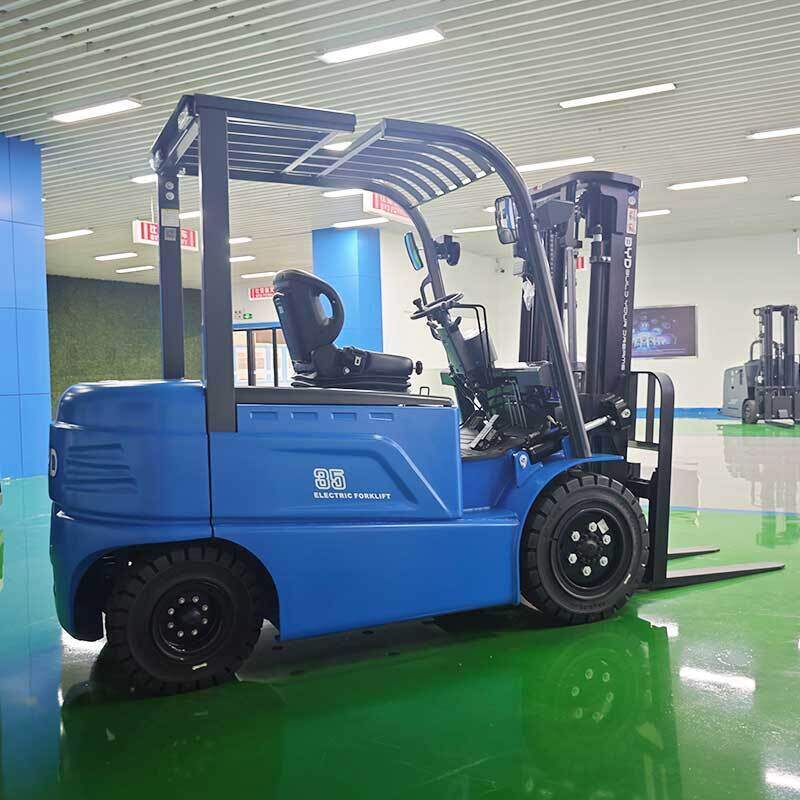
Against the background of low-carbon industrial logistics development, electric forklifts have become one of the most widely used material handling equipment in closed warehouse scenarios for their low noise, zero local emission and flexible operation features. Mastering standardized use and maintenance knowledge can help operators give full play to the equipment’s performance, reduce unnecessary operation risks, and create more stable value for daily logistics work.
Pre-operation Inspection Specifications
Before starting each shift, operators need to complete a full range of basic checks before formally using the equipment. The first step is to confirm the remaining battery level to avoid power shortage interruption in the middle of high-load operation. Then check the braking sensitivity, hydraulic lifting component stability, tire surface wear degree, and whether the light and prompt sound system works normally. Operators also need to check the surrounding operating area to remove irrelevant obstacles and remind non-working personnel to stay away from the operation range, which can effectively avoid potential safety hazards caused by omitted checks.
Standard Daily Operation Norms
In the process of daily operation, operators should strictly follow the load marking requirements of the equipment to avoid long-term overloading that causes damage to the hydraulic structure and driving motor. When driving in narrow passages, operators need to control the driving speed at a low level, honk before turning or crossing the passage intersection, and avoid sudden acceleration or sudden braking as much as possible. It is not allowed to lift the goods to an excessive height for long-distance driving, and no personnel are allowed to stand or walk on the moving forks, so as to ensure the safety of both personnel and goods.
Routine Maintenance Points
Regular scientific maintenance can effectively extend the service life of electric forklifts and reduce the frequency of unexpected failures. For the power battery part, operators should follow the specified charging process, avoid complete deep discharge or long-term overcharge, and keep the surface of the battery pack clean and dry to prevent short circuit risk. The hydraulic oil and brake wear parts should be checked and replaced regularly according to the specified cycle, and all circuit connection points should be checked for looseness on a regular basis. When the equipment is not in use, it should be parked in the designated fixed area, pull up the hand brake, and lower the forks to the ground level.
Following the above operation and maintenance rules, logistics operators can steadily improve the operation efficiency of electric forklifts, reduce the overall operating cost of the equipment, and build a safer and more orderly warehouse material handling environment.


