
 简体中文
 Русский
 Français
 Português
 Español
 لالعربية


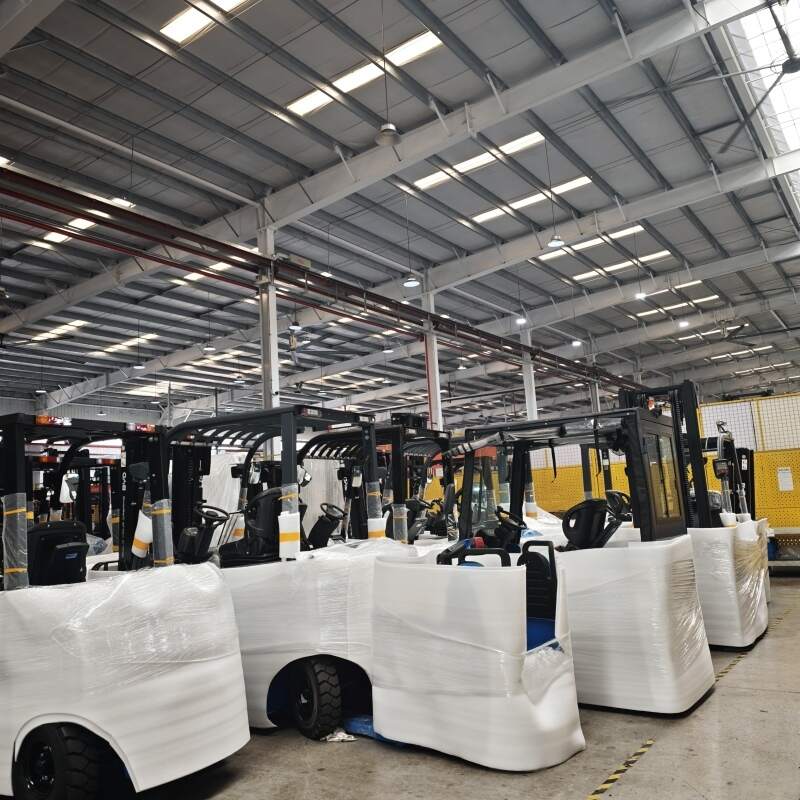
As the low-carbon logistics trend gains popularity across industrial sectors, electric forklifts have become one of the most widely adopted handling equipment in various warehousing and manufacturing scenarios in recent years. This guide shares systematic, field-verified practical knowledge for relevant practitioners to optimize their use of such equipment.
Core Performance Features of Electric Forklifts
Different from traditional internal combustion handling equipment, electric forklifts are powered by on-board battery packs, which produce no exhaust emission during operation, and generate far lower working noise than fuel-powered counterparts. Most models adopt compact body structure design, which can flexibly pass through narrow warehouse aisles, and meet the space utilization improvement demand of high-density storage scenarios. The overall energy consumption cost per unit working hour is relatively lower, which fits the cost control target of most small and medium-sized logistics operation teams.
Standard Daily Operation Norms
Before starting each shift, operators need to complete basic inspection work, including checking the remaining battery power, the flexibility of lifting and steering components, and the sensitivity of each safety protection switch. During operation, operators need to keep a stable running speed, avoid sudden acceleration or emergency braking as much as possible, and keep a safe distance from surrounding goods and passing personnel. When the equipment sends out low power reminder, operators should arrange to return to the designated charging area for power replenishment in time, to avoid unexpected shutdown in the middle of handling tasks.
Routine Maintenance Suggestions
Regularly wipe the dust and residual sundries on the surface of the equipment, and check the wear degree of the tires and lifting chain structure every fixed working cycle. The battery pack should be charged according to the specified operation requirements, avoid long-term over-discharge or full power storage for more than 72 hours, which can effectively extend the overall service life of the core power component. The internal control circuit system should be inspected by professional technicians regularly, to eliminate potential hidden troubles in the early stage.
Scenario Matching Optimization Tips
For different working scenarios, users can adjust the corresponding operation parameters of the equipment according to the actual load weight, passage width and working duration. For long-time continuous operation scenarios, users can arrange reasonable shift scheduling for operators, and prepare spare battery packs to support uninterrupted work. For cold storage or special working environments, users can choose corresponding adaptive matching configurations to ensure stable operation of the equipment.


