
 简体中文
 Русский
 Français
 Português
 Español
 لالعربية


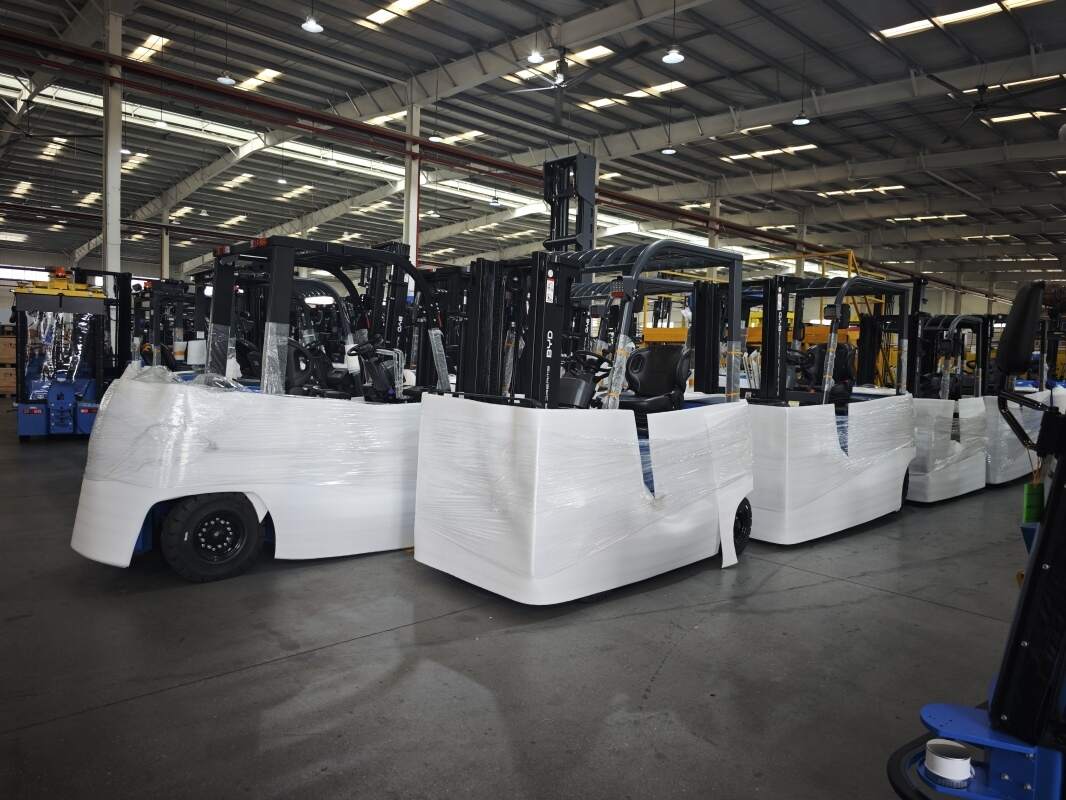
Against the backdrop of low-carbon transformation in modern logistics and manufacturing industries, electric forklifts have become one of the most widely used core equipment for indoor and closed-site material handling, thanks to their low noise, zero tailpipe emission and relatively low operation cost. Mastering standardized operation and scientific maintenance knowledge can help operators reduce unnecessary equipment loss and improve overall operation stability in daily work.
Core Standard Operation Specifications for Daily Use
Before starting each shift, operators need to conduct full pre-operation checks, including confirming remaining battery power, testing the sensitivity of braking and steering systems, checking the tightness of lifting chains and the integrity of fork structures, to rule out hidden risks before formal operation. During the driving process, operators need to control the driving speed according to site conditions, keep a safe distance with surrounding personnel, shelves and goods, avoid sudden acceleration or emergency braking that may cause goods to fall off, and do not carry people or operate with overload beyond the rated load capacity. When operating on slopes, keep the load facing the uphill direction and avoid turning on the slope to prevent rollover risks.
Routine Preventive Maintenance Essentials
After each operation cycle, operators need to wipe the surface of the equipment, clear accumulated dust on the battery heat dissipation vents, and check whether the charging port and circuit connection parts are loose or damp. It is not recommended to leave the equipment under deep power loss status for a long time, and operators should complete the charging process according to the recommended specifications of the power unit to avoid irreversible damage to the battery performance. Regularly check the oil level of the hydraulic lifting system, replace the hydraulic oil at the specified interval, and avoid impurities entering the oil circuit to cause abnormal wear of the hydraulic components.
Scenario Adaptation to Improve Application Efficiency
According to different actual working scenarios, operators can adjust the operation logic of the electric forklift appropriately. For narrow aisle warehouse scenarios, control the turning radius in a reasonable range to avoid collision with shelf structures. For high-height storage scenarios, confirm the maximum lifting height in advance to avoid impacting the top of the shelf during operation. Arrange the shift schedule of multiple equipment reasonably to avoid long-time continuous non-stop operation, which can effectively reduce the failure rate and extend the overall service cycle of the equipment.


