
 简体中文
简体中文 Русский
 Français
 Português
 Español
 لالعربية

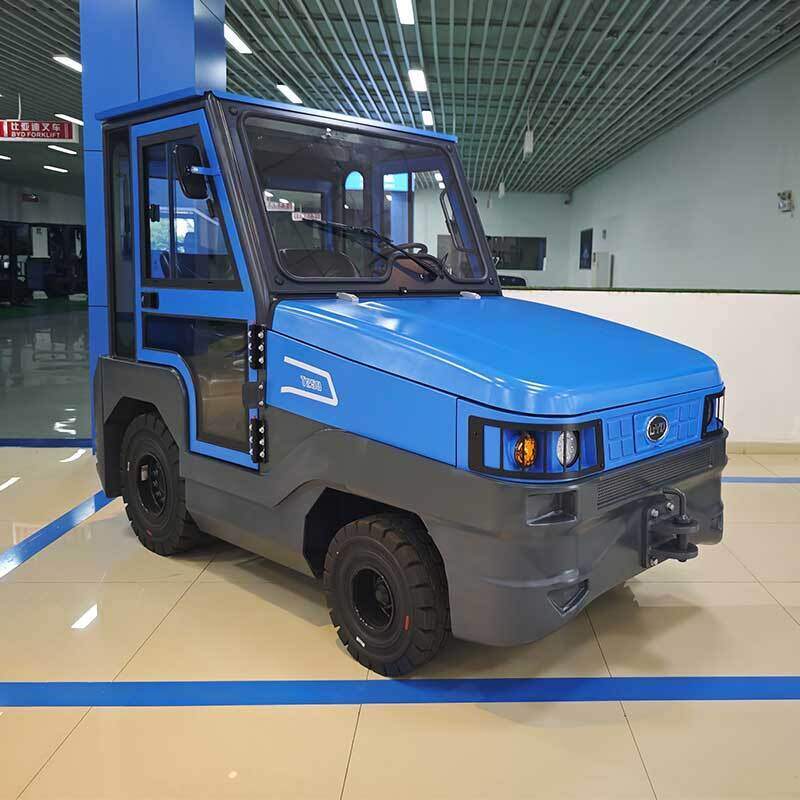
As the modern warehousing and logistics industry continuously promotes low-carbon and high-efficiency operation transformation, electric forklifts have become a mainstream material handling equipment widely applied in indoor and semi-enclosed working scenarios. Many frontline operators and equipment managers still lack systematic, professional cognition of this type of equipment, which easily causes unnecessary component loss and hidden safety risks in daily operation.
Core Performance Traits of Electric Forklifts for Scenario Matching
Different from fuel-powered handling equipment, electric forklifts rely on on-board power modules to provide stable power output, and will not generate exhaust gas that pollutes the closed working air environment. The whole machine produces much lower running noise, which can effectively reduce long-term auditory fatigue of staff working in enclosed spaces. Most models adopt compact body design, which can adapt to narrow channel scenarios common in e-commerce warehouses, pharmaceutical storage sites and retail distribution centers, and steadily complete conventional pallet stacking, transshipment and loading-unloading tasks.
Routine Maintenance Norms to Reduce Unnecessary Loss
Daily maintenance work can start from pre-shift inspection. Operators need to check the power module status, brake sensitivity, lifting mechanism flexibility and tire wear condition before starting the equipment. After daily operation, the equipment should be parked in the designated special area, connected to the power supply for standardized charging, and the dust and debris accumulated on body surface and heat dissipation parts should be cleaned regularly. It is not recommended to store the equipment in high temperature or humid environment for a long time, so as to reduce the abnormal loss of core functional components.
Standardized Operation Guidelines to Avoid Safety Risks
During the whole operation process, relevant personnel need to complete professional operation training in advance, control the load weight within the rated load range of the equipment, and avoid over-height stacking of goods that exceeds the safety limit. When turning or passing through narrow passages, operators need to slow down in advance and keep attention on surrounding pedestrians and obstacles. For operation scenarios with gentle ramps, keep the goods facing the uphill direction to reduce the risk of goods slipping.


