
 简体中文
简体中文 Русский
 Français
 Português
 Español
 لالعربية

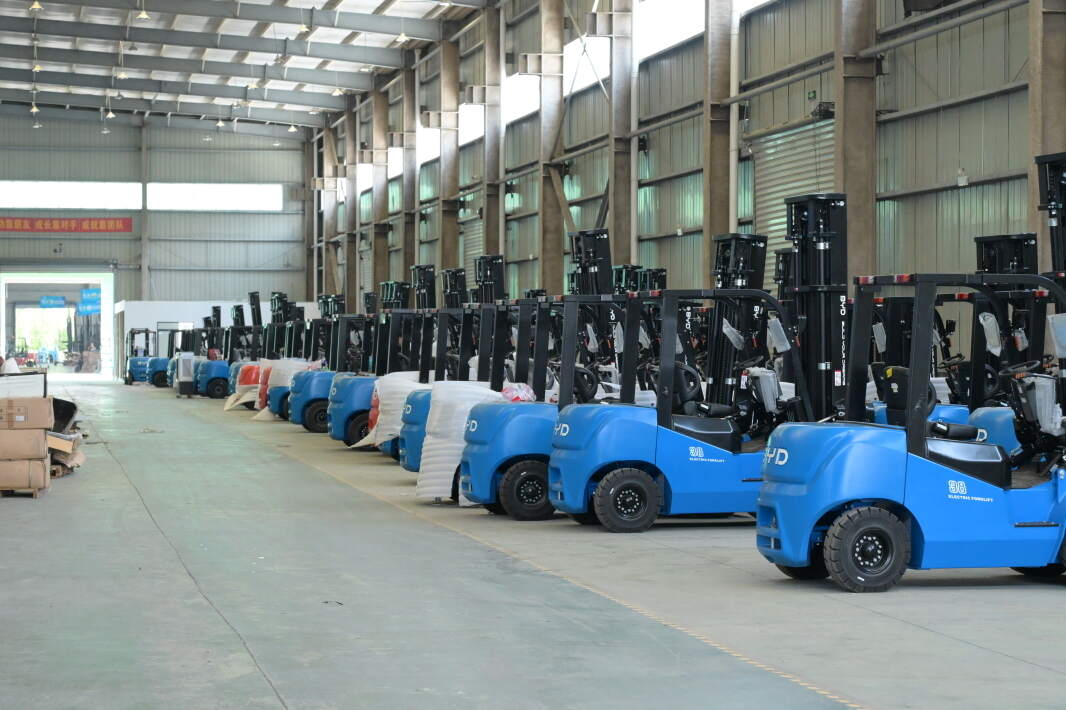
Along with the continuous development of modern logistics and warehousing industry, electric forklifts have become one of the most widely used material handling equipment in daily operation, for their lower noise, zero local emission and relatively friendly operation threshold. Mastering correct use and management rules can help enterprises give full play to the performance of such equipment, avoid unnecessary operation risks and extra cost loss.
Core Standardized Operation Rules
Before starting the equipment every shift, operators need to complete basic inspection work, including checking remaining power level, flexibility of braking system, surface integrity of cargo forks, and unobstructed status of walking channels, to eliminate hidden risks in advance. During operation, personnel need to avoid overloading beyond the rated load range, reduce sharp steering and sudden braking actions, and keep a safe distance with surrounding staff and stacked goods. When the equipment is not in use for a long time within the shift, operators should pull the hand brake and cut off the main power supply to avoid accidental touch caused by misoperation.
Daily Maintenance Essentials for Longer Service Life
Routine maintenance work does not need too much professional technical threshold, but can effectively reduce the frequency of failure. Operators need to wipe the shell and operation panel of the equipment after each shift to remove accumulated dust and cargo residue, especially keep the surface of battery pack and charging interface dry and clean. For the charging process, it is not recommended to carry out overcharging or deep over-discharging for a long time, which will affect the overall cycle life of the power system. Regularly check the wear degree of solid tires, the sealing performance of hydraulic lifting system, and the sensitivity of safety warning devices, and replace the worn accessories in time according to the actual use loss.
Scenario Adaptation Suggestions for Different Use Environments
In different operation scenarios, users can make small adjustments to the use habits to get better use experience. For low-temperature cold storage working scenarios, users can appropriately extend the preheating time of the power system before starting operation, to avoid insufficient power output caused by low temperature. For relatively humid working environment, regular inspection of circuit sealing performance can effectively reduce the probability of short circuit failure. For narrow channel warehousing scenarios, operators can adjust the running speed to a lower level to ensure the safety of personnel and goods in the limited moving space. Following the above reasonable operation and management rules, enterprises can better control the use cost of electric forklifts, improve the overall operation efficiency of material handling links, and create more stable value for daily logistics and warehousing work.


