
 简体中文
 Русский
 Français
 Português
 Español
 لالعربية


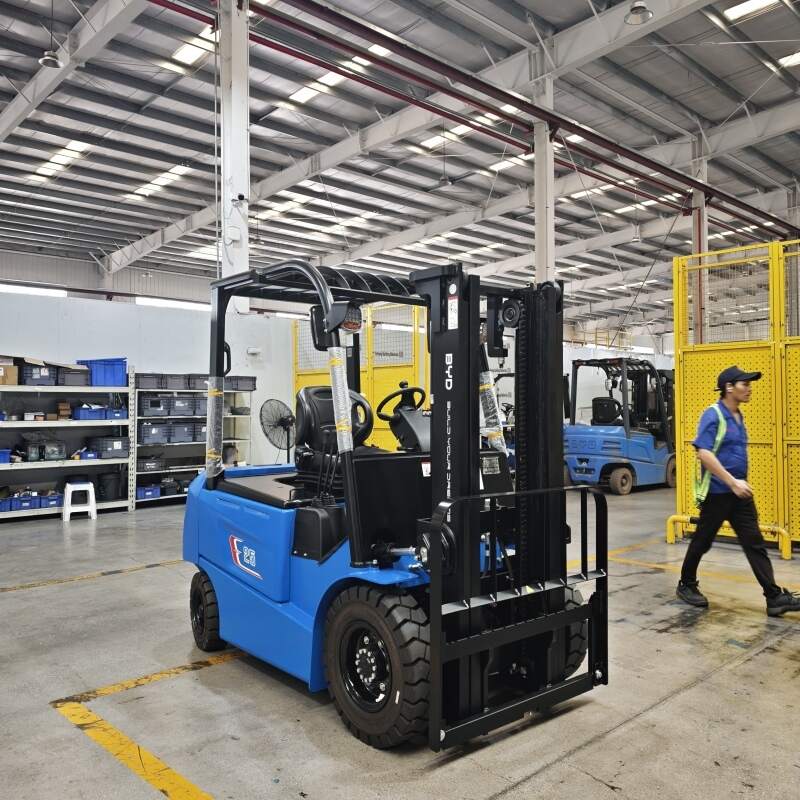
Electric forklifts have gradually become one of the most widely used material handling equipment in modern logistics and manufacturing warehouses in recent years, as low-carbon and low-noise operation concepts are widely promoted across industrial scenarios. Many frontline warehouse operation and management personnel still have vague points in equipment application, maintenance and safety control, which may bring unnecessary operation losses or hidden risks in daily work.
Core Advantages of Modern Electric Forklifts in Daily Operations
Compared with internal combustion counterparts, electric forklifts produce no exhaust emissions during operation, which makes them more suitable for closed indoor warehouse spaces with poor ventilation conditions. The overall noise level of the operation process is also relatively lower, which can reduce long-term auditory fatigue of frontline operators who need to work around the equipment for 8 hours or even longer every day. Most current electric forklift models have relatively simple operation structures, which reduce the learning threshold for new operators to get familiar with basic operation actions in a short period of time, to a certain extent helping the whole team reduce the waiting time of equipment post-configuration.
Routine Maintenance Protocols to Extend Equipment Service Life
Regular inspection is the core part of daily electric forklift management, and no special complex processing steps are required for most daily maintenance work. Operators can check the residual power status of the battery, the wear degree of the walking wheels, the flexibility of the lifting hydraulic system and the normal function of all safety warning lights before starting the machine every shift. It is not recommended to leave the battery in complete power loss status for a long time after operation, which may affect the overall cycle performance of the power system in long-term use. Personnel should also wipe the accumulated dust and sundries on the surface of the equipment body regularly, to avoid debris entering the heat dissipation gap of the power component and affecting the normal heat dissipation effect.
Standard Operation Specifications to Reduce Hidden Safety Risks
Before official loading and handling work, operators should confirm that the load weight is within the rated load range of the equipment, and avoid frequent sharp turns or sudden braking actions when driving on smooth indoor ground. When carrying goods at a high lifting position, operators should try to keep the driving speed at a relatively low level, to reduce the risk of goods slipping and falling from the forks. After the daily operation work is completed, operators should lower the forks to the lowest position, turn off the power supply, and park the equipment in the designated fixed parking area inside the warehouse. Following these basic application and management rules can help enterprises give full play to the use value of electric forklift equipment in daily material handling scenarios, and bring more stable support for the smooth operation of the whole warehouse logistics system.


