
 简体中文
 Русский
 Français
 Português
 Español
 لالعربية


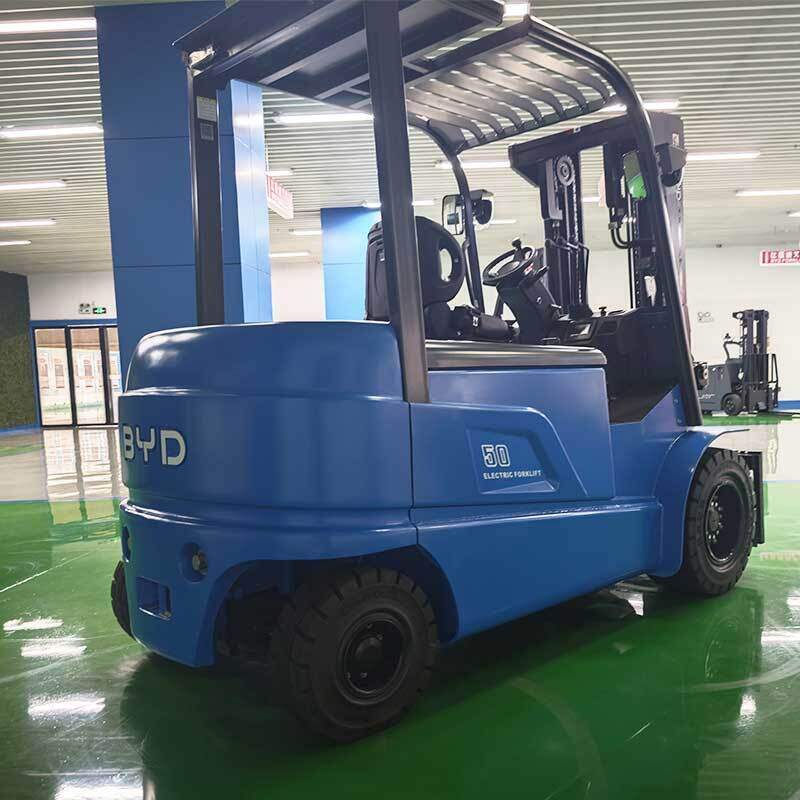
Against the background of growing demand for low-carbon logistics operations, electric forklifts have become one of the most widely deployed material handling equipment in indoor warehouses, manufacturing workshops and cold storage scenarios in recent years. Compared with traditional internal combustion counterparts, such equipment features lower operation noise, zero tail gas emission and relatively low long-term use cost, which fits the development trend of green logistics perfectly. Mastering correct use, maintenance and performance optimization methods can help operation teams give full play to the advantages of electric forklifts in daily work.
Basic Standard Operation Guidelines
Before each shift of operation, operators need to complete a full pre-shift check, covering remaining battery power, brake sensitivity, steering flexibility, fork deformation status and warning light normalcy, so as to eliminate hidden risks in advance. During the operation process, users need to strictly control the load within the rated load range, avoid sharp acceleration, sharp braking and sharp steering when carrying goods, and keep a safe distance with surrounding personnel, shelves and obstacles. When driving on ramp sections, operators should keep the load facing the upward direction, and avoid turning on the slope to prevent slipping accidents.
Routine Daily Maintenance Notes
Routine scientific maintenance can effectively extend the overall service life of electric forklifts and reduce unexpected downtime. For the power battery module, operators should avoid overcharging and deep discharging below the allowable threshold, wipe the dust and liquid on the surface of the battery shell regularly, and check the tightness of the connecting terminals every fixed cycle. For the hydraulic system, users need to check the hydraulic oil level and seal status regularly, and replace the aging hydraulic oil according to the specified cycle to ensure the stability of the lifting and tilting function. Besides, checking the tire wear degree and cleaning the accumulated dust on the circuit connection parts on a regular basis can effectively reduce the probability of circuit failure.
Energy Efficiency Promotion Methods
Improving the energy use efficiency of electric forklifts can effectively extend the single-shift cruising range and reduce the overall operation cost. Operation teams can plan the handling route reasonably in advance to reduce redundant long-distance driving without load, and avoid frequent start and stop in congestible operation areas. Operators can also adjust the operation speed adaptively according to the on-site road condition, avoid long-time high-speed driving under no-load state, and cooperate with professional technicians to calibrate the equipment performance parameters regularly, to make the power output match the actual handling demand better. With standardized operation and refined maintenance management, electric forklifts can create stable and reliable material handling support for different application scenarios, and bring considerable comprehensive benefits for logistics and manufacturing enterprises.


