
 简体中文
 Русский
 Français
 Português
 Español
 لالعربية


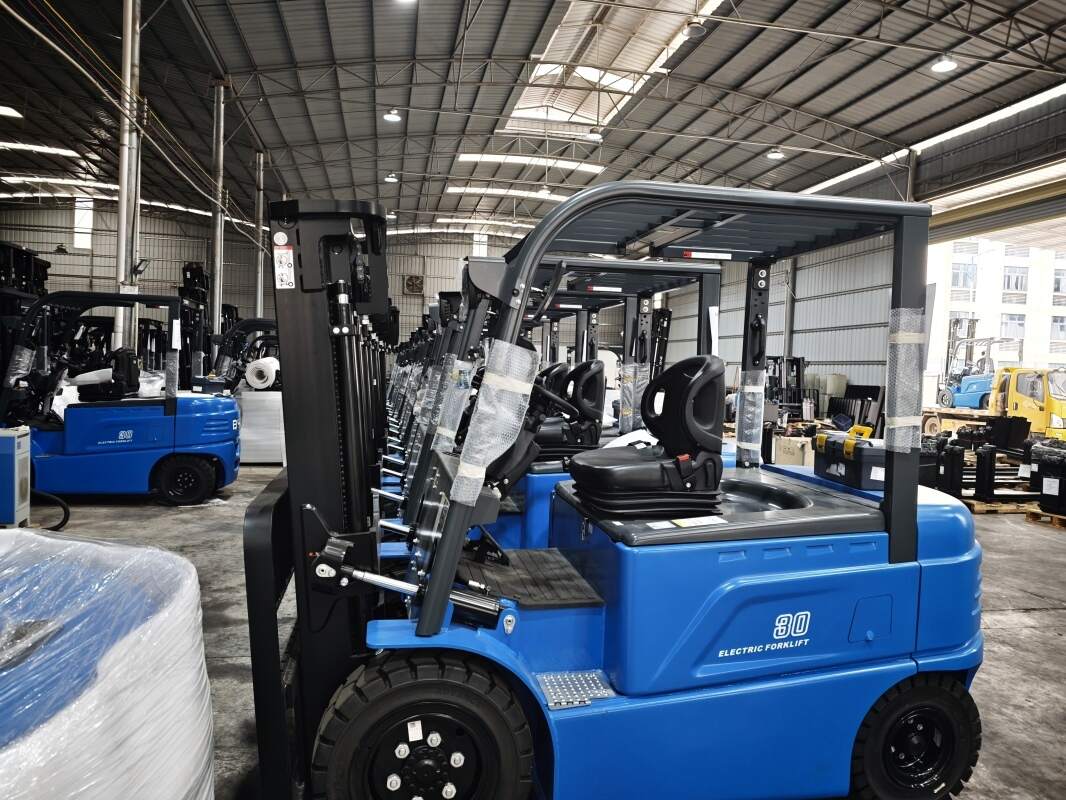
With the continuous development of modern logistics and warehouse management, electric forklifts have become one of the most widely used material handling equipment in various industrial scenarios. Understanding the core characteristics, operation norms and maintenance methods of such equipment can help relevant practitioners give full play to its use value and create better operational benefits.
Core Performance Characteristics of Electric Forklifts
Different from traditional fuel-powered handling equipment, electric forklifts rely on electric energy as the power source, which produces no local exhaust emission during operation, and generates significantly lower working noise, so it can adapt to the closed working environment of indoor warehouses, cold storage and other special scenarios. The average energy consumption cost per unit operation is lower than that of fuel-powered products, and the overall structure is relatively simple, with fewer vulnerable moving parts, which can effectively reduce the daily consumption of wearing parts and bring more stable operation experience for long-term use.
Standardized Daily Operation Requirements
Before each shift, operators need to complete a full pre-operation inspection, including checking the remaining power, braking sensitivity, lifting mechanism flexibility and the integrity of safety warning devices. During the driving process, operators should avoid overloading beyond the rated load, keep a safe distance from surrounding personnel and stacked goods, and decelerate in narrow passages and turning areas. It is not recommended to park the equipment for a long time on a sloped section that exceeds the rated allowable gradient, so as to avoid accidental sliding and unnecessary property loss.
Routine Maintenance and Management Points
For the energy storage unit of electric forklifts, operators should avoid overcharging and excessive deep discharge in daily use, and arrange regular performance tests to master the health status of the unit in time. The surface of the equipment and the transmission contact parts should be cleaned regularly to remove accumulated dust and sundries, and the specified lubrication points should be filled with professional lubricating grease according to the use cycle. Once abnormal noise or unresponsive control is found during operation, the equipment should be shut down for inspection in time, and continue to use it after the hidden trouble is eliminated. Standardized operation and scientific maintenance can effectively extend the service life of electric forklifts, help enterprises optimize the material handling process, and achieve more stable and efficient warehouse operation.


