
 简体中文
简体中文 Русский
 Français
 Português
 Español
 لالعربية

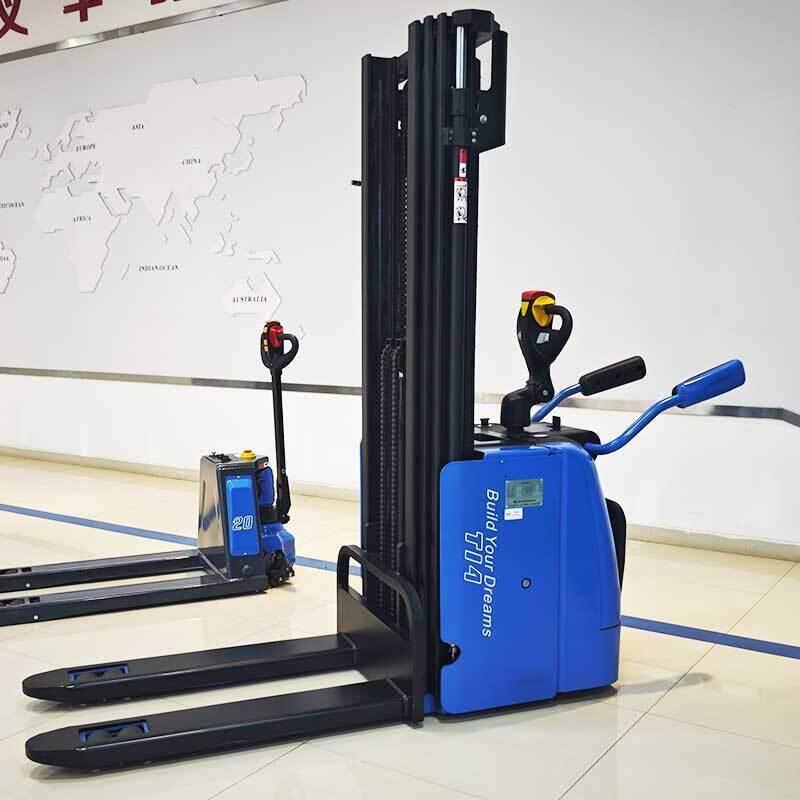
With the continuous development of modern logistics and indoor warehousing industry, electric forklifts have become one of the most widely used material handling equipment across different application scenarios, bringing notable changes to daily operation workflows. A systematic grasp of relevant usage knowledge helps operators give full play to the performance of the equipment while reducing unnecessary operating risks.
Core Performance Advantages of Electric Forklifts
Compared with traditional internal combustion powered handling equipment, electric forklifts produce no exhaust emission during operation, which meets the environmental protection requirements of closed indoor workspaces. The overall operation noise level is relatively low, which reduces long-term noise interference for on-site staff, and the vibration generated in the working process is also smaller, effectively lowering the risk of damage to fragile or precision cargos. Such characteristics make the equipment suitable for scenarios with high environmental requirements such as food storage, pharmaceutical warehouses and electronic component workshops.
Standardized Operation Specifications for Daily Work
All operators need to receive systematic pre-job training before using electric forklifts. Before each shift of operation, personnel shall complete basic checks including brake sensitivity, remaining power level, lifting structure flexibility and tire condition, and avoid starting operation with hidden dangers. When carrying heavy loads, operators shall not make sharp turns or drive at an overspeed status, slow down in advance when passing through slope areas or narrow channel corners, and strictly follow relevant safety regulations to forbid carrying non-working personnel on the vehicle. When leaving the equipment temporarily, operators should fully lower the forks, pull the hand brake, and cut off the main power supply if they leave for a long time.
Routine Maintenance Practices to Extend Equipment Service Life
Regular standardized maintenance work can effectively reduce the failure rate of electric forklifts and extend their stable service cycle. For the power battery part, operators should avoid frequent overcharging or over-discharging during daily use, keep the contact surface of the power interface clean and dry, and prevent conductive impurities from causing abnormal power consumption. On a regular basis, the sliding part of the lifting guide rail needs proper lubrication treatment, staff should check whether the wiring connectors of the circuit system are loose, clean the dust accumulated on the heat dissipation component in time, and avoid the equipment working in a humid environment for a long time.
Scenario Matching and Optimization Suggestions
When selecting and using electric forklifts, relevant teams can match the equipment parameters according to the actual operation conditions. For warehouses with relatively narrow passageways, equipment with appropriate body width can be selected to improve the passing efficiency. For scenarios with large cargo weight, it is necessary to select products with corresponding load capacity to avoid overloading. For long-term operation in low temperature outdoor environment, corresponding insulation protection measures for the power battery can be added, and the charging schedule can be reasonably arranged during peak operation hours to avoid unexpected interruption of operation caused by insufficient power. With proper operation and regular maintenance, electric forklifts can maintain stable working performance for a long time, effectively reduce the overall long-term operation cost of the material handling link.


