
 简体中文
简体中文 Русский
 Français
 Português
 Español
 لالعربية

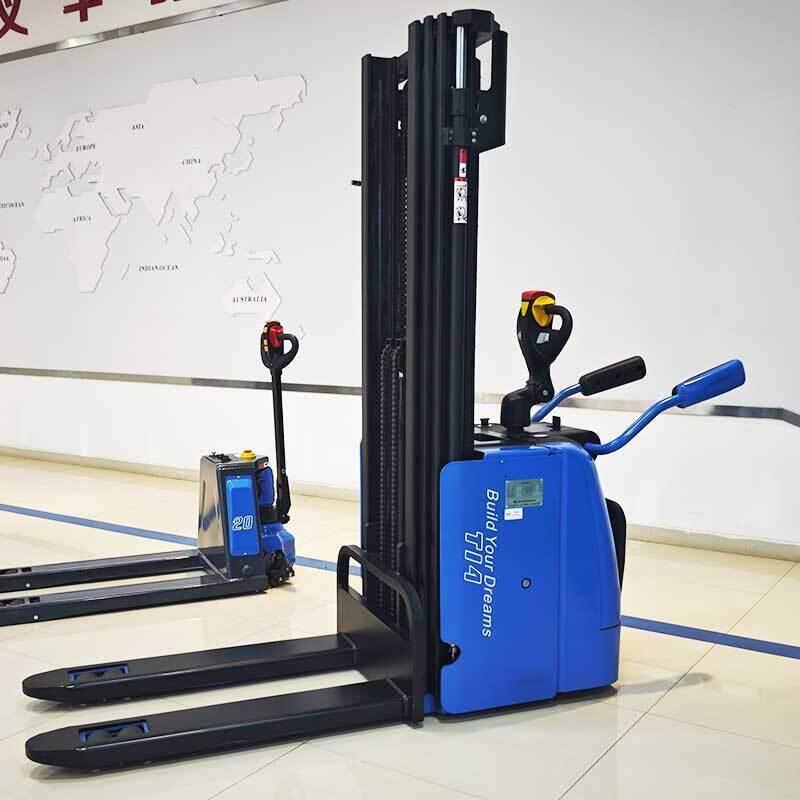
For large-scale retail distribution centres that process tens of thousands of SKUs and daily inbound and outbound orders, electric pallet trucks are the core material handling equipment that supports smooth operation of sorting, temporary storage and delivery links. Standardized daily operation not only effectively reduces unnecessary equipment wear, but also avoids on-site operation risks brought by high-density personnel flow and high-frequency handling demands.
Before starting each shift, operators need to complete the full pre-operation check flow strictly. First, check the remaining power level to ensure it can support the operation load of the whole shift, avoid sudden power off in the middle of the main passage which will block the whole operation line. Second, check the flexibility of the braking system, operation handle response status, and clean up the packaging paper, plastic straps and sundries wound on the load wheels to prevent slipping or deviation during driving. Third, observe the surrounding working area to confirm no scattered goods or obstacles in the planned driving route, and do not start the equipment with hidden dangers.
During on-site operation, operators need to keep the driving speed at a reasonable level according to the site traffic rules, slow down in advance at corners, shelf ends and blind areas of sight, and send out warning signals appropriately when meeting crossing personnel. It is not allowed to overload the equipment, the goods on the forks should be placed evenly, to avoid unbalanced load causing side tilt of the equipment. Operators should keep their body parts inside the running range of the equipment, do not stretch their feet or hands outside the vehicle body, and it is strictly forbidden to take other people on the operating electric pallet truck to avoid collision injury.
After the shift, operators need to drive the equipment to the designated parking and charging area, make sure it does not occupy the fire passage, main sorting passage and emergency exit. Pull up the parking brake, turn off the operation power, clean up the sundries attached to the vehicle body, and fill in the daily operation log truthfully, report any abnormal noise or small fault found during operation to the management team in time, so as to arrange maintenance as soon as possible. Regular operation skill refresh training for all operators can effectively help adapt to the high rhythm of retail distribution centre, reduce unplanned downtime, and support stable operation of the whole logistics network.


