
 简体中文
 Русский
 Français
 Português
 Español
 لالعربية


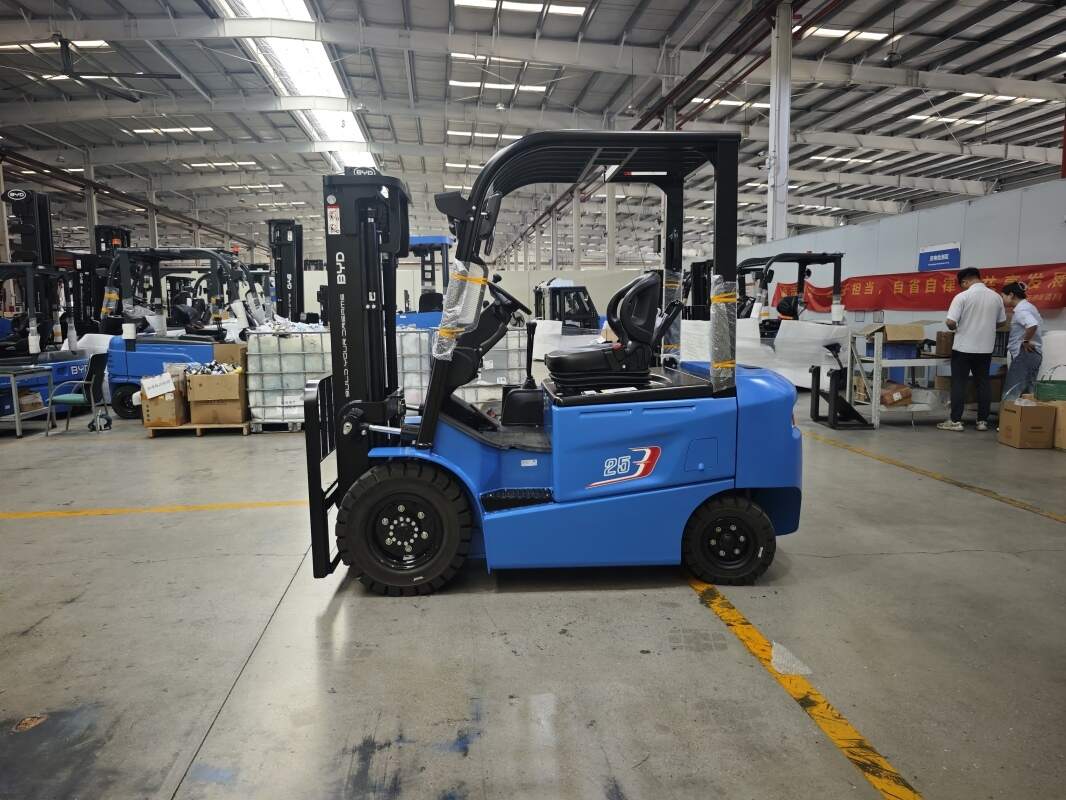
As the logistics and warehousing industry continues to pursue higher operation efficiency and lower environmental impact, electric forklifts have gradually become the mainstream choice for indoor and closed-site material handling scenarios in recent years. Different from internal combustion forklifts, electric forklifts rely on battery power systems to complete lifting, carrying and stacking tasks, and their operation logic and daily management logic have distinct characteristics that require systematic mastery for relevant practitioners.
Core Operation Specifications for Daily electric forklift Use
Before starting any operation, operators need to complete pre-inspection work including checking the battery power level, the flexibility of control handles, the wear condition of forks and the sensitivity of brake systems, to rule out hidden risks before formal operation. During the operation process, it is necessary to avoid sudden acceleration or sharp steering at high load, keep the load center within the allowable range marked on the equipment body, and do not carry out over-lifting or overloading operations that exceed the rated parameter of the equipment. When operating in narrow warehouse aisles, operators need to control the running speed reasonably, and pay real-time attention to the surrounding personnel and obstacle distribution to avoid accidental collision.
Routine Maintenance Measures to Extend Equipment Service Life
Regular standardized maintenance work can effectively reduce the failure rate of electric forklifts in daily use. For the power battery part, users need to follow the manufacturer’s recommended charging specifications, avoid long-term deep discharge or overcharging, and keep the surface of the battery pack dry and clean to prevent liquid leakage or short circuit risk. For the walking and lifting transmission system, regular check of lubricating oil level and tightness of fastening parts can reduce abnormal wear of mechanical components, and regular dust cleaning of the motor and heat dissipation system can keep the operation efficiency of the power system in a stable state.
Application Adaptation Tips for Different Warehouse Scenarios
In different application scenarios, the use mode of electric forklifts can be adjusted appropriately to give full play to its performance advantages. For low-intensity small warehouse scenarios with daily operation time less than 4 hours, users can arrange charging work during the off-peak period of operation, to avoid affecting the normal operation process. For large logistics distribution centers with high-intensity continuous operation, a reasonable rotation schedule for multiple battery packs can be formulated, to ensure that the equipment can maintain continuous operation ability during the peak period of goods in and out.
Sustainable Performance Optimization Direction for Long-term Operation
For long-term operation management of electric forklift fleets, enterprises can record the daily operation data of each device, count the energy consumption, failure frequency and operation intensity of different equipment, and adjust the allocation of equipment according to the actual goods handling demand, so as to further reduce the comprehensive operation cost on the premise of ensuring operation safety.


