
 简体中文
 Русский
 Français
 Português
 Español
 لالعربية


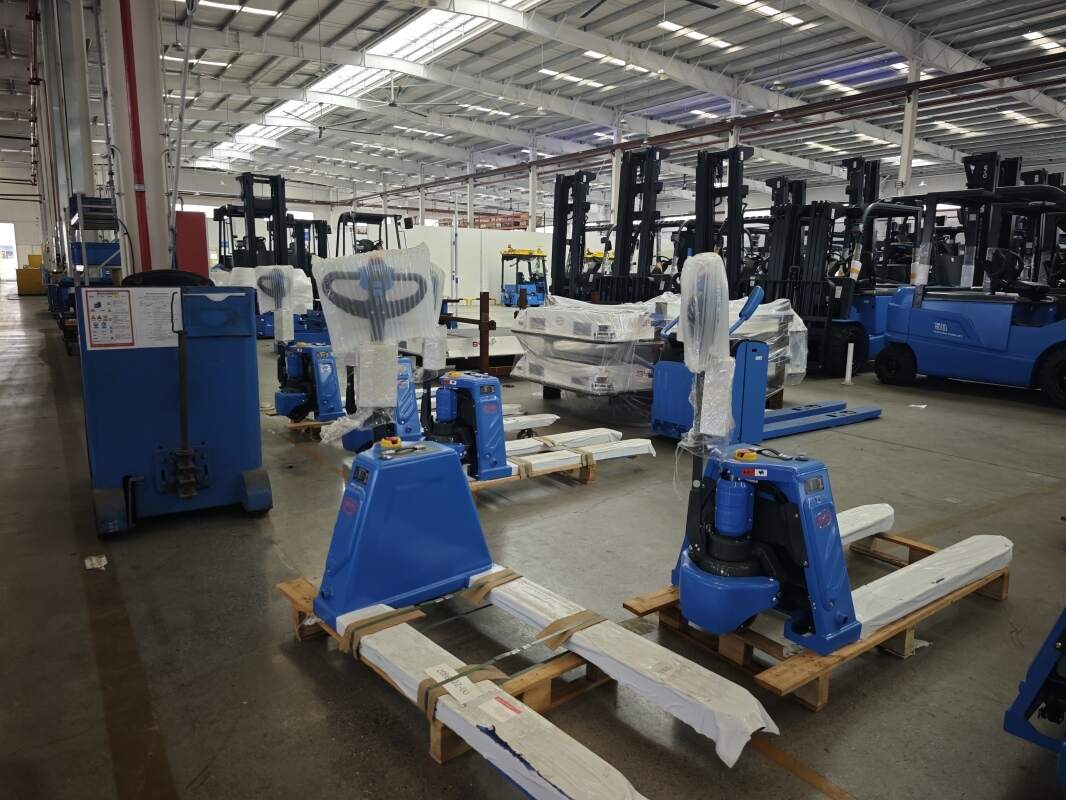
As low-carbon industrial logistics and refined warehouse management develop rapidly, electric forklifts have become the mainstream material handling equipment for most indoor operation scenarios, with wide applications in closed storage spaces, food production workshops and pharmaceutical distribution centers that have strict requirements for zero exhaust emission.
Standard Daily Operation Rules
Before starting each shift, operators shall complete necessary pre-inspection work, including checking the remaining power of power supply, the flexibility of braking system, the intact state of load forks and the clarity of alarm lights, to eliminate potential hidden risks before operation. During the operation process, operators shall adjust the running speed according to the ground condition, cargo weight and surrounding personnel density, avoid sharp steering or sudden braking when carrying heavy loads, and strictly follow the rated load label to avoid overloading operation, so as to prevent unnecessary damage to the load bearing structure. Operators shall not drive the equipment through deep accumulated water areas without special waterproof protection, and shall not leave the operation position without pulling the hand brake and lowering the load forks completely.
Routine Maintenance Essentials
Regular targeted maintenance can effectively extend the whole service cycle of electric forklifts, and reduce the unexpected failure frequency in daily operation. Operators shall wipe the dust and sundries on the surface of power components and motor parts at the end of each shift, check the liquid level state of the power supply regularly according to the operation manual, and replenish corresponding conductive medium if the level is lower than the standard line. The hydraulic lifting system shall be checked for oil leakage once a week, and the braking sensitivity shall be calibrated regularly to make sure the equipment can respond to stop instructions timely under different load conditions.
Long-term Operation Safety Optimization
For teams that use electric forklifts for a long time, they can arrange regular skill training for operators, sort out common operation faults and corresponding solutions, and set up obvious operation warning signs in the warehouse passing area, to remind pedestrians to keep a safe distance from running equipment. Users are not recommended to modify the power system or load limit parameters of the equipment without professional guidance, which will avoid affecting the original structural stability of the equipment.


