
 English
 简体中文
简体中文 Français
 Português
 Español
 لالعربية

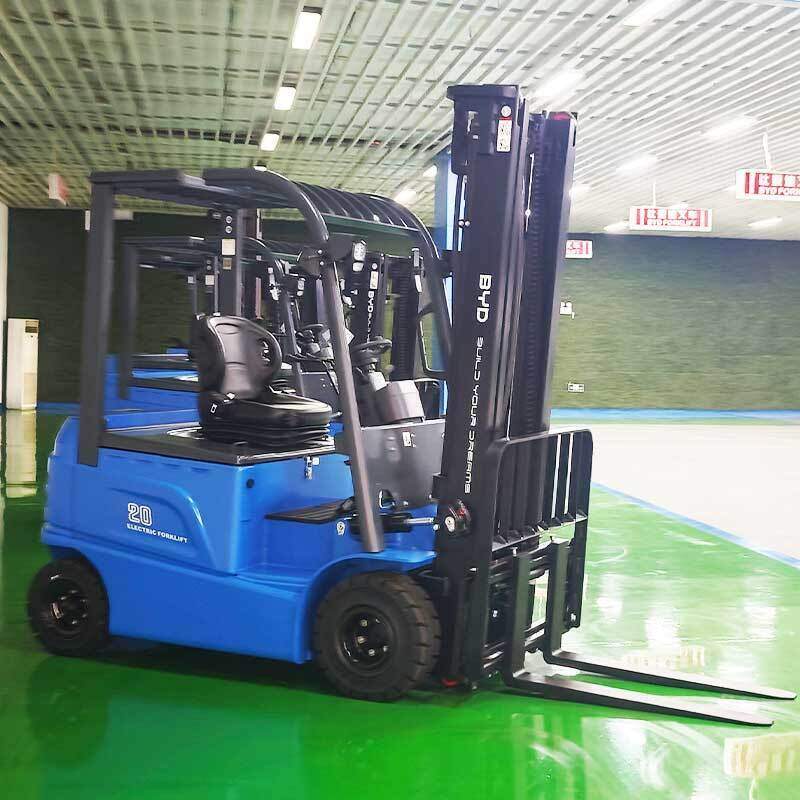
Electric forklifts are core handling equipment widely used in modern warehouses, manufacturing sites and distribution centers. The quality of training programs for relevant operators directly relates to on-site operation safety, equipment service life and overall logistics efficiency. Many enterprises only count participant attendance as the standard to judge training results, but this one-sided measurement cannot reflect the actual mastery of operation skills and safety awareness of trainees, so it is necessary to build a multi-dimensional evaluation system to verify the real value of training inputs.
First of all, complete the baseline data comparison before and after the training. Before the official launch of the training, organize all personnel to be trained to complete a unified pre-test, including basic theoretical knowledge of electric forklift structure, common hidden danger identification methods, and basic operation specification cognition, record the average score and common weak points of the pre-test as the baseline data. After the training, use the same dimension of test questions to carry out the post-test, compare the difference between the two sets of data, you can intuitively see the improvement of the trainees' theoretical knowledge reserve, and screen out the trainees who still have obvious cognitive loopholes to arrange targeted re-training. Do not take the attendance rate of the training session as the only evaluation indicator, because many personnel may not absorb the core content even if they participate in the whole training process.
Secondly, carry out scenario-based practical operation assessment. Set up assessment scenarios that are completely consistent with the daily operation environment of the site, including narrow passage cargo picking, ramp start and stop, high-position cargo stacking, unexpected power failure emergency disposal and other common operation scenarios. The assessor shall record the standard degree of each trainee's operation movements, the frequency of non-compliant operations, the time spent to complete the specified task and the integrity rate of the handled goods. This kind of assessment can avoid the deviation between theoretical memory and actual operation, and truly reflect the operation ability of personnel in the actual work scene.
Thirdly, track the long-term operation data after the training. Within 1 to 3 months after the end of the training, continuously collect the operation data of the trainee team, including the frequency of minor safety operation violations, the quantity of equipment maintenance caused by improper operation, the cargo damage rate in the handling process, and the average efficiency of single handling operation. These actual operation data are the core basis to judge the long-term effectiveness of the training, which can reflect whether the content of the training has been truly implemented in the daily operation habits of personnel.
Finally, collect multi-party feedback to form a closed loop of optimization. Conduct anonymous interviews with front-line operators and on-site supervisors, collect their feedback on the practicability of training content, the rationality of training arrangement and the parts that need to be supplemented, and feed the evaluation results back to the update of subsequent training courses, so as to continuously improve the pertinence and effectiveness of the whole training system. A scientific evaluation mechanism can not only help enterprises meet relevant safety management requirements, but also steadily reduce the hidden safety risks in daily operation.


