
 English
 简体中文
简体中文 Français
 Português
 Español
 لالعربية

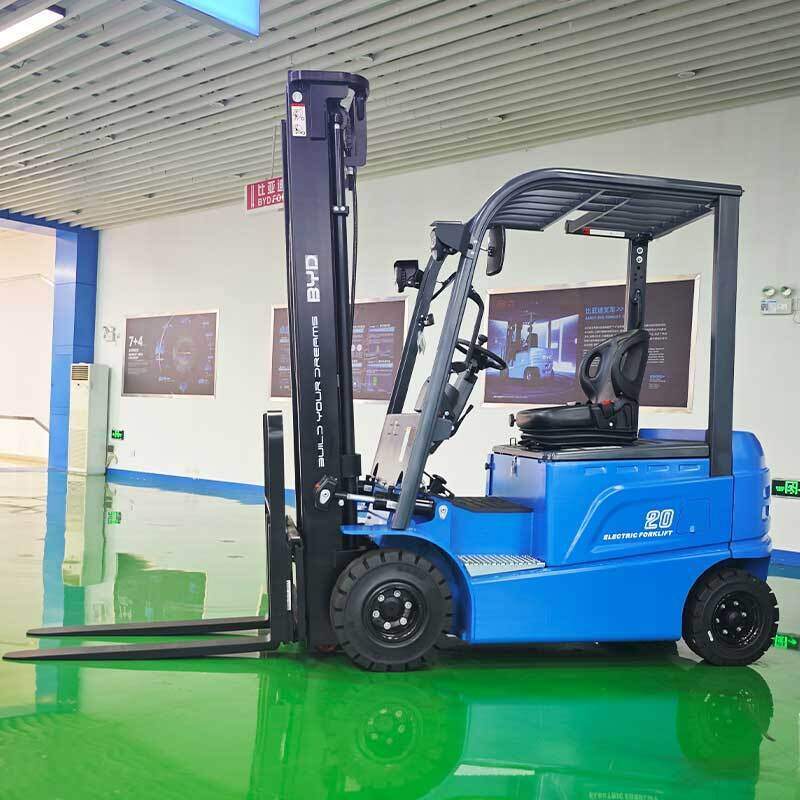
When electric forklifts are widely used in modern warehouse, manufacturing and logistics scenarios, handling fragile items such as precision electronic parts, glass products and craft supplies, or unstable loads including irregular stacked goods, unboxed long materials often brings hidden risks of cargo damage and even on-site safety accidents. Following standardized operation rules can effectively avoid unnecessary losses while ensuring operation efficiency.
Before starting the formal handling work, operators need to complete sufficient pre-operation preparation first. First, make a comprehensive assessment of the loads to be transported: confirm the weight, center of gravity position, packaging firmness of fragile goods, and the easy-to-shake parts of unstable loads. Adjust the distance between two forks of the electric forklift to match the width of the load bottom, to ensure uniform force distribution and avoid partial slipping of the goods. Then conduct a routine inspection of the electric forklift, check whether the lifting hydraulic system, braking system and steering function are in normal working state, and lay a layer of soft non-slip buffer material on the surface of the forks if necessary, to reduce the hard impact between the metal fork and the fragile packaging. Operators also need to plan the driving route in advance, stay away from sections with uneven ground, large slopes and dense pedestrian flow, and clear the obstacles on the driving path in advance.
In the formal operation process, operators need to maintain stable operation rhythm throughout the whole process. Keep the lifting height of the forks no more than 15 cm above the ground when driving, do not lift the load to a high position for moving, to prevent the unstable load from shifting due to the bump of the road surface. Do not implement sudden acceleration, sudden braking or sharp steering during the driving process, turn the steering wheel slowly when turning, and decelerate in advance to avoid the centrifugal force causing the fragile goods to tip over. When lifting or lowering the load, control the hydraulic regulating valve at a constant speed, do not lift or drop the goods rapidly. For loads with high center of gravity, the actual carrying weight should be properly reduced on the basis of the rated load of the electric forklift, to ensure the overall stability of the vehicle body.
When the handling work is finished, park the electric forklift in the designated safety area, lower the forks completely to the ground, and arrange the transported goods to the predetermined position stably. If the load shows signs of tilting during operation, do not adjust the direction sharply, slowly drive the vehicle to an open flat area, and then adjust the load position after putting it down stably. Never try to catch the slipping goods by hand directly, to avoid personal injury. Forming good standardized operation habits can not only protect the integrity of special loads, but also guarantee the personal safety of on-site operators.


