
 English
 简体中文
 Français
 Português
 Español
 لالعربية


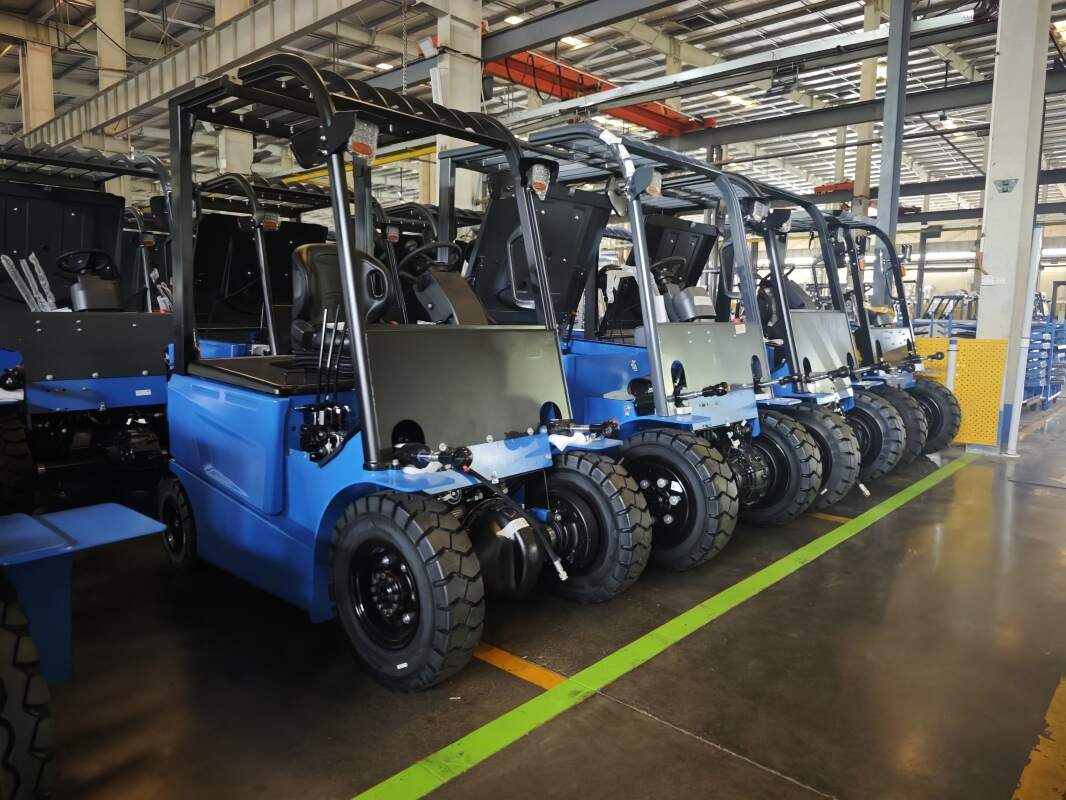
As the low-carbon development trend of modern warehousing and logistics industry continues to spread, electric forklifts have become one of the most widely used material handling equipment in various industrial scenarios, featured by relatively low noise emission and no direct exhaust pollution. Mastering correct use and management methods can help operators give full play to the use value of this equipment in daily work.
Core Safe Operation Guidelines for Electric Forklifts
Before starting the equipment, operators need to complete complete pre-operation inspection, covering the brake system, tire condition, battery power status and lifting mechanism flexibility. During the driving process, operators should keep the running speed matching the surrounding site environment, avoid sharp turns when carrying loads, and keep a safe distance from surrounding personnel and obstacles. When the equipment is in working state, no extra people other than the certified operator are allowed to ride on the vehicle, and the load weight should be controlled within the rated load range specified in the equipment manual, to avoid potential safety risks caused by overloading.
Routine Maintenance Points to Extend Service Life
Daily maintenance of electric forklifts does not require overly complex operations, but needs to be implemented in a persistent manner. For the power battery component, operators should follow the corresponding charging specifications, avoid long-term full power storage or complete power depletion before charging, and regularly clean the dust and attachments on the surface of the battery to maintain good heat dissipation performance. For the walking and lifting transmission components, regular lubrication and fastening inspection are required, and the worn parts should be replaced in time according to the actual wear condition, so as to reduce the failure rate in daily operation.
Practical Methods to Improve Energy Efficiency
Reasonable operation habits can effectively improve the energy utilization efficiency of electric forklifts and extend the single continuous working time. Operators can plan the driving route reasonably before the daily operation period, reduce unnecessary repeated driving and idling time. When the equipment is not in use for a short time, turn off the unnecessary power consuming components in time, and park the equipment in a dry and ventilated position with stable ground. Correcting bad operation habits such as frequent sudden acceleration and sudden braking can also help reduce extra power consumption. For different operation scenarios, users can adjust the corresponding management rules according to actual use demand, to maintain the good working condition of electric forklifts for a long time.


