
 English
 简体中文
简体中文 Русский
 Français
 Español
 لالعربية

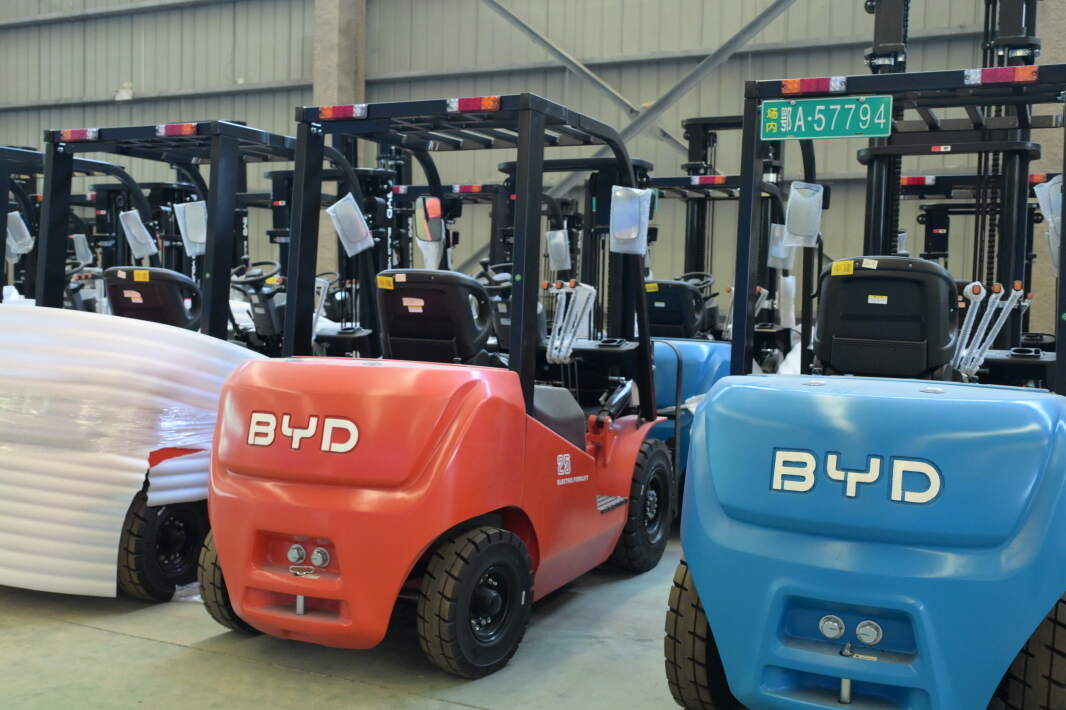
As the adoption of lithium-powered forklifts continues to rise across industrial material handling scenarios, the standardized quality-control procedures of production suppliers become a core foundation for long-term, safe equipment operation. Most formal suppliers build a full-coverage quality management system that runs through every link of production, and users need to understand these core contents to select reliable supply partners properly.
The first core part of quality-control procedures is pre-production raw material and component verification. Before any formal production procedure starts, all incoming components including lithium battery cells, structural frames, drive motors, hydraulic assemblies and control modules will go through strict, batch-based inspection. Each batch of materials will be checked for appearance integrity, parameter consistency and compliance with relevant industry safety standards, and unqualified batches will be rejected directly before entering the warehouse. All qualified materials will be marked with unique traceable labels to record all source information for subsequent follow-up.
The second core link is in-process real-time production monitoring. Each independent production station is equipped with dedicated quality check items that must be completed before the semi-finished product flows to the next procedure. For example, during lithium battery pack assembly, operators will conduct insulation detection, wiring firmness check and voltage consistency testing before the pack is transferred to the vehicle assembly line. For vehicle frame welding procedures, each welding point will be checked for cracks and structural firmness before subsequent painting steps. All operation and inspection records will be archived for each single unit of equipment to avoid unqualified semi-finished products entering the subsequent production chain.
The third core part is full-parameter finished product validation. After full assembly, each lithium forklift will go through a series of simulated working condition tests, including no-load continuous operation test, standard load lifting test, ramp traveling test, safety protection function trigger test and endurance performance verification. All test results must meet pre-set standard requirements, and any abnormal indicator will trigger a targeted troubleshooting procedure before the equipment can be marked as qualified.
The last part is post-delivery traceability and continuous optimization mechanism. The supplier will store all production and test data of each forklift for a long time, to support rapid problem locating in case of after-sales feedback. Regular data sorting will be conducted to optimize existing quality-control procedures, to adapt to changing actual operation requirements from different industrial scenarios.


