
 English
 简体中文
简体中文 Русский
 Français
 Español
 لالعربية

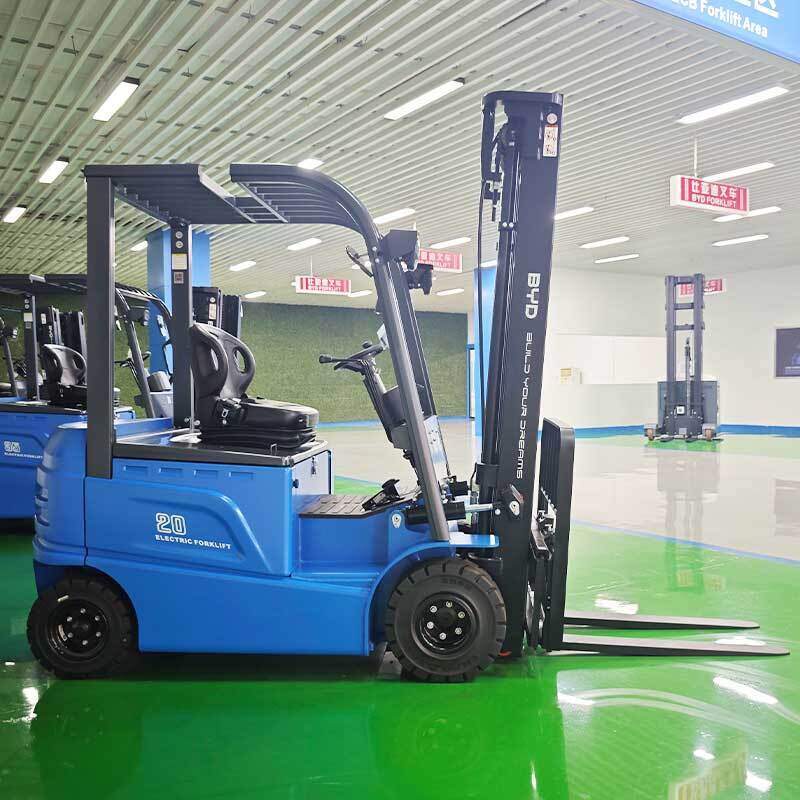
Modern warehousing operations usually adopt narrow aisle design to maximize storage capacity, which puts higher requirements on the steering control ability of electric forklift operators. Non-standard steering actions in narrow aisles may easily cause collisions between forklifts, goods and shelf structures, leading to unnecessary economic losses and safety hazards. This systematic training content guides operators to master standardized steering techniques to adapt to narrow aisle work scenarios.
Pre-operation preparation before steering practice is the basic premise to ensure safe and smooth operation. Before entering the narrow aisle work area, operators need to complete full inspection of the electric forklift steering system to confirm the response of steering components is stable without abnormal lag. Adjust the seat position and interior and exterior rearview mirrors to ensure the full view of the surrounding area of the forklift body. Operators should also walk through the target narrow aisle in advance to confirm the actual clear width of the passage, the position of hidden obstacles and the turning position at the end of the aisle, to avoid blind operation.
Core steering operation skills are the key part of the training. In the narrow aisle straight section, operators should keep the running speed below the specified safety value, and carry out micro-adjustment of steering angle slowly to avoid the deviation of the car body from the safe running track. When approaching the turning point of the narrow aisle, operators should decelerate in advance, grasp the steering force and steering timing accurately according to the actual turning radius of the vehicle and the size of the carried goods, to complete the turning action smoothly without scratching the shelves on both sides. For the short-distance position adjustment in the narrow aisle, operators can use the in-situ fine steering function with small amplitude of force to adjust the parking position accurately, and do not pull the steering operation lever sharply.
Daily training and assessment specifications help operators form stable operation habits. The training organizer can build a simulated narrow aisle scene in the open training area, set up different turning conditions and obstacle positions, and organize operators to carry out repeated simulation exercises. After each training session, the trainer should record the improper steering actions of the trainees, guide them to correct the bad operation habits in time, and gradually improve the stability of their steering operation in narrow aisle scenarios. Operators are also suggested to summarize practical experience in daily work, and form a set of steering operation logic that matches their own operation habits under the premise of complying with safety specifications.


