
 English
 简体中文
简体中文 Русский
 Français
 Español
 لالعربية

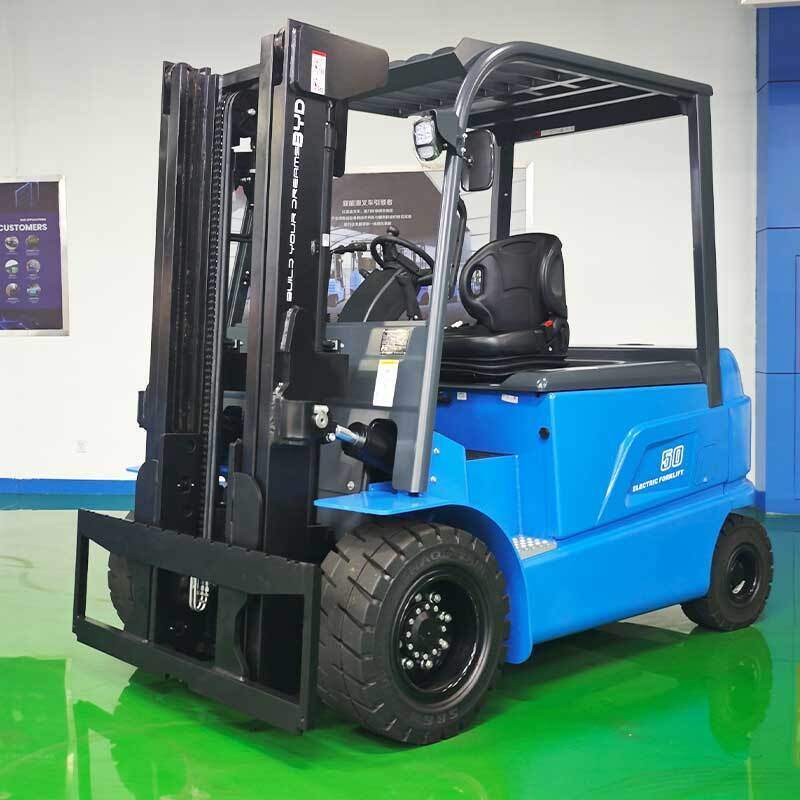
First, it is necessary to clarify the unique operational requirements of animal feed warehouses before using electric material handling trucks. Most of the goods stored in such warehouses are sealed bulk bags of compound feed, raw grain and nutritional additives, which are highly sensitive to oil pollution, exhaust emission and foreign debris intrusion. Unlike internal combustion powered handling equipment, electric material handling trucks produce no exhaust emission during operation, which can effectively avoid residual volatile pollutants adhering to the surface of bulk feed bags, to ensure the quality and safety of stored animal feed products.
Before starting each shift of handling work, operators need to complete targeted pre-inspection work adapted to the warehouse scenario. First, check the surface of the fork arms to make sure there are no sharp burrs or damaged protrusions that may tear the woven material of bulk feed bags. Second, confirm the sealing state of all hydraulic components, to rule out the risk of small amount of hydraulic leakage that may contaminate the feed bags. Third, clean up the dust accumulated on the motor and power component housing, to prevent fine feed dust from entering the internal structure and causing unexpected operation faults. Operators also need to adjust the fork spacing to match the common pallet size used for bulk bag storage in the warehouse, to ensure stable support when picking up loaded pallets.
During the formal handling operation, the traveling speed of the electric material handling truck should be kept within the low range specified for indoor warehouse work. The ground of the feed warehouse often has scattered fine feed particles, which will reduce friction and lead to slipping risk if the traveling speed is too high. When picking up bulk bag pallets, operators need to push the fork arms fully into the bottom gap of the pallet, and lift the pallet to 10cm to 15cm above the ground before starting to travel, do not transport pallets with bulk bags lifted to a high position for long distance. When stacking, operators need to align the stress points of the upper pallet and the lower stored pallet, to avoid the bulk bag falling and breaking due to unbalanced stress.
After the daily operation shift, operators need to wipe and clean the body of the electric material handling truck in time to remove the residual feed dust and particles in the body gaps. The charging process of the equipment must be carried out in the independent designated area far from the feed storage area, to avoid potential safety hazards. Following these operation notes can effectively reduce the damage rate of bulk feed bags, lower the hidden risk of feed pollution, and maintain stable and efficient operation of the warehouse.


