简体中文
简体中文 Русский
 Français
 Português
 Español
 لالعربية

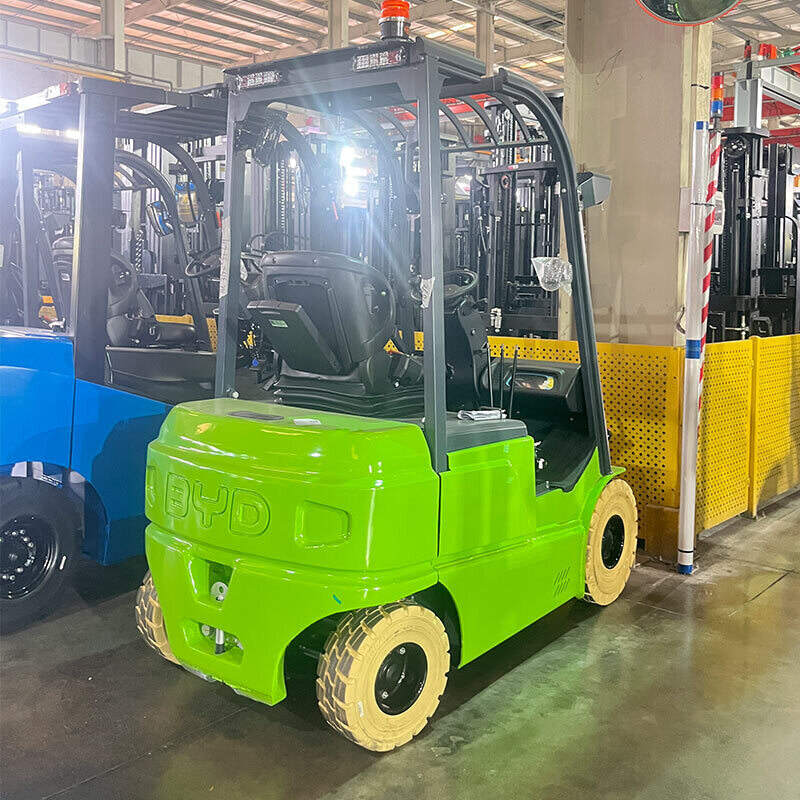
Against the backdrop of accelerated low-carbon transformation in urban logistics and refined operation of light industrial facilities, compact electric forklifts have gained growing popularity in recent years, as they effectively fill the supply gap of material handling equipment suitable for narrow spaces and low-load operation scenarios. The whole industry is exploring targeted optimization directions to better match diverse practical usage demands, and several clear development trends have emerged in current market practices.
The first notable trend is the continuous improvement of space adaptability for dense urban operation scenarios. Different from large-sized forklifts for heavy industrial ports or large warehouses, compact electric forklifts for urban use are mostly applied in narrow urban distribution centers, community freight stations, underground storage spaces and crowded downtown loading zones. Recent iteration of products further reduces the minimum turning radius and whole-vehicle footprint under the premise of guaranteeing basic rated load capacity, allowing the equipment to smoothly pass through access passages less than two meters wide, and complete stacking and loading work in very limited operation spaces.
The second trend is the further alignment of low-carbon operation performance with urban environmental management requirements. Most regional urban emission regulations have set strict restrictions on the use of fuel-powered handling equipment in downtown areas, and compact electric forklifts no longer produce exhaust emissions during operation. Current industry exploration also continuously optimizes the energy efficiency management system, effectively extends the single-battery life cycle, and supports fast charging and battery swap modes, which reduces the demand for dedicated high-power charging stations, making it more convenient for scattered urban operation entities to use.
The third trend is the expansion of multifunctional configurations to fit diversified light industrial demands. Light industrial scenarios including small processing workshops, packaging factories, electronic component storage areas often have diversified handling demands beyond basic stacking. The newly updated compact electric forklifts can be optionally equipped with multiple replaceable working attachments, to complete auxiliary operation work such as barrel carrying, non-slip cargo handling, and small parts sorting, avoiding the need to purchase multiple separate equipment for different operation demands, and effectively reducing the comprehensive input cost for small operation entities.
The fourth trend is the gradual popularization of user-friendly intelligent operation designs. Different from large industrial forklifts that require professional long-term certification training, most users of compact electric forklifts for urban and light industrial scenarios are part-time operators with limited operating experience. The current new generation of products simplifies the operation panel, adds visual operation reminder systems, and sets built-in safety protection mechanisms such as automatic speed limiting in narrow spaces, automatic overload warning, which effectively lowers the operation threshold, and reduces the occurrence of misoperation-related safety risks. Looking ahead, as the demands of urban distribution and light industrial refined operation continue to rise, compact electric forklifts will achieve more targeted performance optimization, to bring more stable, efficient and low-carbon material handling solutions for relevant usage scenarios.