
 简体中文
简体中文 Русский
 Français
 Português
 Español
 لالعربية

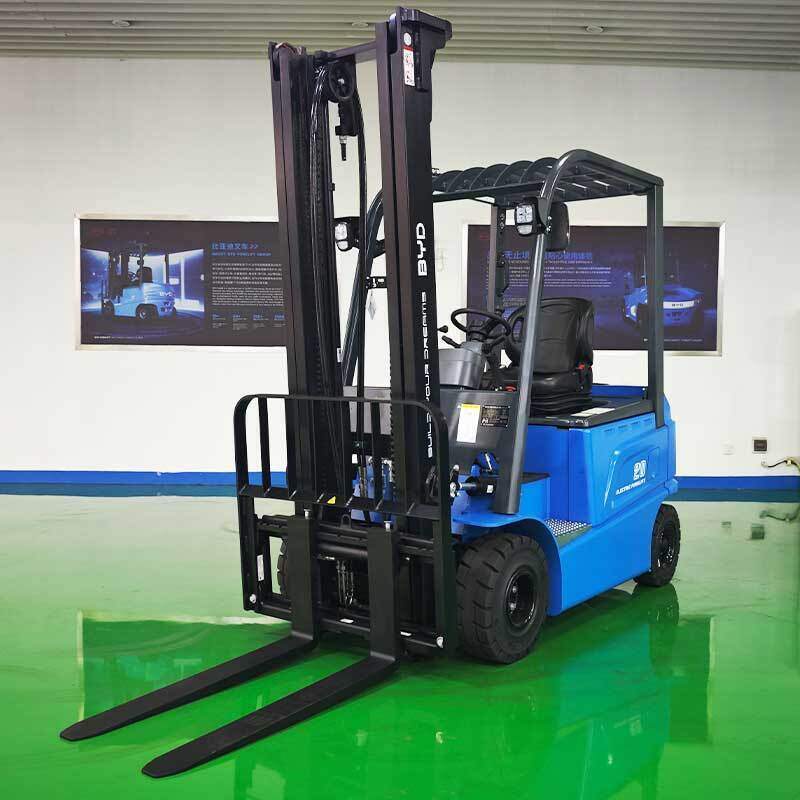
Against the background of continuous popularization of low-carbon industrial logistics equipment, electric forklifts have become one of the core equipment widely used in indoor warehouses, distribution centers and light industrial production workshops. Mastering scientific use and management methods can help operation teams give full play to the inherent advantages of such equipment, and create more stable output for daily material handling work.
Core Standard Operating Specifications for Daily Use
Before starting each shift, operators are suggested to complete a full range of pre-operation checks, including confirming battery power level, testing the sensitivity of braking and steering systems, checking whether the lifting mechanism runs smoothly without abnormal jamming. During the driving process, operators need to keep a safe distance from surrounding personnel and stacked goods, slow down at intersections and narrow passages, and avoid sudden acceleration or sharp steering which may cause unbalance of goods. Overload operation should be strictly avoided, as it will bring extra load to the power system and hydraulic structure, and increase the hidden risk of operational accidents.
Routine Maintenance Measures to Reduce Operating Loss
The power battery component is the core part of electric forklift that needs regular maintenance. Operators are supposed to avoid deep discharge and long-term overcharge, and arrange charging work in a dry, ventilated and temperature-appropriate environment. The surface of motor and heat dissipation components needs to be cleaned regularly to avoid accumulated dust blocking the heat dissipation channel. For wear parts such as tires and sealing rings of hydraulic system, regular inspection can help replace the aging parts in time before they malfunction. If the equipment needs to be idle for more than two weeks, the power should be disconnected properly and the battery should be activated at regular intervals to avoid spontaneous power loss.
Scenario Adaptation Tips for Higher Efficiency
For special working scenarios, targeted adjustment of operation strategies can further optimize the use effect of electric forklifts. In low temperature environments, preheating the power system for several minutes before formal operation can reduce the extra power consumption caused by low temperature. In high humidity working environments, the insulation performance of electrical contact points should be checked regularly to avoid potential safety hazards. When carrying out long-distance handling tasks in large warehouses, the operation team can plan the driving route in advance to reduce detours and no-load driving time, so as to make full use of the battery life of single charge. With standardized operation and systematic maintenance, the service life of electric forklifts can be effectively guaranteed, and the overall operating cost of the logistics link can be controlled at a reasonable level, matching the diverse material handling demands of different industrial scenarios.


