
 简体中文
简体中文 Русский
 Français
 Português
 Español
 لالعربية

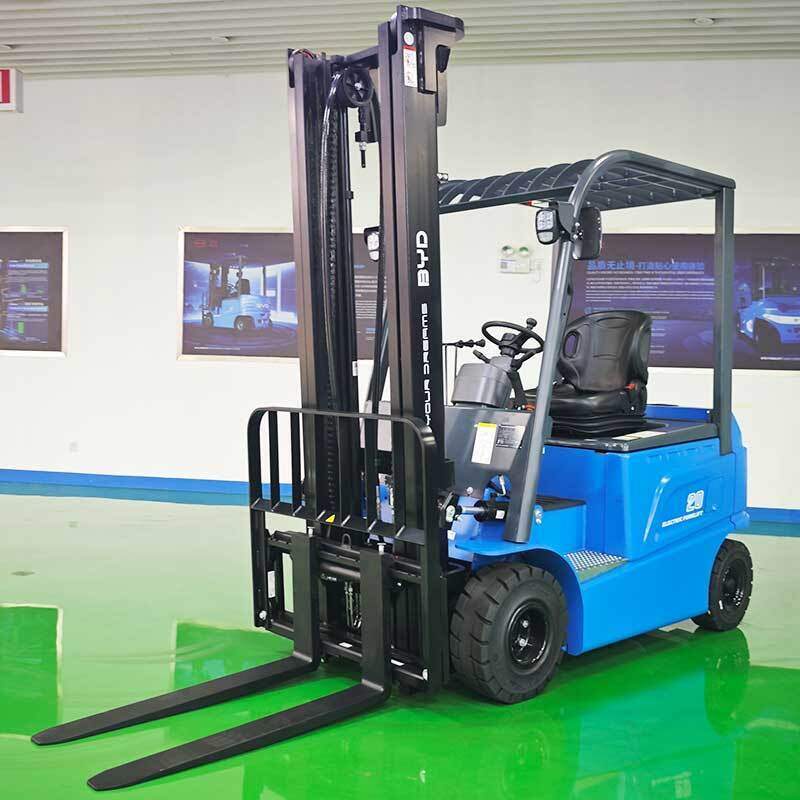
Electric forklifts are widely used in modern warehouse and material handling scenarios, and the standardized operation level of operators directly affects on-site safety, operation efficiency and equipment service life. Supervisors as the core role connecting management and frontline teams, their ability to monitor operator performance is the key to maintaining long-term stable operation order, so targeted systematic training for supervisors is very necessary.
The first stage of training focuses on popularizing professional knowledge matching electric forklift operation scenarios. Unlike internal combustion forklifts, electric forklifts have unique operation risk points such as battery daily maintenance specifications, low-speed passage requirements near charging areas, and no-load sliding restriction rules. The training should let supervisors master all relevant compliance rules for electric forklift management, pass the basic knowledge assessment before they can participate in subsequent practical skill training, to avoid blind judgment that does not conform to the characteristics of electric forklift operation.
The second stage of training teaches supervisors to build a multi-dimensional performance monitoring system, instead of only focusing on major operation accidents. They should be guided to split the daily operation behavior of operators into multiple measurable dimensions, including pre-shift vehicle inspection completion rate, driving route compliance, load lifting and placing standardness, abnormal situation response speed, and other quantifiable indicators. Supervisors are required to complete simple on-site records every shift, and give timely positive feedback or correction reminders for small irregular operations, instead of centralized traceability after hidden dangers evolve into safety accidents.
The third stage of training focuses on teaching effective two-way communication skills. Supervisors should avoid single punishment-oriented management methods, when they find non-standard operation behavior, they need to communicate with operators in a non-accusatory attitude, demonstrate the correct operation steps on site, and actively collect the practical difficulties encountered by operators in daily work, such as too narrow passage space, untimely equipment maintenance and other problems, then coordinate relevant departments to solve these problems, to reduce the occurrence of irregular operations caused by objective environment constraints.
It is also necessary to arrange regular recurring training for supervisors every quarter, update the latest operation management rules according to the actual operation situation of the site, share excellent supervision practices from different teams, and continuously optimize the performance monitoring system, to steadily improve the overall electric forklift operation level of the frontline team.


