
 简体中文
简体中文 Русский
 Français
 Português
 Español
 لالعربية

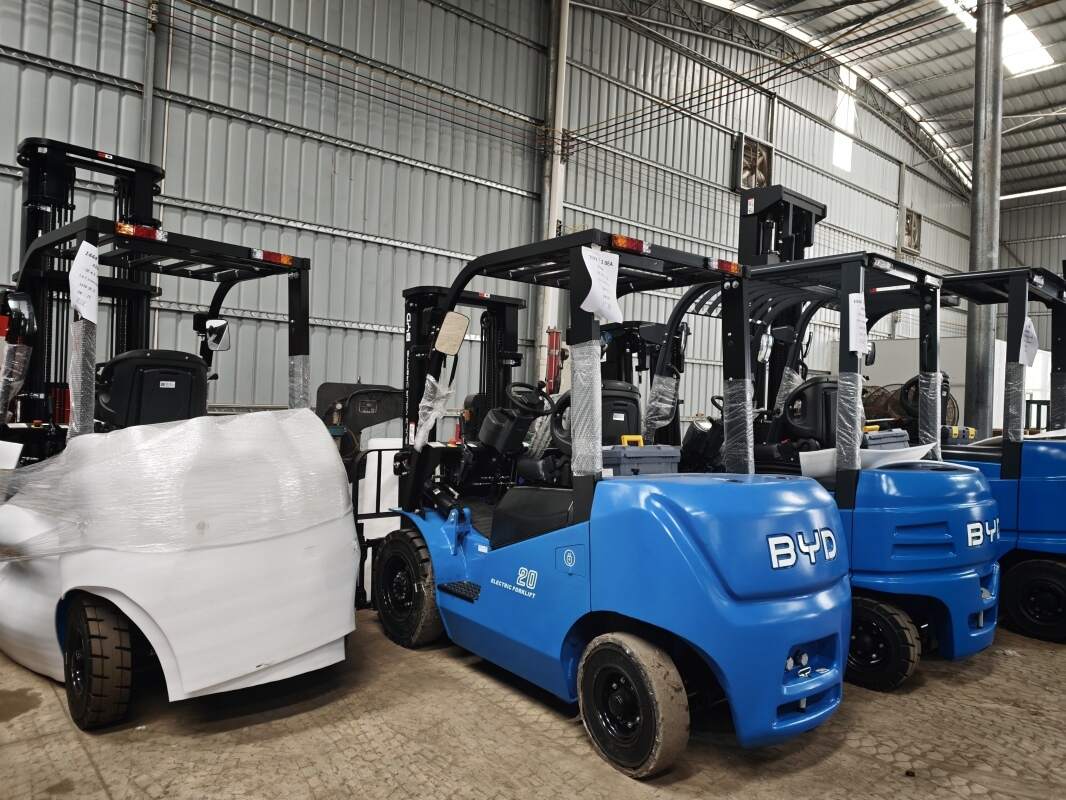
Many warehouse operation teams are turning to electric forklifts as core handling equipment in recent years, to adapt to stricter indoor environmental requirements and lower long-term operating cost expectations. As a low-carbon, flexible handling solution, electric forklift shows unique adaptability in various closed and semi-closed storage scenarios, which can meet the basic operation needs of most regular material sorting, stacking and short-distance transfer tasks.
Core Application Scenario Advantages of Electric Forklifts
Compared with fuel-powered handling equipment, electric forklifts produce no exhaust emissions during normal operation, which avoids the risk of harmful gas accumulation in poorly ventilated indoor spaces, making them suitable for scenarios with high requirements for air quality, such as food storage, pharmaceutical warehouses and electronic component workshops. The low noise level of the driving system also reduces sound pollution in concentrated working areas, which can improve the overall comfort of on-site staff working for long hours. Most models have compact body designs that can flexibly pass through narrow warehouse aisles, making full use of limited storage space to increase the number of available storage positions.
Practical Routine Maintenance Guidelines
Standardized daily maintenance work can effectively reduce the failure rate of electric forklifts and extend their stable service cycle. Operators can complete a basic full check before each shift starts, including checking the connection status of battery poles, observing the wear degree of solid tires, testing the sensitivity of the braking system and lifting mechanism, and confirming the remaining power level to avoid sudden power failure during operation. During the charging process, the equipment should be placed in a cool, ventilated designated area, and prolonged overcharging or complete deep discharge of the battery should be avoided as much as possible. It is also not recommended to keep the equipment under full load for a long time in static state, which will cause unnecessary loss to the driving motor.
Operation Optimization Skills for Higher Handling Efficiency
Standardized operation habits can not only reduce the probability of safety accidents, but also improve the overall operation efficiency of the warehouse. Before starting the handling task, operators can plan the driving route in advance according to the distribution of storage positions, so as to avoid repeated detours and congestion in busy aisles. When operating the lifting and tilting functions, keep the movement steady and avoid sharp acceleration, sudden braking or sharp turning actions under high load state, which will reduce the wear of key components and avoid the risk of goods falling. Teams can also arrange corresponding operation training for new staff, to make them fully familiar with the operation logic and safety boundary of the equipment before formal on-duty work. A set of standardized usage and management rules can help the equipment maintain stable performance for a long period, and create more tangible value for the whole warehouse material circulation system.


