
 简体中文
简体中文 Русский
 Français
 Português
 Español
 لالعربية

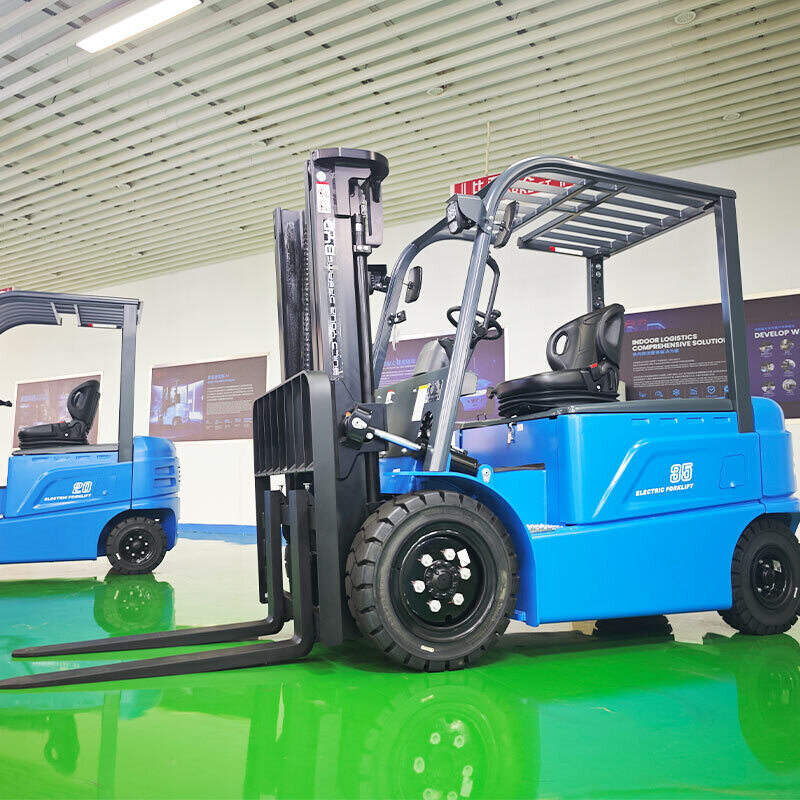
Many modern loading docks are designed with limited reserved operating space to maximize storage area and berth quantity, which often leads to frequent interleaving of passing personnel, stacked pallets, and parked trucks in narrow working zones. Improper operation of electric pallet trucks in such tight areas may easily cause minor collisions, cargo slipping, or temporary traffic jams that reduce overall operation efficiency. Carrying out standardized targeted maneuvering drills can effectively help operators form stable operation habits, avoid unnecessary operation errors, and create a safer working environment for the whole dock area.
Before the formal drills, all preparation work should be completed first. The training area will be cleared of irrelevant sundries in advance, and operators will use chalk and warning tapes to mark the boundary lines of the simulated tight dock, the position of fixed facilities such as door pillars, the edge of simulated cargo positions, and the parking reference points of loading trucks. All participants need to wear necessary labor protection supplies, and get familiar with the basic control characteristics of the electric pallet truck in advance, including the response sensitivity of the micro-operation lever, the braking distance under no-load and full-load conditions, and the trigger logic of the emergency stop button.
The formal drills are divided into three progressive stages to ensure operators can master practical skills step by step. The first stage is low-speed steady passing drill. Operators are required to drive the electric pallet truck through the simulated channel with a width less than 2.2 meters, keep the driving speed no higher than 1.5 km/h, pass three consecutive right-angle turning points marked in advance, and do not touch the boundary warning lines on both sides during the whole process. Through repeated 3 to 5 groups of exercises, operators can form the muscle memory of gently pushing the control lever, and get rid of the bad operation habit of accelerating or turning sharply. The second stage is precise loading and unloading alignment drill. Operators need to adjust the position of the truck body accurately when approaching the tail of the simulated loading platform, align the fork teeth with the socket of the pallet to be handled, control the forward and backward adjustment distance within 5 cm, and complete the alignment within no more than 2 reversing adjustments, so as to avoid repeated car moving that occupies the limited dock space and causes congestion for other working personnel. The third stage is emergency avoidance drill. During normal driving process, the trainer will randomly arrange a simulated pedestrian to cross the operation path from the side, requiring the operator to trigger the parking brake within 1 second, and adjust the direction slightly to reserve a safe gap of at least 30 cm, to ensure no collision with the simulated passing personnel or surrounding stacked goods.
After the whole drill, all participants can gather for a short review session, sort out the common problems in operation such as insufficient space judgment and delayed braking response, and adjust the drill details according to the actual layout of their own dock area. Regular re-drills every month can help operators maintain good operation awareness, steadily improve the operation efficiency in tight dock areas, and reduce the occurrence of various work-related safety risks.


