
 简体中文
简体中文 Русский
 Français
 Português
 Español
 لالعربية

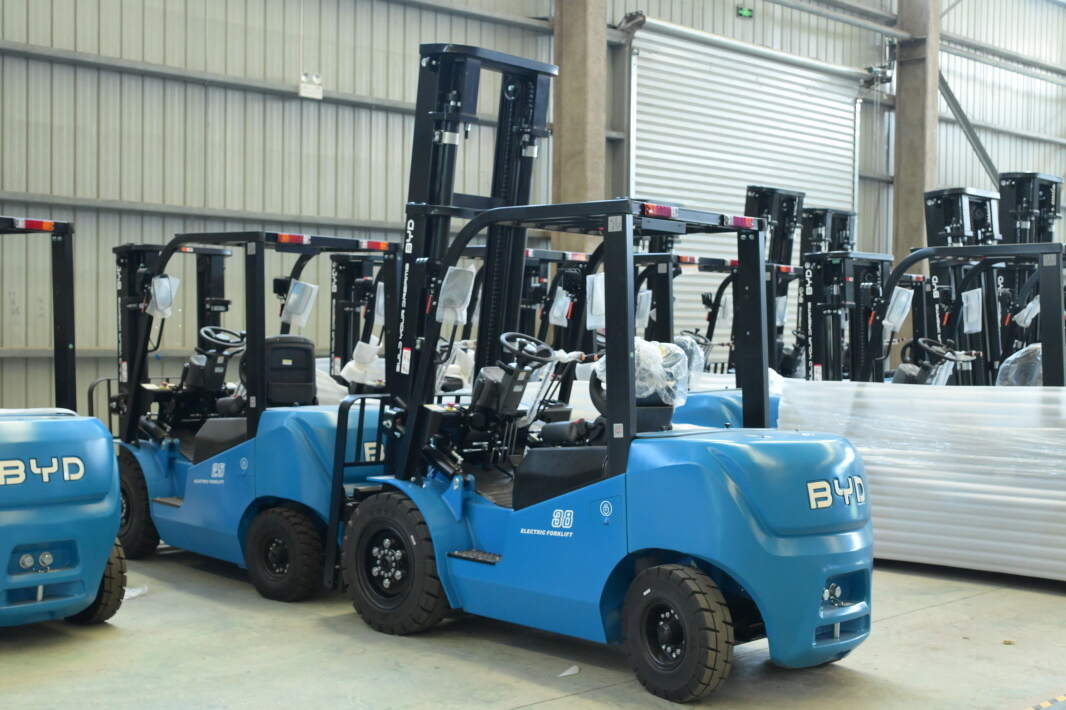
The 2-ton electric counterbalance forklift is one of the most widely applied material handling equipment in the industrial logistics field, with its design oriented to meet the daily lifting, stacking and short-distance transfer demands of medium-load goods. Reasonable analysis of its applicable working conditions and full mastery of core parameters can help enterprises arrange operation tasks properly, extend equipment service life and reduce unnecessary operation cost.
From the perspective of working condition matching, this type of equipment shows high adaptability to closed indoor scenarios including ordinary commodity warehouses, raw material storage areas of light processing workshops, and finished product sorting zones. As it produces no exhaust emission during operation, it will not cause air quality damage to closed spaces that have high requirements for environmental hygiene, and its low operation noise will not interfere with surrounding office areas or staff rest areas. It can also operate stably in semi-outdoor covered loading and unloading platforms, low-temperature cold chain storage zones with ambient temperature above -10℃, and other similar scenarios. For operation scenarios with long continuous transfer distance over 200 meters, users need to arrange proper charging plan according to actual battery configuration to avoid unexpected operation interruption. It is not recommended to use this type of equipment in open sites with heavy rain, serious accumulated water or road surface with slope exceeding 10%, which may cause potential safety risks and extra wear of core components.
From the perspective of core parameter overview, the standard rated load of 2-ton electric counterbalance forklift is 2000kg, with matched load center distance of 500mm, which means the equipment can keep stable load performance when the gravity center of goods is within the specified 500mm range. The standard maximum lifting height of common models ranges from 3 meters to 6 meters, and users can select customized mast configurations according to the actual height of goods shelves. The driving speed under full load status is usually controlled between 4.5km/h and 6km/h, while the no-load driving speed is usually kept between 7km/h and 9km/h, which balances operation efficiency and driving safety. Most of the products are equipped with electronic power steering system, which reduces the operation strength of drivers effectively. The matching battery capacity can support 6 to 8 hours of continuous operation under standard working conditions, and different battery types can be selected according to user's daily use frequency. When carrying out equipment selection, users can compare the parameter indexes with their own actual working condition demands, so as to find the most suitable configuration solution for daily operation.


