
 English
 简体中文
 Русский
 Português
 Español
 لالعربية


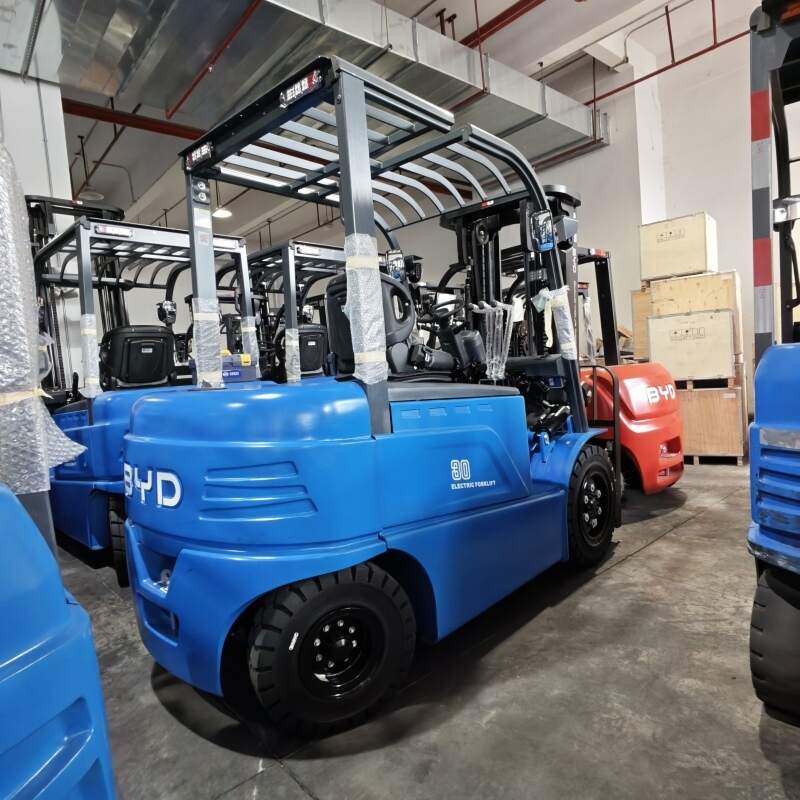
Against the background of low-carbon logistics development, electric forklifts have occupied an increasingly large proportion in the field of indoor and outdoor material handling, with advantages of low noise, zero local emission and relatively low long-term operating cost. Mastering systematic operation and maintenance knowledge can help relevant practitioners give full play to the equipment’s performance, reduce unnecessary wear and avoid unplanned downtime.
Core Pre-operation Check Protocols
Before starting each shift’s task, operators need to complete a set of standardized inspection procedures without omission. First, check the remaining power level of the power supply system, confirm that the power output meets the requirement of the scheduled handling task, and observe whether there is abnormal bulge or leakage trace on the surface of the power unit. Second, test the sensitivity of the braking system, steering mechanism and lifting control lever, and check the wear degree of solid tires to avoid safety risks caused by excessive wear. Third, check the surface condition of the cargo forks and the surrounding guard structure, confirm that there is no obvious crack or deformation that may affect normal use.
Standard Operation Specifications for Stable Performance
In the daily operation process, operators need to follow standardized operation logic to reduce extra loss of core components. Avoid frequent sharp acceleration and emergency stop during driving, keep a stable driving speed matching the surrounding site environment, and avoid sharp turn at high speed. Do not operate the equipment beyond the rated load range for a long time, and keep the cargo forks at a proper low position when moving, to prevent the goods from falling accidentally. When driving on sloped roads, keep the cargo side facing up the slope and do not turn on the slope surface to avoid side slip risk.
Routine Maintenance Skills for Longer Service Life
After finishing the daily operation task, operators need to complete simple maintenance work to keep the equipment in good condition. Clean the dust and sundries accumulated on the surface of the equipment and the heat dissipation structure in time, to avoid affecting the heat dissipation efficiency of the power system. Charge the power unit according to the specified operation requirements, avoid long-term over discharge or overcharge, and place the equipment in a dry and ventilated storage environment when it is not used for a long time. Arrange regular professional inspection for the circuit connection points, transmission lubrication points and brake performance, to eliminate hidden problems in the early stage. Proper use and maintenance can effectively extend the service life of electric forklifts, bring more stable operation experience for daily material handling work.


