
 English
 简体中文
简体中文 Русский
 Português
 Español
 لالعربية

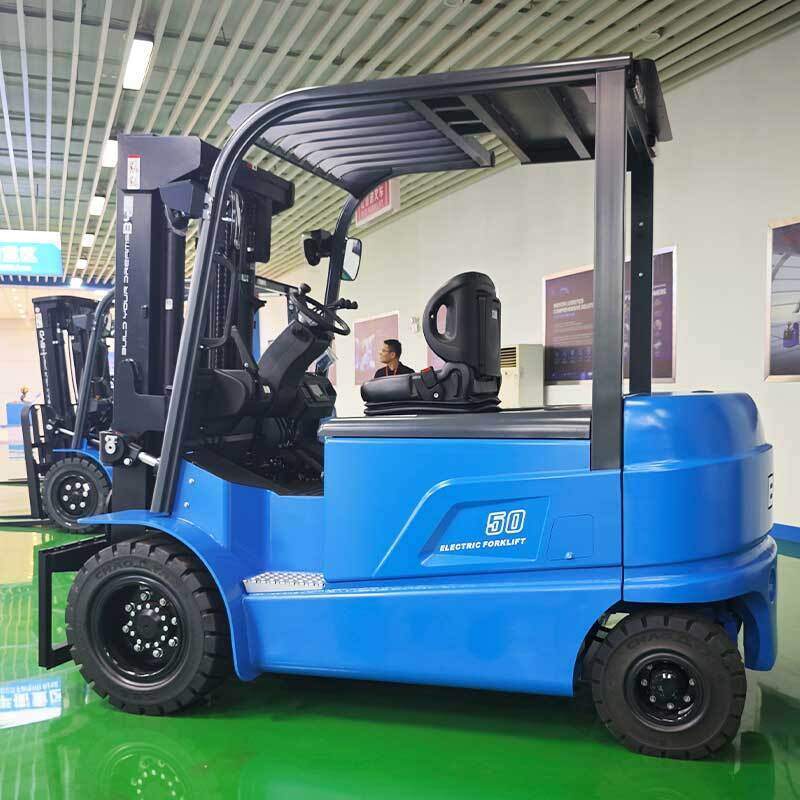
As the global logistics and industrial warehousing sector continuously focuses on low-carbon transformation and operation efficiency improvement, electric forklifts have become one of the most widely applied material handling facilities across different working scenarios. Many frontline operators and warehouse managers still lack systematic, practical supporting knowledge to maximize the use value of such equipment, while avoiding unnecessary component wear and potential safety risks.
Core Functional Advantages of Electric Forklifts
Compared with traditional internal combustion handling equipment, electric forklifts produce zero local exhaust emissions during the whole operation process, which avoids pollution to stored goods with high hygiene requirements, and creates a quieter working environment for indoor closed operation spaces. Its overall energy consumption cost per unit working hour is relatively controllable for long-term use, and no complex fuel supply pipeline layout is needed on the operation site, which reduces the corresponding site transformation investment for small and medium warehouse users.
Standard Daily Operation Specifications
Operators need to complete basic professional training before independent operation. Before each start-up, it is necessary to check the remaining power display, braking sensitivity and the sealing performance of the hydraulic lifting system, and confirm that there is no abnormal blockage in the surrounding operation passage. During driving, do not exceed the rated load capacity specified by the equipment, keep a low driving speed on the ramp, avoid sharp steering and sudden braking. When leaving the operation position for a long time, lower the fork and cut off the power supply to avoid safety hazards caused by accidental touch. Do not drive in the area where the water accumulation depth exceeds the threshold specified in the product manual, to prevent the circuit system from moisture damage.
Routine Maintenance Reference Suggestions
After daily operation, supplement the power in time, and try to avoid running the equipment until the power is completely exhausted. Regularly clean the dust accumulated on the motor heat dissipation grille, check whether the battery terminal has oxidation or loose traces, inspect the hydraulic oil level and tire wear degree every month. When it is found that the loss parts have obvious aging signs, replace the parts in time, do not run the equipment with hidden faults for a long time. Normative regular maintenance can effectively reduce the overall long-term operation cost of the equipment.
Scenario Matching Optimization Tips
Users can select electric forklifts with matching parameters according to their actual operation scenarios. For narrow aisle storage scenarios, models with smaller turning radius can be selected. For high shelf storage scenarios, configurations that support higher lifting height can be selected. For short-term outdoor operation scenarios, products with higher protection level can be selected. Sufficient pre-assessment of scenario demands can avoid unnecessary waste of equipment performance, and further improve the overall operation turnover efficiency.


