
 English
 简体中文
简体中文 Русский
 Português
 Español
 لالعربية

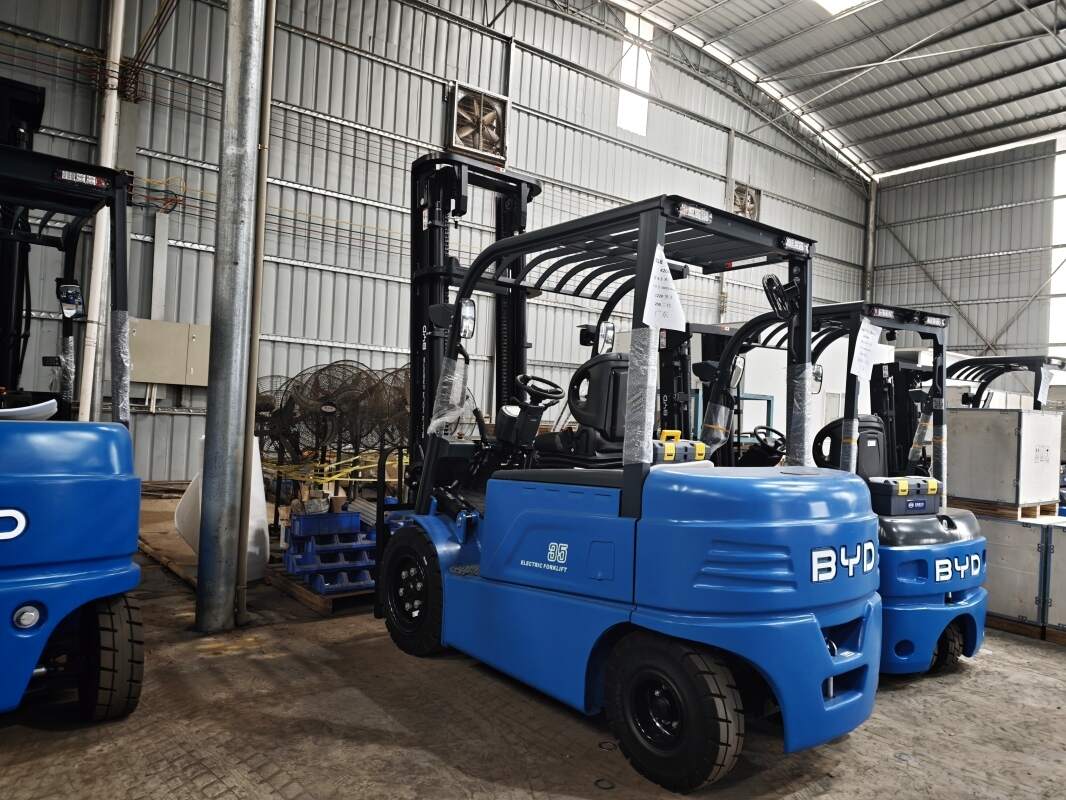
As lithium-ion forklift batteries are widely applied in logistics, manufacturing and warehouse scenarios, the standardized design of dedicated charging areas has become a core link to eliminate potential safety hazards in daily operation. Reasonable charging area design can effectively avoid common risks such as heat accumulation, accidental collision and uncontrolled fire spread, and create a stable working environment for operators.
First of all, layout and space planning should follow basic safety principles. The dedicated charging area should be set in a relatively independent area far away from flammable and stacked sundries, with obvious physical isolation facilities separated from the normal goods handling and pedestrian passage area. The ground of the charging area should be made of non-slip, corrosion-resistant and non-combustible materials, and the reserved space can meet the requirements of normal forklift parking, charging plug insertion and removal, and emergency evacuation, to avoid crowded operation or accidental collision between vehicle body and charging equipment. The width of the special access to the charging area should not be less than 1.5 meters, to ensure that personnel can leave the scene quickly in case of unexpected conditions.
Secondly, the ventilation and thermal management system should meet the use characteristics of lithium-ion batteries. During the normal charging process, lithium-ion batteries may release a small amount of non-toxic volatile substances, so the ventilation system of the charging area should maintain a sufficient air exchange rate per hour, to keep the ambient temperature in the area between 0 and 45 degrees Celsius. It is not allowed to set the charging area in a closed or semi-enclosed space without mechanical ventilation, and it is also necessary to avoid long-term direct sunlight on the charging equipment and batteries to prevent abnormal temperature rise. Temperature monitoring sensors installed in the upper space of the charging area can be linked with the ventilation system to automatically adjust the operating power of the ventilation equipment when the temperature exceeds the set threshold.
Thirdly, the deployment of fire protection and emergency facilities should cover all possible risk points. The entrance of the charging area should be equipped with an easily accessible emergency power-off device, which can cut off the whole power supply of the charging area immediately in case of abnormal conditions. The site should be equipped with fire extinguishing devices that are suitable for lithium-ion battery fire scenarios, and smoke and overheat detection alarms should be installed, whose alarm signals can be transmitted to the on-site duty management post in real time. Clear safety warning signs should be posted at the conspicuous position of the charging area to remind non-professional unauthorized personnel not to enter the operation area at will.
Finally, the supporting safety facilities should be matched with the actual operation needs. The charging area should be equipped with a special storage area for insulated operation tools, and a reliable grounding and electrostatic discharge system to avoid static accumulation. A small buffer area can be reserved next to the charging position for temporary placement of batteries that need daily maintenance, and the whole design scheme should refer to the local industrial safety management specifications for regular inspection and verification. Scientific and compliant charging area design can effectively reduce operation hidden dangers, extend the service life of lithium-ion forklift batteries, and ensure the personal safety of on-site operators.


