
 English
 简体中文
简体中文 Русский
 Português
 Español
 لالعربية

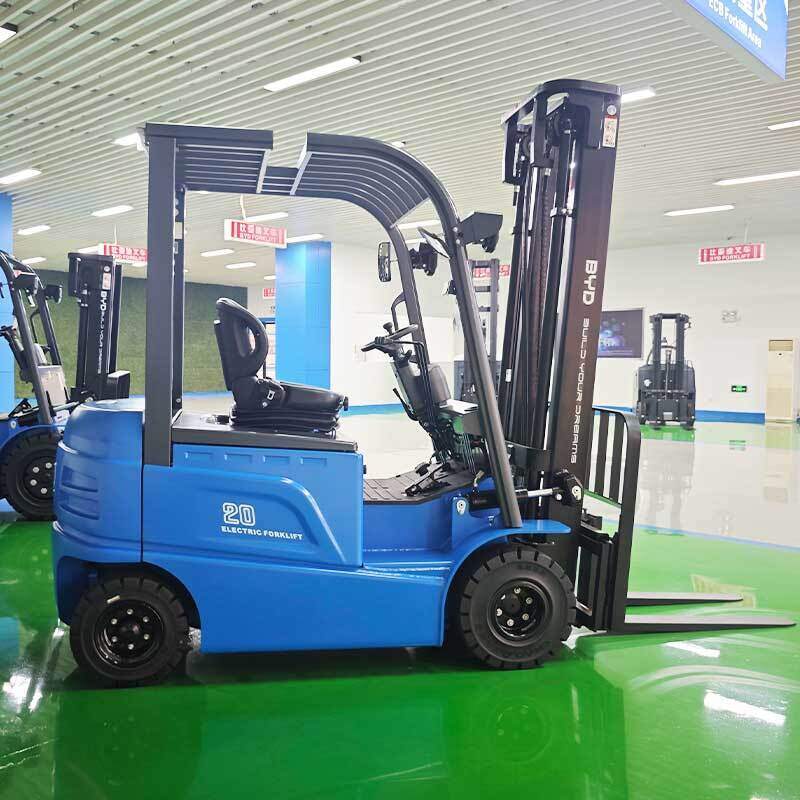
As one of the most widely used material handling equipment in daily industrial and logistics scenarios, 2-3 ton lithium-ion forklifts are favored by users for their stable load capacity, zero local emission and low operation noise. Different mast configurations, as the core functional component that directly determines the lifting performance, bring distinct application variations that fit diversified operation demands.
The standard duplex mast type, with limited free lifting height, delivers open and unobstructed view for operators during daily handling processes. This configuration is highly suitable for conventional scenarios including ordinary small and medium-sized warehouses with 3 to 4 meters high shelves, cargo loading and unloading at general docks, and ground stacking work in fast-moving consumer goods distribution points. It works stably under regular operation intensity of 4 to 6 hours per day, and requires relatively low daily maintenance, making it a practical choice for retail storage and neighborhood logistics stations.
The full free trip duplex mast configuration allows the forks to rise to a certain height without lifting the whole outer mast first. This special structural design avoids collision with the top of enclosed narrow space, so such forklifts are widely applied inside containers, closed van cargo holds, and cold chain storage areas with strict height limit. Operators can finish stacking and picking work smoothly even in space with 3 meters top height restriction, greatly expanding the applicable boundary of 2-3 ton lithium-ion forklifts in transit connection scenarios.
The triplex mast configuration supports maximum lifting height up to 6 meters, which is specially designed for high-shelf three-dimensional warehouses, large e-commerce fulfillment centers and manufacturing raw material storage zones. This mast type can help operators place or pick goods on shelves over 5 meters high, making full use of vertical storage space for enterprises. Users of this configuration need to ensure the ground flatness of operation area meets relevant requirements, and arrange corresponding operation training for staff to guarantee working safety.
When selecting the proper mast option, users do not need to pursue excessively high lifting height blindly. Combining actual conditions including operation space height limit, common stacking height demand, aisle width and daily operation intensity, the matched mast configuration can effectively improve working efficiency, reduce unnecessary energy consumption and lower long-term maintenance cost, bringing stable and reliable support for daily material handling work.


