
 English
 简体中文
简体中文 Русский
 Português
 Español
 لالعربية

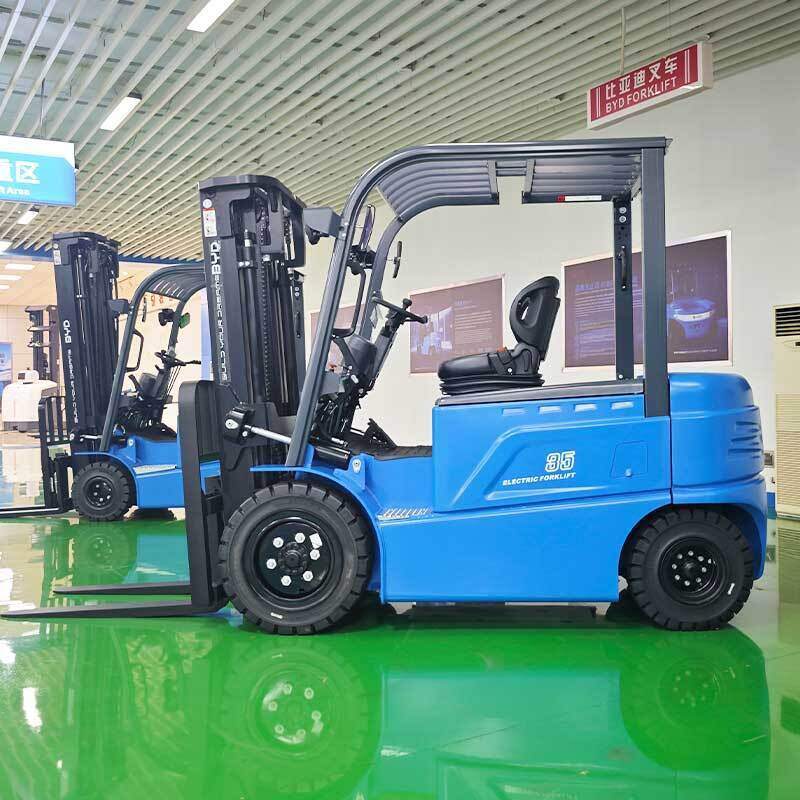
With the continuous promotion of low-carbon industrial logistics, electric forklifts have become one of the most widely applied material handling tools in indoor and closed working environments across many industrial sectors. Compared with traditional internal combustion forklifts, their operation characteristics and management requirements show obvious differences, so systematic mastery of relevant professional knowledge can help logistics and warehouse practitioners maximize the use value of such equipment.
Core Performance Characteristics of Electric Forklifts
Unlike fuel-powered models that rely on fossil fuel combustion to provide power, electric forklifts drive the walking and loading and unloading system through battery power supply, which produces almost no exhaust gas during operation, and the noise level in the working state is also significantly lower. Most models are designed with a compact body structure, which can adapt to the narrow channel space of standardized modern warehouses, and will not cause adverse effects on the air quality of closed storage areas that store food, daily chemicals or precision electronic components.
Standard Operation Specifications for Daily Use
Before each formal shift operation, operators need to complete a series of pre-inspection work, including checking the remaining battery power, the flexibility of the lifting and tilting system, the sensitivity of the braking device, and the normal operation of the lighting and warning lights in the working environment. During the operation, it is necessary to avoid rapid steering, sudden braking and overloading beyond the rated load range, and keep a sufficient safety distance from surrounding personnel, goods and shelf structures. When the equipment is parked, the forks need to be lowered to a position 10 to 15 cm from the ground, the power supply should be cut off in time, and it is not allowed to park the equipment in passages with slopes or near the fire equipment stacking area.
Scientific Routine Maintenance Points
Reasonable daily maintenance can effectively prolong the service cycle of electric forklifts and reduce the probability of unexpected failures. The battery module is the core component of maintenance, users need to arrange the charging process in strict accordance with the parameter requirements of the supporting charging system, avoid long-term over-discharge of the battery, and keep the surface of the battery shell clean and dry to prevent leakage of conductive liquid. The wear degree of the tire surface and the lubrication state of each transmission part should be checked regularly, and the sundries wound on the walking wheel should be cleaned in time to avoid abnormal vibration during driving.
Scenario-based Usage Optimization Suggestions
For different application scenarios, users can adjust the configuration and use mode of electric forklifts according to actual needs. For high-intensity continuous operation scenarios with more than 8 hours of daily use, users can configure backup battery modules to realize quick replacement, so as to reduce the waiting time caused by single battery charging. For the operation scenarios on the wet and slippery ground in the outdoor temporary unloading area, users can adjust the running speed of the equipment to a lower level to ensure the stability of driving. After long-term use, regular professional inspection of the power system and control loop can help potential hidden dangers be eliminated in time. As the supporting technology of electric industrial equipment continues to iterate, the application scope of electric forklifts will be further expanded to more diversified working scenarios.


