
 English
 简体中文
简体中文 Русский
 Português
 Español
 لالعربية

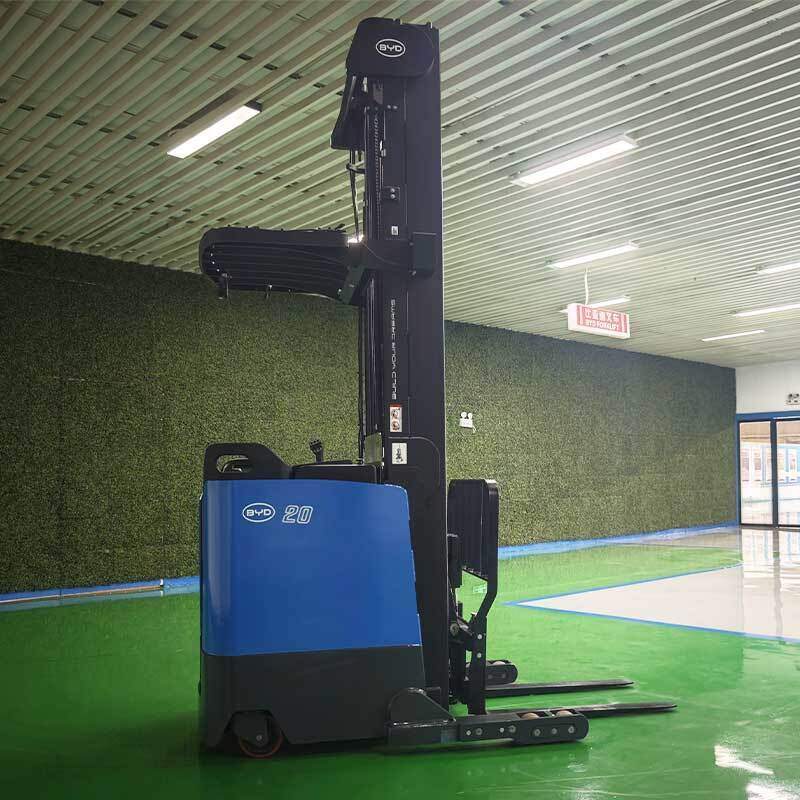
First, it is necessary to complete full pre-operation assessment before handling long or overhanging cargo with electric pallet trucks. In daily warehouse scenarios, long cargo such as profile, building board, piping and large equipment components often extend beyond the regular edge of standard pallets, which may break the original load balance of the vehicle if not handled properly. Operators should first confirm the total weight of the cargo, the total overhang length on each side, and the actual center of gravity position, to make sure the total loaded weight does not exceed 70% of the rated load capacity of the electric pallet truck, to reserve enough margin for dynamic driving safety. Check the integrity of the loaded pallet to make sure there is no crack, loose nail or local deformation that may weaken the supporting performance, and make obvious safety marks on the two outermost ends of the overhanging part to remind nearby passing staff to keep proper safe distance.
For core load-securing operations, operators should place the long cargo evenly on the central bearing area of the pallet first, to make the overall center of gravity of the whole cargo aligned with the central bearing mark of the electric pallet truck as much as possible. If the long cargo can only be arranged with unilateral overhang in limited storage space, the overhang length should not exceed half of the pallet’s own length, and extra balance counterweight can be added on the opposite side if necessary, to avoid unilateral tilting during driving. Then use qualified industrial binding straps to do cross winding between the reserved binding points of the cargo and the edge grooves of the pallet, tighten the straps fully and fasten the lock structure stably, and cut off the extra loose strap tail properly to avoid hooking other surrounding facilities during movement. For long cargo with smooth surface that is easy to slip, add non-slip rubber mats between the contact surface of cargo and pallet to increase friction, do not use ordinary transparent tape instead of special industrial binding parts for fixation.
During the whole transportation process, operators should keep low driving speed, avoid sudden acceleration or sudden braking that may cause load shifting. When turning, properly expand the turning radius to avoid the overhanging part hitting the shelves, aisle door or passing personnel, and keep the line of sight covering both ends of the overhanging cargo all the time. Do not steer the vehicle when it is running on sloped sections, and park the vehicle with overhanging cargo only on flat, obstacle-free areas that do not block the main operation aisle. After unloading, check the wear condition of binding straps and pallet structure in time, and arrange targeted operation training for relevant staff regularly, to keep the long cargo handling process stable and safe.


