
 English
 简体中文
 Русский
 Português
 Español
 لالعربية


Many logistics, manufacturing and warehousing enterprises that switch from internal combustion forklifts to electric forklifts often only focus on the initial purchase price of the whole vehicle, while ignoring the battery, as the core energy component, accounts for more than 40% of the total life cycle cost of the equipment. This field guide helps decision makers sort out all hidden expenses related to forklift batteries, and make more scientific input plans.
1. Upfront Procurement and Supporting Costs
The first part of total cost of ownership is not limited to the purchase expense of the battery unit itself. It also covers the matching charging facility deployment cost, the circuit transformation of the charging area, the safety protection configuration around the charging station, and the pre-job training cost for operators to master correct battery use specifications. Many enterprises that only compare the unit price of batteries on the market often omit these supporting investments, resulting in a big deviation in the initial budget.
2. Daily Operation and Maintenance Costs
This part accounts for the largest proportion of the full-cycle battery cost, including the electricity consumption for daily charging, the regular balanced maintenance of battery packs, the inspection of waterproof and dustproof structure, the replacement cost of easily worn accessories such as wire connectors and insulating gaskets, and the labor cost of special personnel in charge of battery management. Enterprises can arrange charging plans according to local peak-valley electricity price policies to effectively reduce daily power consumption expenses. Standardized maintenance can extend the service life of batteries by 20% to 30% under normal working conditions, avoiding extra cost expenditure caused by premature capacity attenuation.
3. End-of-cycle Processing and Residual Value
Most enterprises ignore this part of income and expenditure when calculating total cost of ownership. After the battery reaches the end of its service life in the forklift operation scenario, it can be transferred to the compliant energy storage scenario for echelon utilization, and the residual value can offset part of the previous investment. Standardized disposal in accordance with local environmental protection regulations can also avoid additional fines caused by irregular waste battery treatment.
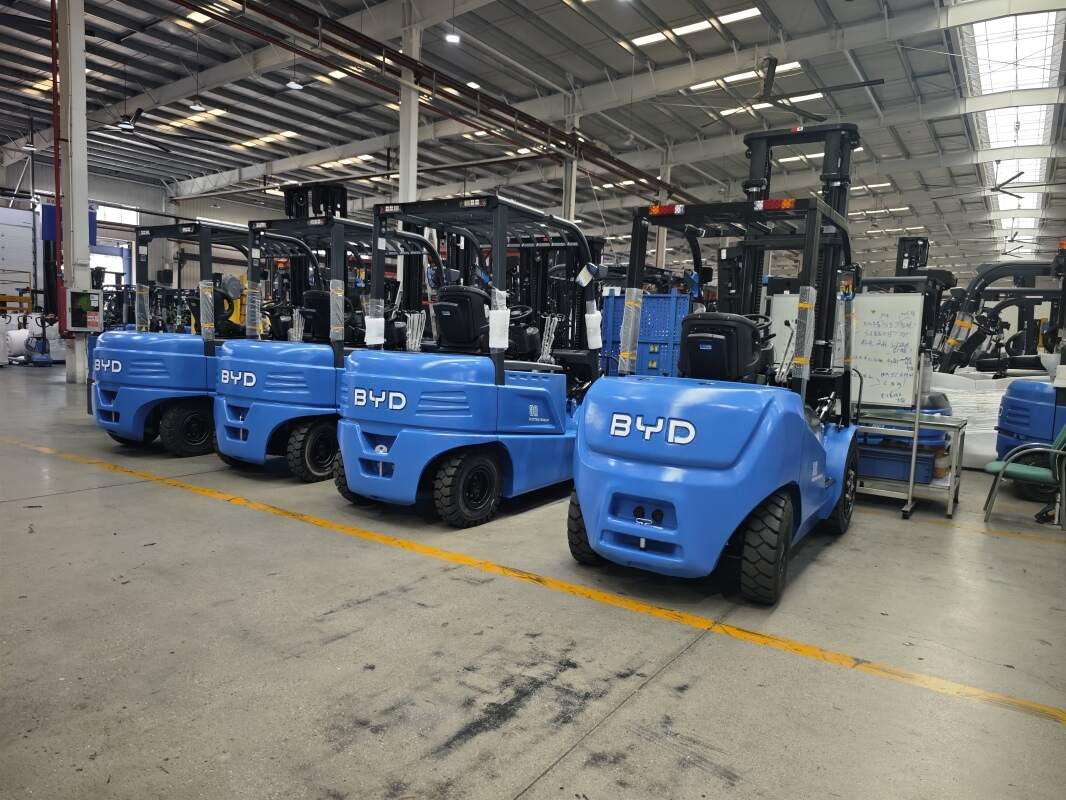
As a professional new energy enterprise, Jian Shu New Energy focuses on BYD electric forklifts, and can provide customers with customized full-lifecycle forklift battery total cost of ownership calculation and supporting operation guidance. If you have relevant demands for electric forklift battery cost control, you can contact us via [email protected] for more professional supporting solutions.


