
 English
 简体中文
简体中文 Русский
 Português
 Español
 لالعربية

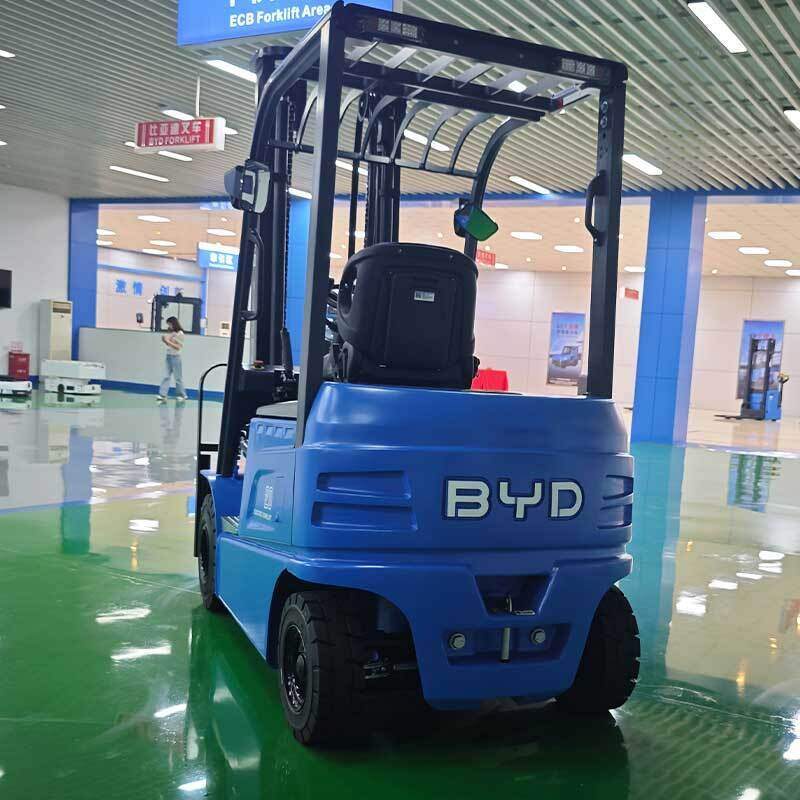
With the continuous upgrading of global intelligent logistics systems, warehouse layouts are no longer designed around fixed cargo storage and transportation modes, but are gradually evolving towards high density, flexible adjustment, low carbon emission and mixed human-machine collaboration modes. These changes have put forward new, targeted requirements for the R&D, configuration and operation of electric forklifts, which are the core equipment of warehouse material handling.
The first obvious change of future warehouse layouts is the widespread application of high-density storage areas, which reduce the reserved aisle width between storage racks to maximize the use of vertical space and site area. Unlike traditional warehouses that reserve more than 3 meters of wide access channels for handling equipment, the aisle width in this type of new layout is usually controlled below 2.2 meters. This puts higher requirements on the steering flexibility of electric forklifts, the smoothness of power output and the compactness of the whole vehicle structure, to ensure that the equipment can shuttle through narrow and dense areas stably without collision, and adapt to the operation needs of lifting goods to a height of more than 10 meters for access.
The second typical feature of future warehouse layouts is the modular dynamic partition design. Many e-commerce and order fulfillment warehouses will adjust the location and function of storage areas, picking areas, sorting areas and temporary stocking areas according to business peaks and low seasons, instead of maintaining a fixed partition structure for a long time. Under this variable layout, electric forklifts need to have strong scenario adaptability, support quick adjustment of operation parameters to match different goods types, pallet specifications and operation paths, and have sufficient continuous operation battery life to avoid frequent charging operations that interfere with the continuity of cross-area operation.
In addition, more and more new warehouses are designed as fully enclosed low-carbon operation spaces, which completely ban fuel handling equipment to control exhaust emission and indoor noise. In this layout, electric forklifts not only need to maintain the basic zero-emission operation attribute, but also need to support intelligent energy management docking, which can arrange the charging process in the low peak period of warehouse power consumption, so as not to increase the extra load pressure of the facility power supply system. For the human-machine mixed layout that will be widely popularized in the future, electric forklifts also need to be equipped with reliable perception and obstacle avoidance functions, to safely cooperate with automatic guided vehicles and walking operators in the shared operation space, without additional transformation of the warehouse layout to add physical isolation protection facilities. Matching electric forklift configuration with the planning logic of future warehouse layouts can help logistics operators obtain more stable long-term operation returns, and continuously improve the overall efficiency of material handling links.


