English
 简体中文
 Русский
 Português
 Español
 لالعربية


Djibouti City serves as a core logistics transfer hub in the Horn of Africa, with large demand for material handling equipment from local port terminals, public warehouses, freight distribution centers and manufacturing facilities. Most equipment operators used to make procurement decisions only referring to initial purchasing cost, and rarely calculate the full total cost of ownership covering the whole operation lifecycle.
When conducting TCO calculation for lithium forklifts, the first part to confirm is the initial procurement input. Compared with traditional internal combustion forklifts, lithium forklifts have relatively higher upfront purchasing cost, while they avoid a series of hidden expenditures that will occur in the later operation stage.
The largest gap between lithium forklifts and traditional fuel forklifts appears in daily operation cost. According to local operation data in Djibouti City in recent years, the market price of refined fuel keeps at a relatively high level, which makes the hourly fuel consumption of internal combustion forklifts take up over 70% of daily equipment operation cost. Lithium forklifts can be recharged with regular industrial power supply, the per hour energy consumption cost is far lower than fuel cost, and there is no additional expenditure for fuel transportation and storage management.
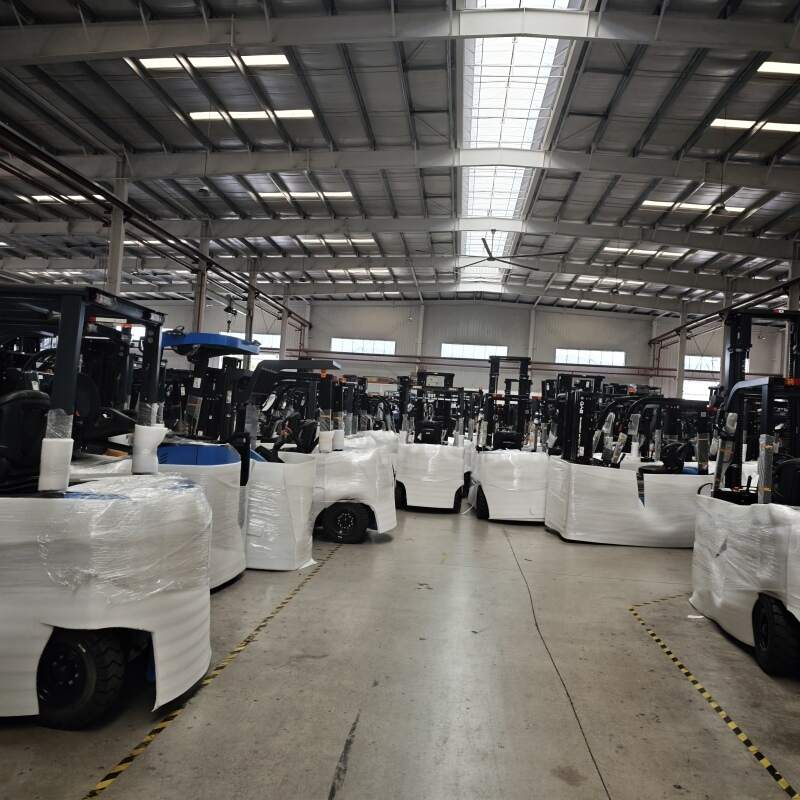
The maintenance cost advantage of lithium forklifts is also quite obvious. The power system of lithium forklifts does not have complex internal combustion structures, so there is no need to conduct regular oil replacement, filter element update and combustion chamber cleaning work. The annual maintenance expenditure of lithium forklifts is about 30% of that of traditional fuel forklifts, which also reduces the downtime caused by long maintenance waiting period, and guarantees the operation efficiency of tight schedule port transfer scenarios in Djibouti City.
For the residual value part, the power battery of lithium forklifts has a long cycle service life, which can support over 8 years of normal operation under standard working conditions, much longer than the 5 year service cycle of traditional fuel forklifts. The residual value of lithium forklifts after exiting operation is also higher than that of fuel forklifts in the same working condition.
Jian Shu New Energy, focusing on BYD electric forklifts, can provide customized TCO measurement services for different local enterprises in Djibouti City, combining with the daily operation hours, site environment and material handling demands of each client. For related service consultation, please send email to [email protected]. Making full lifecycle cost analysis before equipment procurement will help local logistics and operation enterprises effectively control long term operating expenses.