
 English
 简体中文
 Русский
 Português
 Español
 لالعربية


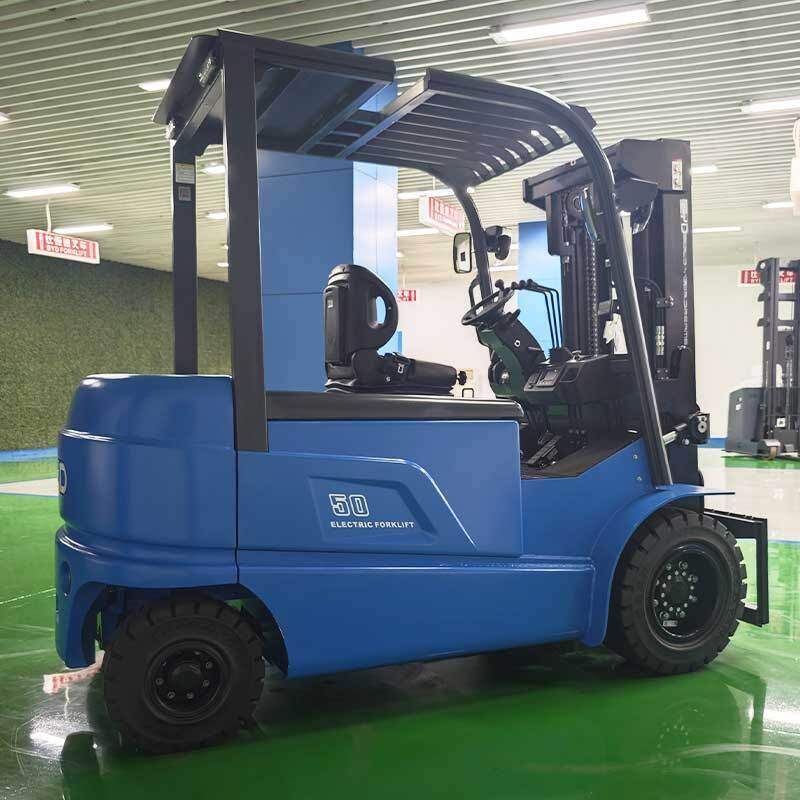
With the rapid development of green logistics, electric forklifts have become one of the most widely used core equipment for indoor material handling in recent years, and mastering systematic professional knowledge of this equipment can help relevant personnel give full play to its use value in daily work.
Core Performance Features of Electric Forklifts
Compared with traditional internal combustion handling equipment, modern electric forklifts produce zero local exhaust emissions during operation, which can well meet the air quality requirements of closed storage spaces such as food warehouses, pharmaceutical storage areas and cold chain distribution centers. The whole operation process keeps low noise level, which will not cause continuous noise interference to the surrounding working staff, and the power output is smooth and uniform, which effectively reduces the risk of collision and damage to fragile goods during handling.
Standardized Operation Specifications for Daily Use
All operators need to receive systematic pre-job skill training before officially using the equipment. Before each start-up, it is necessary to check the working status of the brake system, the remaining power of the power unit and the flexibility of the lifting structure, and no overloading operation is allowed in the working process. When driving in narrow aisles, operators need to slow down in advance and pay close attention to the movement tracks of surrounding personnel and goods, and cut off the main power supply in time when the equipment is left idle for a long time, so as to avoid unnecessary power consumption and potential safety risks.
Practical Daily Maintenance Guidelines
Carrying out regular standardized maintenance work can effectively extend the service life of the equipment and reduce the probability of unplanned downtime. The working personnel can regularly check the wear state of the power unit connecting line, check the hydraulic system for hidden leakage points, monitor the wear degree of the walking tyre, and clean up the dust and debris accumulated in the heat dissipation gap of the body in time. It is not recommended to park the equipment in the open air for a long time in extreme high temperature or low temperature environment, so as to avoid unnecessary loss of core components.
Scenario Matching Tips for Different Demands
Enterprises can select appropriate equipment configurations according to their actual usage scenarios. For the high rack storage scenario, they can match the equipment with corresponding maximum lifting height, for the high-frequency and high-load continuous operation scenario, they can choose the power configuration with higher endurance, and for the very narrow aisle operation scenario, they can select the product with optimized small turning radius, so as to effectively improve the overall operation efficiency of material handling.


