
 English
 简体中文
简体中文 Русский
 Português
 Español
 لالعربية

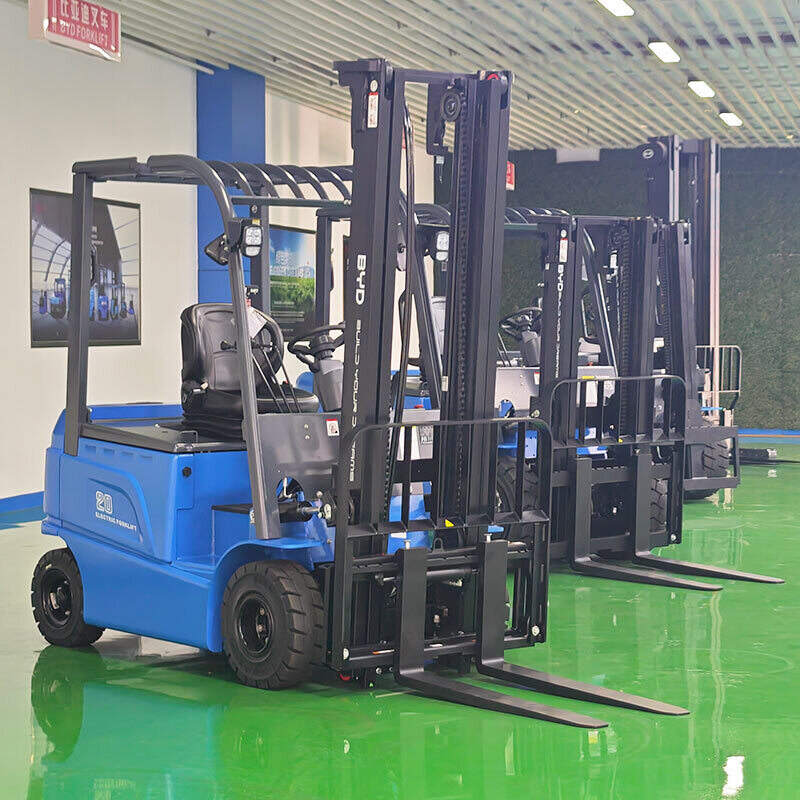
As low-carbon logistics development accelerates across various industrial scenarios, electric forklifts have become a mainstream choice for indoor and semi-outdoor material handling applications for their low noise, zero local emissions and relatively low long-term operating cost. Many frontline operators still lack systematic cognition of proper using methods, which may lead to unplanned downtime, extra operating cost and hidden safety risks in daily work.
Core Operation Specifications for Daily Use
Before each shift, operators need to conduct a simple inspection of key components including braking system, lifting mechanism, power display and tire condition, to rule out obvious abnormal signs in advance. During operation, it is not recommended to carry loads exceeding the rated load capacity for long time, and keep the load at a low height when traveling on uneven ground or narrow aisles to reduce rollover risks. Operators should also avoid frequent sudden acceleration and sudden braking in limited working space, which can reduce unnecessary wear of power components and running parts.
Routine Maintenance Points to Extend Service Life
For the power system, users need to follow official guidance to finish charging procedures properly, avoid over-discharging the power pack to a very low level for a long time, and keep the charging port clean and dry to prevent connection faults. For the mechanical parts, regular cleaning of dust and sundries accumulated on the lifting chain, guide rail and driving wheel can reduce friction resistance, and timely check the tightness of connecting parts to avoid loose parts caused by long-term vibration. It is not advised to conduct excessive disassembly of core components without professional support, which can avoid unnecessary damage to the original performance of the equipment.
Efficiency Optimization Strategies for Warehouse Scenarios
Matching the corresponding parameter configuration of electric forklifts with actual working scenarios can greatly improve overall handling efficiency. For narrow-aisle storage scenarios, choosing models with suitable body width and turning radius can effectively save aisle space and improve the utilization rate of warehouse storage area. For scenarios with high continuous working intensity, arranging reasonable shift handover and charging scheduling can reduce waiting time and ensure basic continuous operation demand. Operators can also arrange the handling route reasonably according to the position of goods to reduce unnecessary repeated travel and further improve unit handling efficiency.
Common Safety Misunderstandings to Avoid
Many operators ignore the full check of surrounding environment before operation, which may lead to collision with passing staff or stacked goods. It is not allowed to carry people on the pallet or lift personnel to high positions by the forklift forks without matching professional auxiliary platforms. After finishing daily work, operators should park the forklift at the designated position, lower the forks to the ground level, cut off the power supply and set the handbrake, to eliminate hidden safety risks during non-working hours.


