English
 简体中文
 Русский
 Français
 Português
 لالعربية


In modern warehousing and logistics scenarios, the operation density of electric forklifts keeps rising, and mixed operation of pedestrians, cargo handling equipment and forklifts has become a common daily state, which brings hidden risks of accidental collisions. Forklift proximity detection is a widely applied safety configuration that helps reduce such risks effectively, and mastering relevant operation knowledge is a necessary skill for all forklift operators.
First, operators need to clarify the basic function logic of proximity detection. This system perceives objects and moving targets within the preset monitoring range around the forklift through non-contact induction components, and will send out corresponding acousto-optic reminders when the distance between the forklift and the nearby target drops to the set safety threshold, to remind operators to adjust the driving route or reduce the running speed in time. It is worth noting that this system serves as an auxiliary safety tool, not a replacement for the operator's active observation and standard operation.
Then, there are several key operation specifications that operators should follow strictly. Before each shift starts, operators should confirm that the proximity detection system is in normal working state, and shall not turn off the system intentionally or block the induction components due to frequent alarms in busy working scenes. Operators also need to be familiar with the alarm level rules set by the system, and take corresponding response actions according to different alarm levels, rather than taking emergency braking until the high-level alarm is triggered. It is not allowed to take the output result of the proximity detection system as the only safety basis, operators still need to strictly abide by the operation speed limit rules of different working areas, and keep continuous active observation during the whole operation process, to make up for possible monitoring blind areas caused by temporary stacking of goods or complex site environment.
For daily maintenance, operators should check the surface of the induction components regularly, wipe off accumulated dust, cargo residues and other attachments, and do not paste any shielding objects around the components to avoid affecting the normal induction effect. Once abnormal alarm or unresponsive situation of the system is found, operators should report to the management personnel in time, and do not operate the forklift with hidden safety risks.
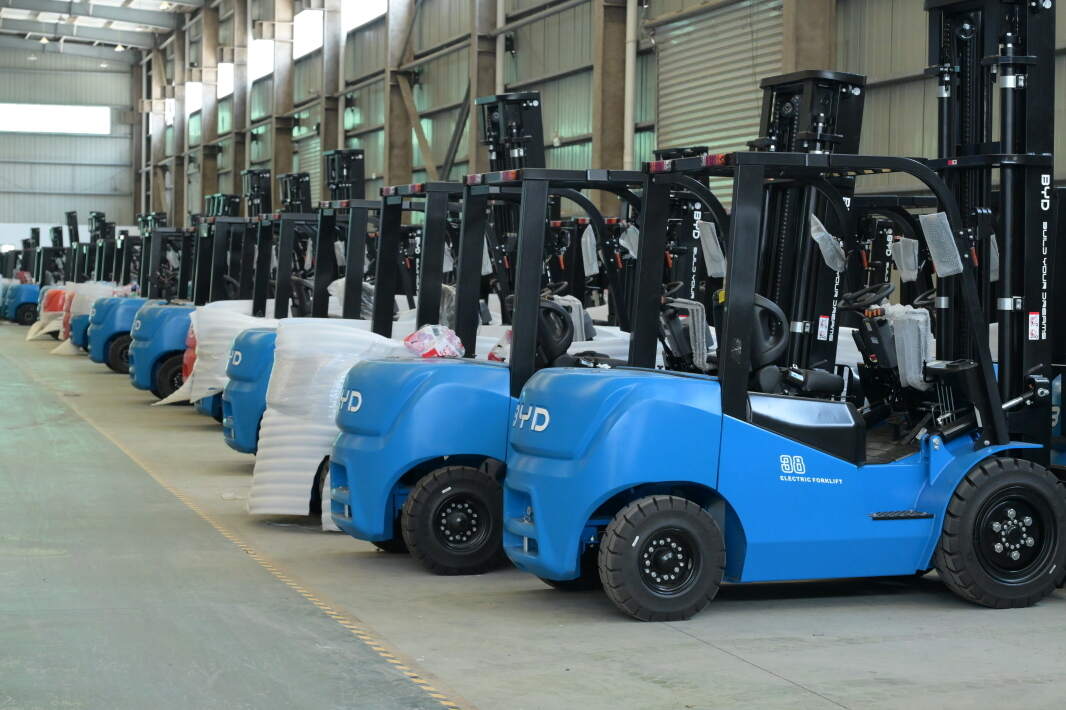
As a professional supplier focused on electric forklifts, we are Jianshu New Energy, specializing in BYD electric forklifts. If you need more professional information about electric forklift safety configurations and operation specifications, please send email to [email protected] for consultation.