
 English
 简体中文
 Русский
 Français
 Português
 لالعربية


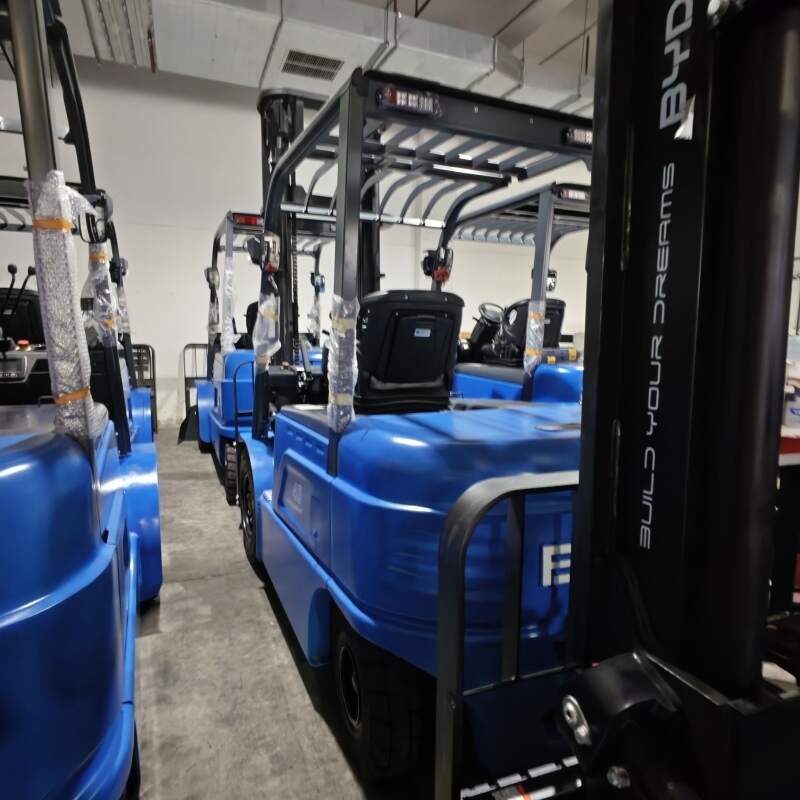
In recent years, electric forklifts have gradually become one of the core common equipment in modern logistics and warehousing scenarios, thanks to their low noise, zero direct emission and relatively low long-term operation cost features. Mastering standardized operation and scientific maintenance knowledge can help relevant practitioners give full play to the use value of the equipment in daily work, and avoid unnecessary operation risks and extra cost consumption.
Core Standardized Rules for Daily electric forklift Operation
Before each formal start of operation, operators need to complete necessary pre-inspection work, including checking the remaining power of the power system, the sensitivity of the brake and steering system, the normal display of safety warning lights, and the integrity of the fork and protective baffle. During the operation process, operators should strictly control the load within the rated bearing range of the equipment, avoid sharp steering and sudden braking when driving at a high speed, slow down and honk the warning horn in advance when turning or passing the intersection of the passage. It is not allowed to carry irrelevant personnel on the equipment body, and do not place your limbs outside the protective frame of the equipment during driving, to avoid collision with surrounding goods or facilities causing safety risks. When operating on a sloped passage, keep the cargo facing the upper slope direction, and do not turn on the slope to avoid side slipping.
Routine Scientific Maintenance Tips for Electric Forklifts
Daily maintenance work can effectively extend the overall service life of the equipment, and reduce the probability of sudden failure during peak operation periods. For the power system part, operators should avoid excessive discharge below the safe power threshold, arrange charging work in time after the daily operation peak, and keep the charging environment dry and ventilated. Regularly check the tightness of the circuit connection terminals, and wipe away the accumulated dust and stains on the surface of the power module to avoid affecting the heat dissipation effect. For the hydraulic lifting system, check the sealing performance of the oil circuit at fixed cycles, replenish the hydraulic oil to the standard liquid level in time, and check the wear degree of the tire tread regularly, replace the tire when the wear degree reaches the specified threshold to ensure the driving stability. Clean the sundries accumulated in the body gap after each long time operation, to prevent the hard sundries from scratching the circuit or the hydraulic parts.
Efficiency Optimization Methods for Different Application Scenarios
Combined with the actual operation environment, adjusting the use strategy of electric forklifts can further improve the overall operation efficiency. For narrow channel warehousing scenarios, arrange the equipment with corresponding turning radius parameters to reduce the space occupation in the driving process. The logistics management personnel can plan the reasonable operation route in advance according to the distribution of goods storage points, reduce the no-load driving distance of the equipment, and make reasonable scheduling for multiple sets of equipment in different operation areas, to avoid mutual congestion and long-time idle waiting. Select the corresponding power output mode according to the actual weight of the handled goods, which can not only meet the operation demand, but also reduce unnecessary power consumption, and help the equipment get longer continuous working time under the same power supply condition.


