
 English
 简体中文
 Русский
 Français
 Português
 لالعربية


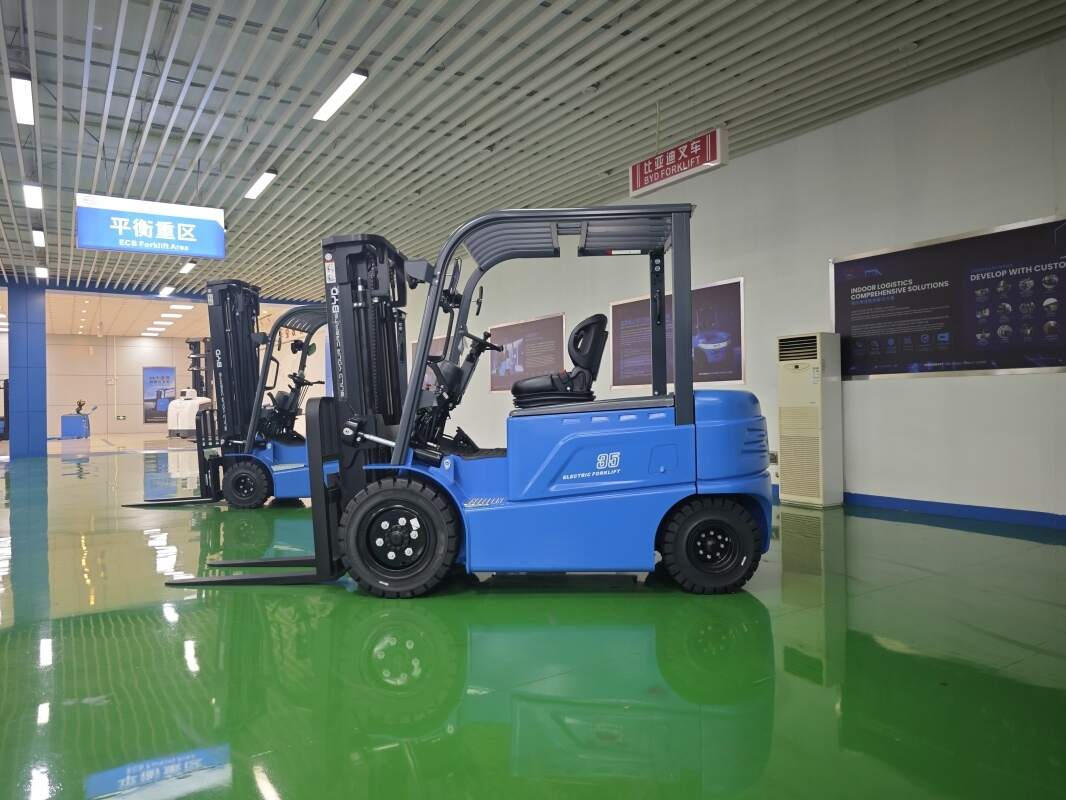
As low-carbon and efficient logistics equipment is increasingly adopted across industrial and warehousing sectors, electric forklifts have become one of the most widely used material handling units for indoor and semi-outdoor operation scenarios. This guide systematically sorts out practical professional knowledge for relevant practitioners to grasp core operation and management points of such equipment.
Core Advantages of Electric Forklifts in Modern Material Handling
Compared with internal combustion counterparts, electric forklifts generate zero tail gas emission during operation, which fits the environmental control requirements of enclosed warehousing spaces. Their overall operating noise is maintained at a relatively low level, which will not cause excessive disturbance to on-site staff and affect normal work progress. The power consumption cost per unit operation is usually lower than the fuel cost of traditional fuel powered equipment, which helps reduce long-term operation expenditure for logistics teams.
Standard Operation Specifications for Safe Daily Use
Before starting each shift, operators need to conduct basic checks on the tire condition, brake sensitivity, power level and lifting structure stability of the equipment to eliminate hidden risks in advance. During the operation process, operators should keep the load center within the specified allowable range, avoid sudden acceleration or sharp turning actions, and do not carry out over-lifting or over-loading operations beyond the equipment’s rated parameters. When the equipment is not in use, operators should park it at the designated area, lower the lifting fork to a position close to the ground, cut off the power supply and engage the hand brake properly.
Practical Daily Maintenance Tips to Extend Service Life
Regular cleaning of the dust and accumulated sundries on the surface of the equipment and heat dissipation structure can avoid abnormal operation caused by blockage of heat dissipation channels. For the power battery pack, it is necessary to follow the specified charging process, avoid over-discharging the power to a very low level for a long time, and check the connection state of the line terminals periodically. The lubrication points of the transmission and lifting mechanism should be supplemented with professional lubricant on schedule, to reduce wear of moving parts during long-term use.
Scenario-based Application Optimization Suggestions
For cold storage and high humidity operation scenarios, operators can take proper protective measures for the core electrical components of the equipment to reduce the impact of special environment on component performance. For high-frequency continuous operation scenarios, it is reasonable to arrange scheduled shift handover and battery swapping plans to ensure continuous operation efficiency without overburdening a single equipment unit.


