English
 简体中文
 Русский
 Français
 Português
 لالعربية


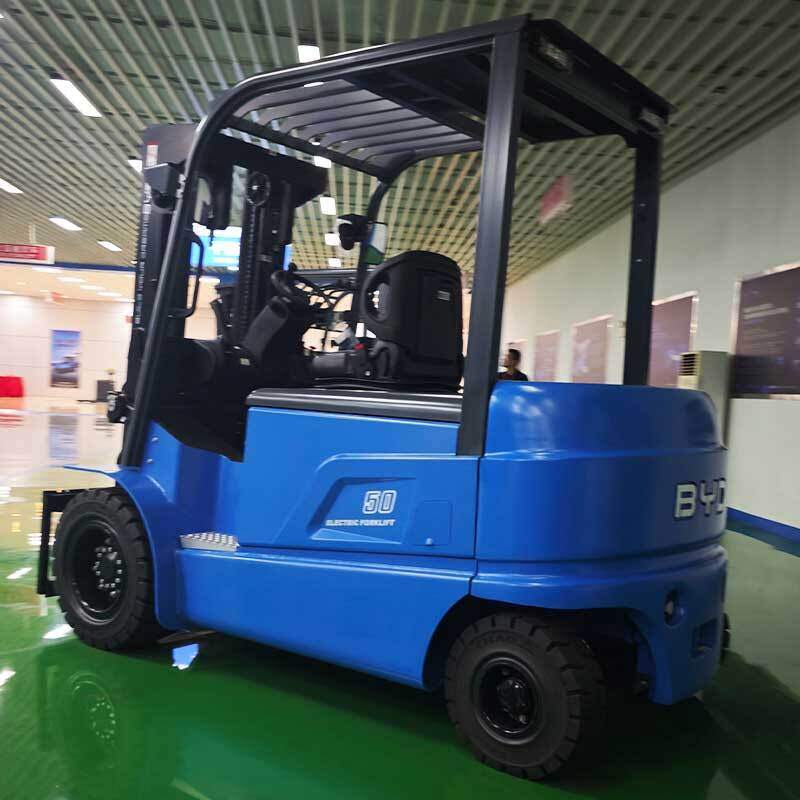
First, counterbalance forklifts are widely applied in warehouse storage, manufacturing workshop logistics and distribution center scenarios as core material handling equipment. A standardized practical operation checklist can effectively help operators regulate usage behaviors, reduce unexpected failure risks, avoid safety hazards, and extend the overall service life of the equipment, bringing stable and continuous operation support for daily logistics work.
The first part of the checklist is the pre-start exterior inspection. Operators need to walk around the whole forklift for a full visual check before getting on the vehicle, to confirm there is no obvious structural deformation or damage on the vehicle body, check the wear degree of solid tires and confirm no foreign objects are embedded in the tire surface, inspect the lifting chain and fork structure for no hidden cracks or excessive wear, and confirm all exposed wiring harnesses have no breakage or peeling damage.
The second part is the power and safety function verification, which is specially set for electric counterbalance forklift products. Operators need to confirm the remaining power level is sufficient to support the planned whole-shift operation, check the charging port has no oxidation or sundry blockage, test the response sensitivity of steering system, braking system and all operation handles one by one, and confirm all safety accessories including working lights, warning buzzers and reverse prompt devices can work normally without failure.
The third part is the load and operation site adaptation check. Before starting formal handling work, operators need to confirm the weight of the to-be-handled goods is within the rated load range of the forklift, adjust the fork spacing to fit the size of the pallet to ensure stable support for the goods, survey the whole operation path in advance to confirm the channel width, ground flatness and space at the turning position meet the passing requirements, and clear irrelevant personnel and obstacles around the operation area in advance.
The fourth part is the post-operation wrap-up check. After completing the daily handling tasks, operators need to drive the forklift to the designated fixed parking area, pull the hand brake stably, lower the forks fully to contact the ground, turn off the whole power system, clean up the sundries and dust attached to the vehicle surface, and record any abnormal phenomena encountered during the operation process in time to facilitate subsequent targeted maintenance and troubleshooting.
Following all items on this checklist strictly can help users form good operation habits, reduce unnecessary operating costs and improve overall logistics operation efficiency. Sharp Tree New Energy focuses on BYD electric forklifts, we provide professional matching equipment solutions and supporting services for different industrial handling scenarios. For any related consultation, you can send emails to [email protected] for further communication.