
 English
 简体中文
简体中文 Русский
 Français
 Português
 لالعربية

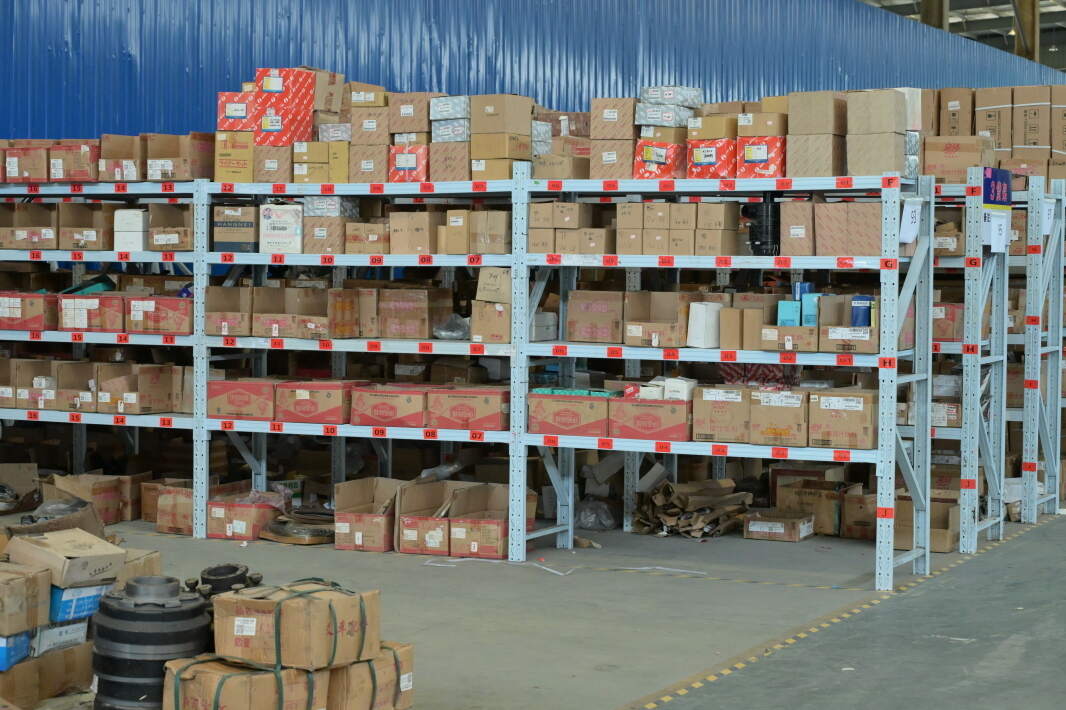
As electric forklifts are widely adopted in modern warehouse operations for their zero-emission, low-noise and flexible operation features, the supporting traffic management system has become a core priority for warehouse safety governance. Among all basic management measures, standardized aisle marking is a low-cost, high-efficiency approach to clarify traffic boundaries, reduce misoperation and avoid unnecessary collision risks.
First, the fundamental marking specification for conventional through aisles. For main passages that bear most electric forklift traffic flows, the solid boundary marking lines should be painted with high-abrasion, high-visibility materials, with clear width reserved to match the maximum turning radius of commonly used electric forklift models in the site. The distance between the outer edge of aisle marking lines and the nearest shelf edge or stacked goods should reserve no less than 30 centimeters of safe buffer space, to avoid scratching the goods or shelf structure when the forklift turns. No scattered stacked goods or idle operation tools are allowed to stay within the marked aisle scope, so as to eliminate hidden obstacles for passing electric forklifts.
Second, differentiated marking standards for special functional zones. For crossing areas where electric forklift passages and pedestrian walkways intersect, alternating color or dashed warning lines should be added 3 to 5 meters ahead of the crossing point, to remind forklift operators to slow down and watch out for passing pedestrians. For loading and unloading staging zones, temporary goods waiting zones, and equipment parking zones near the edge of the aisle, closed bold marking lines should be used to define the independent scope, to prevent electric forklifts from entering these non-traffic zones by mistake. For blind area corners that block the sight of forklift operators, special warning marking with clear prompt content should be set on the ground 2 meters ahead of the corner, to remind operators to honk gently and pass at a speed lower than 3km/h.
Third, daily maintenance and update rules for aisle markings. Warehouse management teams should arrange regular patrols to check the visibility and integrity of all ground marking lines, and timely re-paint the faded or partially worn parts caused by frequent rolling of electric forklift wheels. When the internal storage layout or passage flow direction is adjusted, the original old marking lines should be completely removed before painting the new ones, to avoid misleading operators with leftover old marks.
Implementing these scientific and practical aisle marking standards can effectively standardize the travel path of electric forklifts, reduce unplanned congestion in peak operation periods, and build a stable safety barrier for on-site equipment, goods and working staff.


