English
 简体中文
 Русский
 Français
 Português
 لالعربية


Tires are a core supporting component for electric forklifts, which directly affects operation stability, working efficiency, energy consumption level and daily operation cost, making it a key factor that operation managers need to pay attention to during vehicle selection and later maintenance. Many enterprise users often face confusion when choosing between pneumatic tires and cushion tires, failing to match the tire type with actual operation scenarios to get the best use effect.
Structure and basic feature difference
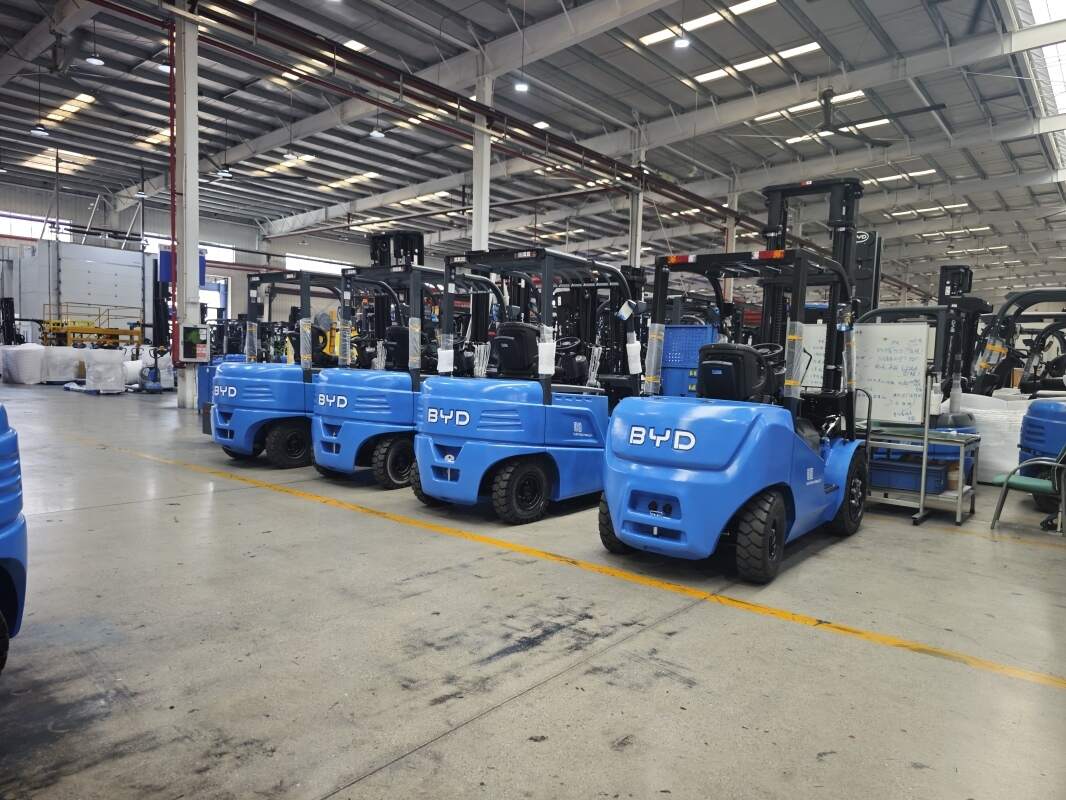
Pneumatic tires are designed with sealed air cavity inside, wrapped with thick wear-resistant rubber and designed with deep textured tread. This structural feature endows the tire with good shock absorption performance and excellent ground adhesion. There are also special solid-filled pneumatic tires for heavy-load scenarios, which can effectively avoid the risk of tire blowout in harsh working conditions. As for cushion tires, they are made of dense solid rubber directly fixed on the steel rim, with no air cavity inside and mostly smooth flat tread. This kind of tire has high overall hardness, small deformation under load, and low rolling resistance during driving.
Scenario adaptation reference
For operation scenarios that are mainly carried out outdoors, including open-air cargo yards, unimproved loading and unloading areas, or sites with scattered small gravel and uneven road surfaces, pneumatic tires are a more suitable choice. Its good shock absorption performance can reduce the vibration transmitted to the vehicle body and goods during driving, and the deep tread can provide sufficient friction force to prevent sideslip on wet or rough roads. For long-term indoor operation scenarios, such as closed warehouses, narrow aisle cargo sorting areas with smooth epoxy floors, cushion tires can show better performance. The low height design of cushion tires helps lower the whole vehicle’s center of gravity, which improves the lateral stability of the forklift when lifting goods to a high position. Meanwhile, its small rolling resistance can reduce the extra power consumption of the electric forklift, effectively extending the single charging range of the vehicle.
Daily maintenance and cost consideration
Pneumatic tires need regular tire pressure inspection in daily use, and users need to check the tread condition regularly to remove embedded sundries in time to avoid abnormal tire damage. When used in matched outdoor scenarios, its service life can reach the conventional design standard. Cushion tires do not need extra daily maintenance for tire pressure adjustment, and there is no hidden danger of air leakage or blowout, which brings lower maintenance burden for operation teams. When running on flat indoor ground, its wear rate is very slow, and it can maintain stable performance for a long period.
As a professional service provider focusing on BYD electric forklifts, Jian Shu New Energy can provide you with targeted tire matching and vehicle selection suggestions according to your actual operation conditions. If you have related demand for consultation, you can contact our team via [email protected].