
 English
 简体中文
简体中文 Русский
 Français
 Português
 لالعربية

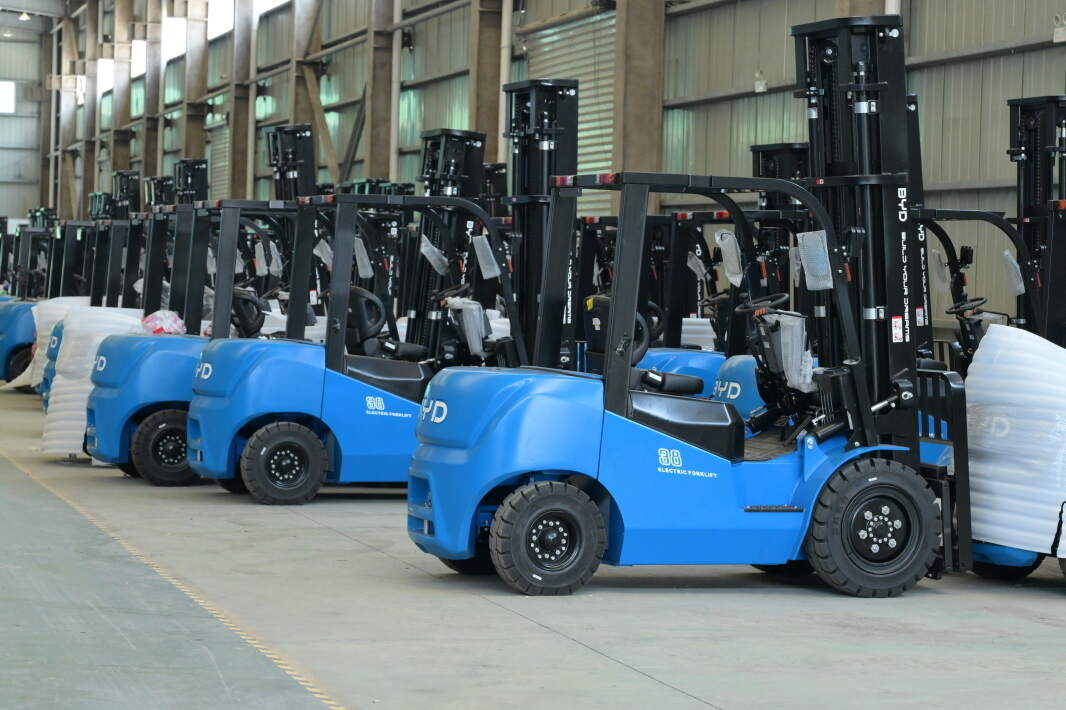
For most indoor logistics stations, enclosed warehouse and indoor cargo storage scenarios, choosing the right industrial handling equipment is one of the core factors affecting overall operation efficiency. Many operation teams often judge equipment performance only from basic parameter sheets, but the actual performance difference under real long-term indoor working conditions is far more practical than theoretical parameters. The following parts will launch an objective, neutral comparison of the two types of forklifts from multiple actual operation dimensions.
First, the emission and indoor environment adaptation difference. Indoor sites usually have relatively limited ventilation conditions, which are quite different from open outdoor operation spaces. A diesel forklift will continuously output combustion exhaust gas during the whole operation process. If it runs for a long time in a closed indoor space, the local concentration of air pollutants will gradually rise, which will affect the comfort of on-site staff working for a long time. For indoor scenarios that have strict requirements for air cleanliness, such as food storage, light industrial product warehouse and pharmaceutical storage sites, the exhaust residue may also cause unnecessary contact with stored goods. By contrast, electric forklifts produce zero tail gas emission during the whole driving and handling process, no combustion waste gas will be generated under any working state. There is no need to configure additional complex forced exhaust system in the indoor site, which can meet the long-term full-hour indoor operation requirements smoothly.
Second, the operation noise and working experience difference. The power system of diesel forklift relies on fuel combustion to generate power, so the vibration and noise generated by the engine during operation are at a relatively high level. With the echo effect of the enclosed indoor space, the continuous running noise will increase the auditory fatigue of the on-site staff, and the normal transmission of operation instructions and daily on-site communication will also be interfered. The electric forklift is driven by high-efficiency motor, the vibration amplitude in running state is very small, and the overall noise level is much lower. Operators will not be disturbed by strong vibration when driving for a long time, and the whole on-site working environment will keep a relatively quiet and orderly state.
Third, the site layout and daily maintenance difference. Diesel forklifts need regular fuel replenishment in daily operation, so the indoor site needs to plan a special fuel storage and filling area. This kind of area has clear fire protection specification requirements, which will occupy extra available space of the warehouse. The daily maintenance of diesel power system involves engine oil replacement, multi-group filter cleaning and other procedures, which takes relatively long maintenance time. For electric forklifts, daily energy replenishment only needs to be connected with standard compliant charging piles, there is no need to set up separate storage area for flammable dangerous goods. Even small and medium-sized indoor warehouses can arrange charging layout easily. The routine maintenance work of electric forklift only includes regular inspection of battery, motor and walking structure, the overall maintenance process is simpler.
There is no absolute good or bad between the two types of equipment, operation teams can make comprehensive judgment based on their own actual operation duration, site condition and budget arrangement, and select the most suitable handling equipment for their own indoor scenarios.


